

Best Air Rotary Union for Reliable Performance
2026-08-19
Finding the best air rotary union for reliable performance often feels like a gamble—until you discover a manufacturer that consistently delivers. Leaks, pressure drops, and frequent replacements are common pain points that plague underperforming systems. MOFLON has built its reputation on eliminating these frustrations, offering precision-engineered rotary unions that hold up under demanding conditions. But what separates a truly dependable air rotary union from the rest? Read on to learn the key factors behind long-lasting performance and why MOFLON keeps exceeding expectations.
What Separates a Reliable Air Rotary Union from the Rest
The difference often starts with what you can't see at first glance—the seal stack. A reliable air rotary union uses a hardened, precision-ground shaft paired with a balanced mechanical seal that maintains consistent contact without excessive friction. Cheaper units tend to rely on simple lip seals that wear quickly under thermal cycling or when condensate forms inside the air lines.
Pressure and temperature swings are where many rotary unions fall apart. A dependable design handles intermittent spikes, dry running, and slow rotation without letting air escape through the housing. That means testing at multiple RPMs and pressures, not just a static bench check. It also means choosing bearing arrangements that don't transfer axial load to the sealing faces.
Finally, maintenance reality separates the two. A well-built union doesn't require complete disassembly to inspect or replace a seal—it's designed with accessible wear components and clear torque specs. The manufacturer also stands behind it with a meaningful warranty and spare parts availability, rather than treating it as a throwaway consumable. When downtime costs more than the part, that difference matters.
Key Design Features That Prevent Leaks and Downtime
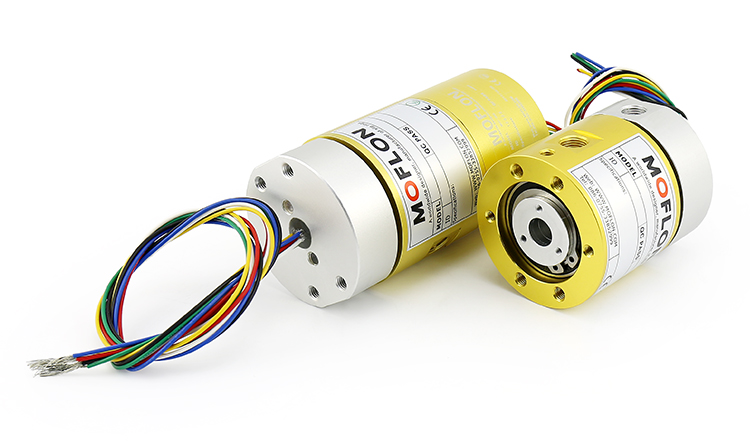
One overlooked culprit behind many leaks is the reliance on a single static gasket under fluctuating thermal loads. The designs that hold up over time instead use dual-seal arrangements where an inner compressible ring handles the initial closure, while a secondary metal-to-metal contact takes over once the system reaches operating temperature. This staged sealing approach absorbs expansion and contraction without losing surface pressure, which is the primary reason these connections remain drip-free even after thousands of cycles.
Downtime often comes from components that fail suddenly rather than degrade gradually. To counter this, robust systems integrate redundant pathways for both fluid and power. For example, a pair of small pumps can run in parallel at reduced load, so if one seizes, the other automatically ramps up without interrupting flow. Pressure relief valves are also positioned to vent excess force into a containment chamber instead of allowing a burst, while inline sensors monitor seal compression and send an alert when the reading drifts outside a narrow band. This layered approach means a minor issue becomes a maintenance task, not an emergency shutdown.
Material choice plays a quieter but equally critical role. Surfaces exposed to aggressive media are often treated with a low-friction, corrosion-resistant coating that prevents pitting and micro-cracks from forming at the seal interface. In addition, the use of self-lubricating polymer bushings in moving parts eliminates the need for periodic greasing, which itself can introduce contaminants. By removing these weak points at the design stage, the system avoids the slow degradation that eventually leads to a sudden leak or seized component.
Matching Air Rotary Unions to High-Cycle Applications
High-cycle pneumatic systems don't forgive mismatched rotary unions. The moment a machine starts cycling dozens of times per minute, any union that wasn't selected for that duty will leak, seize, or wear out well before its rated lifespan. The key is to look beyond the catalog's maximum pressure rating and instead focus on the bearing design, seal material, and internal flow path. A union built for occasional indexing may use a simple O-ring against a polished shaft, but high-cycle work demands a hardened, precision-ground rotor paired with a low-friction seal that can handle continuous micro-motion without generating heat or debris.
One practical trick is to match the union's maximum RPM to at least twice the actual cycling speed, but more important is the seal's ability to recover between pressure pulses. In high-cycle applications, the union sees rapid pressurization and venting, which can cause seals to extrude or roll if they aren't supported by proper backup rings or a balanced mechanical seal. Also pay attention to the bore size and port configuration: a union with a large internal volume will act like an accumulator, slowing response times and forcing the compressor to work harder. A compact, low-volume design keeps the system crisp and reduces the energy lost to unnecessary air expansion.
Finally, don't ignore the mounting arrangement. High-cycle motion often introduces side loads or vibration that a flange-mounted union handles better than a threaded nipple. If possible, use a union with an integrated bearing that takes the radial load off the seal, and consider adding a flexible coupling or vibration isolator to the inlet line. This keeps the seal's contact patch uniform and prevents the kind of uneven wear that shortens service intervals. In short, matching a rotary union to a high-cycle application is less about choosing the biggest or most expensive option and more about understanding the dynamic sealing environment and selecting a design that thrives under constant motion.
How to Evaluate Seal Materials for Long Service Life
Start by looking beyond datasheets. A material's listed tensile strength or temperature rating rarely tells you how it will behave after years of cyclic loading, chemical exposure, or thermal swings. Instead, run application-specific tests: subject samples to the actual fluid, pressure profile, and temperature range they'll see in service. Watch for early signs of compression set, swelling, or surface cracking—these often predict failure long before a leak occurs.
Pay close attention to how the seal interacts with its mating surfaces. Harder materials may resist extrusion but struggle to conform to minor flange irregularities, while softer compounds can heal imperfections yet wear faster under abrasive slurries. Evaluate the full system, not just the seal in isolation. A material that performs brilliantly in a clean bench test might degrade rapidly when exposed to trace contaminants or unexpected pressure spikes.
Finally, build in time for accelerated aging studies that mimic real-world duty cycles, not just constant stress. Alternate between wet and dry conditions, vary the temperature ramp rates, and include periods of complete depressurization. The most telling data often comes from what happens during recovery phases—when the seal has a chance to relax and then must seal again. That cycle, repeated thousands of times, is the true measure of long service life.
Installation Mistakes That Shorten Rotary Union Lifespan
Misalignment is a silent killer for rotary unions. Even a slight angular or parallel offset between the union and the connected shaft forces the internal bearing and seal to absorb alternating stress with every rotation. Many installers rely on rigid couplings or force the union into position, which distorts the housing and causes premature wear on the sealing surfaces. Instead, flexible connections or alignment checks with a dial indicator can keep the union running true.
Another frequent error is using excessive thread sealant or the wrong type on tapered pipe threads. Tape or paste that squeezes into the fluid passage breaks free under pressure and lodges in the seal faces, scoring them and leading to leaks. A thin, compatible sealant on the male threads only—never on the first two threads—reduces contamination risk without compromising the joint.
Finally, unsupported piping and over-tightened connections transfer external loads directly into the union. Long horizontal runs without brackets or hangers impose bending moments, while overtightening fittings can crack the housing or deform the seal carrier. Let the piping be supported independently and tighten to the manufacturer's torque spec so the rotary union only handles its intended rotation, not the plumbing stress.
Maintenance Habits That Keep Air Rotary Unions Running Smoothly
A quick look at the service log often reveals the same story: most air rotary union failures trace back to skipped inspections, not sudden part fatigue. The unions that run for years without a hitch are usually on a simple but strict routine. Every 200 operating hours, wipe down the housing and check for any trace of oil mist or air leakage around the seals. A faint hiss or a damp spot is your first warning sign—catching it early means you swap a $20 O-ring instead of a $400 rotor assembly later.
Filter maintenance is another habit that separates smooth operations from constant downtime. Compressed air lines carry moisture, rust particles, and compressor oil that quietly chew through internal bearings. Make it a monthly task to drain the filter bowl and replace the element whenever the pressure drop across it climbs above 2 psi. If your system runs in a dusty or humid environment, cut that interval in half. Clean, dry air is not a luxury—it is the entire lifeblood of the rotating joint.
Finally, do not ignore alignment and torque checks. A rotary union that is even slightly misaligned will wear its seals unevenly and develop a wobble you can feel by hand. Once a quarter, loosen the mounting bolts, let the union settle into its natural position, then torque them back to the manufacturer's spec in a cross pattern. While you are there, rotate the shaft by hand—any roughness or catching means it is time to inspect the bearings before the vibration spreads to your whole machine.
FAQ
An air rotary union is a mechanical device that lets you transfer compressed air or vacuum from a stationary supply line into a rotating part—like a clutch drum, winding reel, or indexing table—without twisting the hose. You'll commonly see them on packaging machinery, rotary tables, printing presses, and automated assembly equipment where a tool or chuck needs air while spinning.
Look closely at the seal design and housing tolerance. For reliable performance, choose a unit with low-friction seals rated for your working pressure and a hardened shaft surface where the seal rides. Also check the port size matches your hose diameter; undersized ports create backpressure and heat, which shorten seal life. If possible, ask the manufacturer for a leak-rate spec rather than just a max pressure rating.
Most air rotary unions list a maximum rpm and a maximum pressure, but real reliability comes from staying well under both. As a rule of thumb, keep the operating speed below about 70–80% of the stated limit and leave headroom on pressure. High speed combined with high pressure generates extra heat at the seal contact, and that heat is what causes premature wear even if you're technically within the rated range.
Keep the incoming air clean and dry. Moisture and particles are the two biggest killers of internal seals. Add a filter and regulator close to the inlet, and periodically check for play in the rotor bearing. Every few hundred hours, rotate the shaft by hand and feel for roughness—if it doesn't spin smoothly with no air connected, the bearing or seal has already started to degrade.
Yes, many models can, but don't assume all of them do. If you need both pressure and vacuum through the same passage, look for a rotary union specifically rated for dual-purpose use. The seal geometry differs slightly because vacuum can pull the seal lip away from the shaft if it was only designed for positive pressure. Also verify the temperature rating if the vacuum application pulls hot air or fumes.
Watch for a gradual drop in tool performance—slower cylinder movement, reduced clamping force, or a hissing sound near the union when the machine is idle. You might also notice oil mist or dirt accumulating around the shaft. Vibration that worsens at higher speeds is another red flag. Any of these usually means the seals are worn or the bearing has excessive clearance.
For most compressed air duties, nitrile (NBR) seals offer a good balance of wear resistance and cost. If the air is hot or contains trace oils that attack standard rubber, fluorocarbon (FKM) is a better choice. In very dry, high-speed applications, PTFE-based seal packages often last longer because they generate less friction, but they require a smoother shaft finish to seal properly.
Conclusion
A rotary union that lasts in air service usually stands out for reasons that have nothing to do with price. The shaft needs support at both ends, the sealing faces have to be lapped flat enough to hold a thin air film, and the body must let heat escape instead of soaking into the bearings. Leaks almost always begin at the dynamic interface, so tight tolerances and a balanced seal design keep the faces from tilting under pressure. Another factor that gets overlooked is duty cycle. A union built for short bursts will fail quickly on a line that cycles every few seconds, while one that is too large can chatter at low load. Matching the rotor diameter and flow path to the actual speed and pressure range does more for reliability than any single material upgrade.
Seal selection is where many long-term failures are decided. Dry, filtered air works well with PTFE-based seals, but if the air carries any oil mist or fine dust, a hardened carbon face against a ceramic-coated counterpart will survive much longer. Installation mistakes are just as destructive: hanging unsupported hose weight off the port, forcing the inlet into alignment, or over-tightening fittings all create side loads that squeeze the seal film away. Once running, reliable performance comes from simple habits—listening for a faint whistle at the joint, checking for uneven warmth, and keeping the air supply clean and dry. The best air rotary union is not automatically the most expensive one. It is the union that matches the machine’s real cycle rate, gets installed without strain, and receives just enough attention to catch wear before it becomes a shutdown.
Contact Us
Contact Person: Xiangpin Li
Email: [email protected]
Tel/WhatsApp: 86 186 1706 8578
Website: https://www.moflon.com