

Best Laser Safety Curtains: Top Picks for Maximum Protection
2026-06-09
In any laser environment, safety isn't just a checkbox—it's the line between a routine day and a catastrophic accident. Yet, with so many curtains claiming 'laser-rated' protection, how do you actually know which ones hold up when it counts? We've cut through the noise to bring you the top laser safety curtains for maximum protection, spotlighting LASERPAIR for their rigorous testing and field-proven designs. Whether you're guarding a high-power industrial setup or a delicate research lab, this guide will equip you with picks that stop beams cold—without slowing you down.
Why Laser Safety Curtains Are Non-Negotiable for High-Risk Environments
In industrial settings where high-powered lasers slice through metal or perform delicate medical procedures, stray reflections and direct beam exposure can cause irreversible eye damage or severe skin burns in milliseconds. Standard barriers simply don’t cut it—a fraction of a second’s oversight can lead to catastrophic injury, regulatory fines, or halted operations. Laser safety curtains act as a passive, always-on shield, automatically containing hazardous light without relying on operator vigilance. Their specialized multi-layer fabrics are engineered to absorb and disperse specific wavelengths, providing fail-safe protection that administrative controls alone can’t guarantee. When the margin for error is zero, these barriers transform untamed laser radiation into a controlled, predictable element of the workspace.
Unlike rigid enclosures or makeshift screens, properly rated curtains maintain flexibility while delivering certified optical density levels—often OD 4+ or higher—meaning they reduce beam power by a factor of 10,000 or more. They withstand direct hits for limited durations without catching fire or transmitting dangerous levels of light, an essential trait in robotic welding cells, additive manufacturing bays, or research labs where alignment beams can stray. Facilities often overlook transient reflections from reflective surfaces like polished metals or glass, but a curtain system designed with overlapping panels and floor-level seals captures those unpredictable leaks. It’s not just about blocking the primary beam; it’s about neutralizing the scattered, secondary hazards that safety glasses alone might miss.
Beyond the immediate safety, these curtains earn their keep by maintaining workflow visibility. Transparent or semi-transparent variants allow supervisors to monitor processes without entering the hazard zone, and modular designs let teams reconfigure protective boundaries as projects evolve—no construction permits or permanent walls needed. They’re also built to shrug off sparks, chemical splashes, and daily wear in harsh environments, holding certifications like CE, UKCA, or ANSI Z136 compliance. Ultimately, the cost of a curtain pales beside the liability of an accident: lost productivity, equipment damage, and human cost don’t leave room for compromise. In high-risk laser applications, “good enough” protection is simply not an option.
Decoding the Materials: From Polycarbonate to Specialized Fabrics
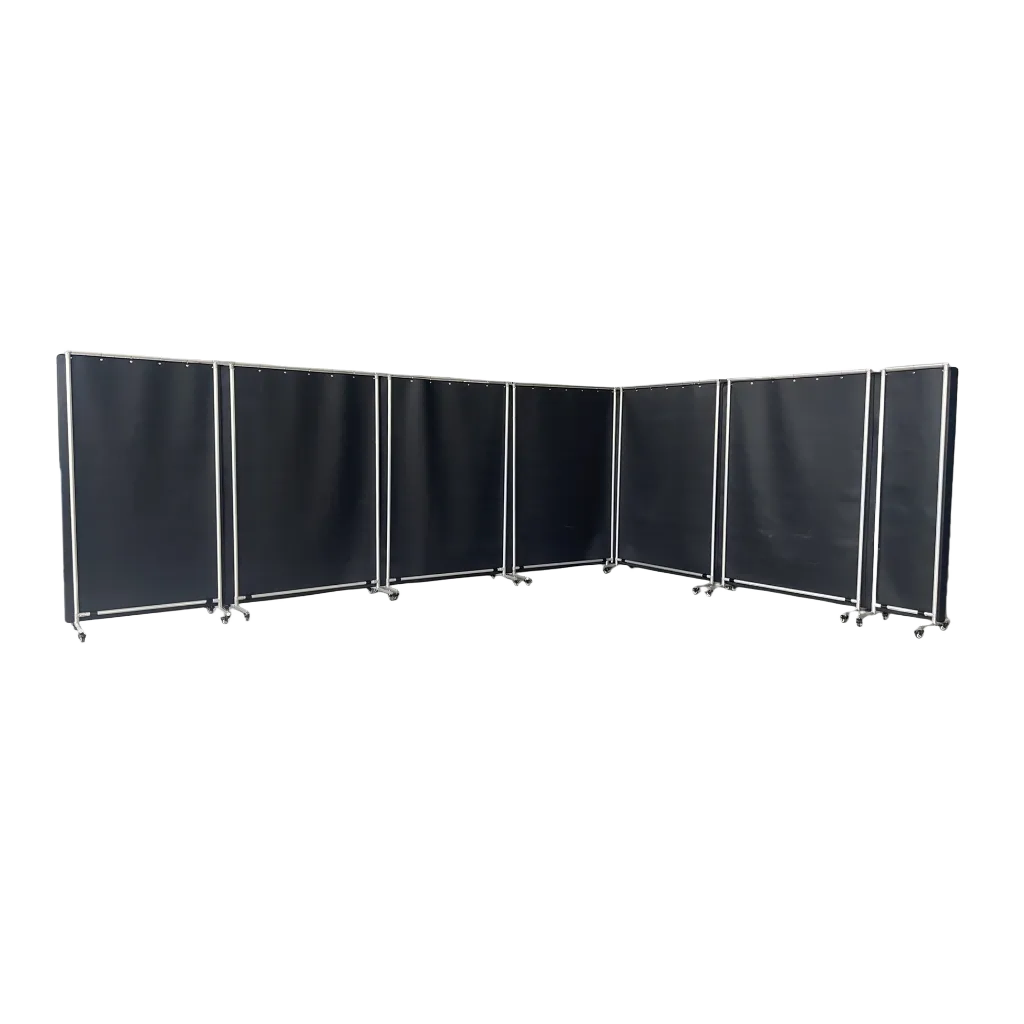
Polycarbonate stands out for its exceptional impact resistance and optical clarity. Unlike standard plastics that shatter under stress, this material flexes and absorbs force, making it a mainstay in protective gear and high-traffic applications. Its natural transparency rivals glass but with a fraction of the weight, opening doors for designers who need durability without sacrificing lightness.
When it comes to specialized fabrics, the narrative shifts from rigidity to adaptability. Technical textiles now integrate coatings and laminates at the molecular level, granting properties like waterproof breathability or heat reflection. These are not surface treatments that wash away; they're engineered mechanisms woven into the fabric’s core, responding dynamically to environmental changes.
The interplay between a hard polycarbonate shell and a soft, responsive fabric encapsulates modern material design. Take performance outerwear: a rigid polycarbonate visor shields against impact, while the garment’s fabric stretches and recovers with movement. This synergy isn't accidental—it's the result of selecting materials that complement each other’s weaknesses, yielding products that perform beyond the sum of their parts.
Certification Matters: What to Look for in a Compliant Curtain
When you’re shopping for curtains that meet safety and performance standards, certifications are your shortcut to confidence. Rather than wading through vague marketing claims, look for specific labels like GREENGUARD, OEKO-TEX, or NFPA 701. These aren’t just fancy badges—each one tells you exactly what the product has been tested for. GREENGUARD, for example, means low chemical emissions into your indoor air, while OEKO-TEX confirms free from harmful substances against a long list of regulated chemicals. If fire safety is a concern, NFPA 701 verifies flame resistance, often required in public spaces. The key is matching the certification to your actual needs: a curtain for a child’s room may prioritize chemical safety, whereas one for a commercial venue might require fire compliance. Check the label or manufacturer’s documentation—certifications should be clearly stated, not hidden in fine print. If they aren’t, that’s a red flag worth heeding.
It’s also worth noting that not all certifications are created equal. Some are voluntary, prompted by industry leaders aiming to set a higher bar, while others are mandatory for certain markets. For instance, the CE marking in Europe or the UKCA mark in Britain signals compliance with basic health and safety regulations, but they don’t tell you much about the specifics unless you delve into the technical files. Meanwhile, certifications backed by independent third-party labs carry more weight than manufacturer self-declarations. You’ll want to see logos or certificate numbers that can be cross-checked on the issuing organization’s website. Be wary of generic terms like “eco-friendly” or “safe” without a certification to back them up—these can be empty promises. A truly compliant curtain will provide traceability, connecting you back to test reports and the exact standards met. This level of transparency not only protects your health and safety but also indicates a manufacturer that takes quality seriously.
Beyond the obvious safety and environmental credentials, certifications can hint at durability and overall product quality. For example, a curtain that meets standards for colorfastness to light or abrasion resistance will keep its appearance longer, saving you from premature fading or thinning. Some certifications bundle multiple performance factors together, giving you a more complete picture. When comparing two similar-looking curtains, the one with a robust set of certified attributes often justifies a slightly higher price tag by offering long-term peace of mind. In short, treat certifications like a cheat sheet—they condense a lot of technical detail into an easy-to-trust signal. Take the extra minute to understand what each seal means, and you’ll find that choosing a compliant curtain becomes a lot less daunting and a lot more reliable.
Custom vs. Off-the-Shelf: Finding the Right Fit for Your Workspace
When outfitting a workspace, the decision between custom-built solutions and ready-made options often boils down to priorities. Off-the-shelf furniture and layouts promise speed and affordability—perfect for teams that need to move in next week without the wait. Yet what you gain in convenience, you might sacrifice in uniqueness. Mass-produced desks and chairs rarely reflect a company’s culture or adapt to odd-shaped rooms, leaving awkward gaps or a cookie-cutter feel.
Custom designs, on the other hand, let you sculpt every inch to match how your team actually works. Need integrated cable management for a clutter-free lab? Want a standing-height bench with built-in storage for prototypes? These bespoke touches can boost daily efficiency and even morale, but they come at a cost: time and money. Negotiating with craftsmen, waiting for fabrication, and paying premium prices require patience and a flexible budget.
The sweet spot often lies in blending both approaches. Start with modular off-the-shelf systems that allow for later personalization—add custom tabletops, reconfigurable partitions, or unique color accents. This way, you get the bones quickly while leaving room to grow into a space that feels truly yours, without the full custom headache.
Installation Hacks for Maximum Coverage and Convenience
Placing your router in the center of your home isn't always practical, but elevating it can work wonders. Try mounting it high on a wall or tucking it onto the top shelf of a bookcase—this helps the signal clear furniture and other low obstacles. If a central spot is out of reach, avoid kitchens and bathrooms where metal pipes and appliances can interfere, and keep the router at least a foot away from other electronics like cordless phones or baby monitors.
For multi-story homes, directing antennas perpendicularly makes a surprising difference. If your router has external antennas, angle them so some are vertical and others horizontal—this aligns with how devices hold their internal antennas and can boost coverage across floors. Stickyback velcro strips are a low‑effort hack for securing routers to walls or the underside of desks, freeing up shelf space and often improving signal path in the process.
Don't overlook the power of a quick channel tweak. Many routers default to crowded channels, slowing everything down. Using a free Wi‑Fi analyzer app, you can spot the least congested channel in your neighborhood and switch to it in the router settings. Pair this with setting up a separate guest network for visitors; it keeps your main network less cluttered and adds a layer of convenience without sacrificing speed.
Beyond the Basics: Maintenance and Longevity Tips
Real durability starts with understanding how you actually use your gear. Rather than following a generic care schedule, build habits around your routine. If you use an item daily, wipe it down after each use and do a quick check for wear. For things that stay in storage, condition them before they sit and again when they come out. This rhythm keeps materials from degrading unnoticed and catches small issues before they become expensive repairs.
Storage conditions matter more than most people think. Avoid damp basements or scorching attics. Instead, choose a cool, dry spot with stable temperature. Sunlight is a silent enemy—it fades, cracks, and weakens materials over time, so keep items covered or in shaded areas when not in use. For leather goods, skip the plastic bags; they trap moisture and encourage mildew. Use breathable cloth covers or simply keep them on open shelving with space for air to circulate.
Learning one or two basic repair skills can add years to your belongings. Tightening a loose screw, stitching a torn seam, or applying protective wax doesn’t require a professional. When you do need an expert, find someone who specializes in the material or item type, not just the nearest general shop. If a piece uses unique hardware or fabric, order spare parts before they become hard to find. This proactive approach turns occasional maintenance into a natural part of ownership rather than a chore.
FAQ
It comes down to optical density and material resilience. A good curtain absorbs or reflects the specific wavelength you’re working with, and it holds up under accidental beam exposure without melting or burning through. Look for tested ratings that match your laser's power level.
Measure the area you need to enclose fully, including any potential beam scatter zones. Ceiling-mounted tracks work great for large rooms, while floor stands are ideal for temporary setups. Always overlap panels slightly to eliminate gaps.
Layered polymer composites and reinforced fabrics rated for high irradiance are your safest bet. Some incorporate multiple layers to handle both visible and invisible wavelengths. For CO2 or fiber lasers, specialized colored vinyls often outperform standard black fabrics.
Absolutely. Many suppliers offer made-to-order sizing, angled panels, and even cutouts for cables or viewing windows. If your space has odd angles or equipment in the way, a modular system can be pieced together to fit snugly.
Yes, rolling partitions and lightweight welding-style screens are common. Some collapse into a carrying case, making them perfect for field service or demo setups. Just ensure the portable unit still meets the optical density requirement for your laser class.
Regular visual inspections are key—check for tears, burns, or thinning spots. Clean them with mild soap and water, avoiding harsh solvents that could degrade the protective layer. Replace any curtain that shows damage, and document inspections for safety audits.
Look for markings like EN 12254 (Europe) or ANSI Z136.1 (US). Reputable manufacturers provide certification labels directly on the curtain or in the documentation. If in doubt, ask for a test report showing optical density and flame resistance for your specific wavelength.
Conclusion
Laser safety curtains are an absolute must in any setting where high-powered beams are in use—think manufacturing, medical, or research environments. Without them, even a stray reflection can cause irreversible eye damage or skin burns. The best curtains do more than just block light; they combine rugged, often self-extinguishing frames with advanced shielding materials like high-impact polycarbonate or tightly woven, multi-layer fabrics. Some even incorporate rapid optical detection systems that cut off laser emission the instant a breach occurs. It's not just about the material, though: true peace of mind comes when a curtain carries certifications such as EN 60825 or ANSI Z136, verifying that it has been tested for specific wavelength ranges and power densities. This isn't the place to cut corners—compliant gear is simply the line between a safe workspace and a catastrophic accident.
Out of the box doesn't always mean out of mind. While standard-sized curtains can work for straightforward layouts, custom solutions become vital when you're dealing with odd angles, overhead gantries, or mobile laser heads. A tailored fit eliminates dangerous gaps that prefab models often leave. Installation itself can make or break the setup: overlapping panels, floor-to-ceiling coverage, and magnetic or interlocked access points turn a basic barrier into a seamless safety cell. And once the curtains are up, treat them like any critical safety equipment—regularly inspect for scratches, haze, or seam fatigue, clean with manufacturer-approved agents, and log every check. Even UV-stabilized materials degrade over time, so a proactive replacement cycle keeps the protection level where it needs to be. Ultimately, the best laser safety curtain isn't just a product you buy; it's a system you integrate, maintain, and rely on every single day.
Contact Us
Contact Person: Jenny
Email: [email protected]
Tel/WhatsApp: +86 13537713281
Website: https://www.laserpair-safety.com/