

Best Roll Forming Machine Supplier from China for Reliable Production Lines
2026-09-14
When your production line demands rollers that won’t buckle under pressure, the search for a truly reliable supplier can feel endless. China is home to countless roll forming machine makers, but few combine precision engineering with the accountability you need. Enter Beenew — a name quietly building a reputation for lines that keep running long after the warranty expires. If you’ve been burned by mismatched tolerances or delayed shipments, this might be the supplier you’ve been looking for.
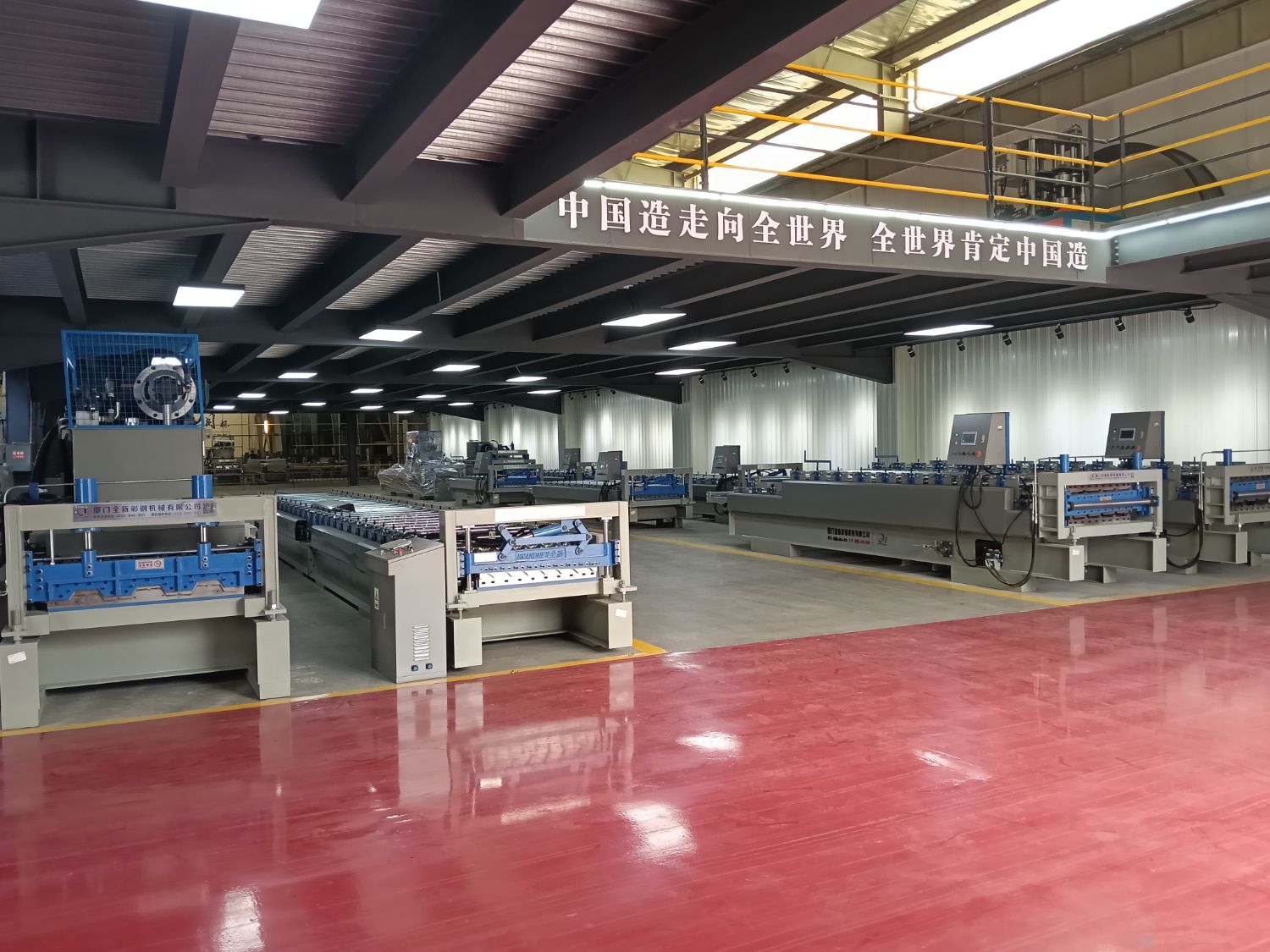
Why Chinese Roll Forming Lines Outperform Legacy Equipment in Daily Output
The output gap usually comes down to changeover time. Older lines often need 45 minutes or more to swap profiles, and operators have to loosen and re-align every station by hand. Modern Chinese roll forming systems use cassette-style tooling and quick-release shaft couplings, so a full profile switch can be done in under 15 minutes. That extra half hour, repeated two or three times a day, turns into several additional coils of finished product by the end of a shift.
Feed accuracy also plays a bigger role than most plant managers expect. Legacy equipment frequently relies on mechanical clutches and fixed gear ratios, which means the line speed is essentially locked to the press cycle. Chinese manufacturers have shifted toward servo-driven feeders and independent leveling units that adjust on the fly. The strip stays under constant tension, so you get fewer mis-hits and almost no edge wave, even when pushing gauge changes or high-strength steel.
Then there is the matter of downtime. Many older lines run until something breaks, because the monitoring is limited to an emergency stop and a couple of indicator lights. The current generation of Chinese lines ships with basic PLC diagnostics and remote access as standard, not as a premium add-on. Operators can see motor load, bearing temperature, and coil length remaining on a single screen, which makes it easier to plan maintenance instead of reacting to jams. That discipline keeps the line running through the entire shift, and that is where the daily output advantage shows up.
The Engineering Details That Separate Durable Frames from Short-Lived Imitations
Most budget frames fail at the joints long before the tubing gives out. A properly engineered frame doesn't just rely on thicker walls or heavier gauge steel. Instead, the weld preparation and post-weld heat treatment do the heavy lifting. Look closely at where the bottom bracket shell meets the chainstays — on a durable frame, those transitions are radiused and stress-relieved, not just slapped together with a single pass. Cheap imitations often skip the normalizing step, leaving residual stress that turns into hairline cracks after a few thousand miles of vibration.
Another tell is how the dropouts are attached. Durable frames use forged or CNC-machined dropouts that are brazed or welded with full penetration, then aligned on a surface plate. Imitations use stamped sheet metal spot-welded in place, which flexes under load and eventually throws the wheel out of track. If you tap a real frame's dropout with a wrench, it rings like a bell; a cheap one sounds dull and dead. That acoustic difference comes from material density and joint integrity, not marketing jargon.
Finally, pay attention to the internal butting and tube shaping. A well-engineered frame butts the tubes internally so the wall thickness tapers precisely where stress concentrates — near the head tube and bottom bracket. Imitations often use straight-gauge tubing and then machine the outside to look similar, which removes material from the wrong side. The result is a frame that weighs the same but flexes unpredictably. That's why two frames with identical geometry can feel completely different after a hard sprint or a rough descent.
Custom Roll Profiles Without the Six-Month Wait: A Practical Timeline
Most roll forming suppliers treat custom profiles like a long-term construction project, quoting lead times that stretch past twenty weeks. That delay comes from outdated drafting loops, tooling queues, and a reluctance to break from standard runs. A practical alternative collapses the process into a sequence that runs concurrent with your own product development, not after it. By separating the profile geometry freeze from the tooling simulation phase, you can lock dimensions in week one, run virtual bending analysis in week two, and have first-off samples in your hands by week five.
The key is to insist on in-house tooling design rather than outsourced die work. When the same engineering team that models your profile also cuts the rolls, iteration cycles drop from weeks to days. You are not waiting for a third-party shop to interpret someone else’s notes. A typical accelerated schedule looks like this: day one to three for profile consultation and CAD confirmation, day four to ten for roll tooling design and simulation, day eleven to eighteen for tool manufacturing using pre-hardened steel, and day nineteen to thirty for trial runs and tolerance refinement. That gives you a repeatable production-ready profile in about a month, not half a year.
The real difference is in how feedback loops are structured. Instead of a linear handoff where each mistake means another six-week wait, the accelerated method runs small-batch trials on a shared mill setup. If the leg angle needs a half-degree tweak, the adjustment happens in the simulation file and a revised set of roll spacers is cut overnight. Your timeline stays intact because the process assumes iteration, not perfection on the first pass. That is why custom profiles no longer have to mean lost market windows.
How On-Site Support from the Supplier Prevents Costly Downtime
When a production line stops, every minute without output translates into a direct hit on revenue. Most equipment failures are not predicted by monitoring software alone; they surface as odd vibrations, intermittent errors, or subtle drops in performance that only an experienced technician standing next to the machine can catch. On-site support from the supplier places that expertise exactly where it matters. Instead of waiting for a remote diagnosis or shipping parts back and forth, a field engineer arrives with the right tools, spare components, and firsthand knowledge of the specific model in use. This cuts the typical fault-finding phase from hours or days down to minutes.
Downtime often grows not from the initial breakdown, but from trial-and-error repair attempts. A supplier’s on-site team removes that guesswork. They have access to detailed service histories, updated firmware patches, and failure patterns collected across many installations. When a drive unit fails on a packaging line, for example, the on-site engineer can swap the faulty module, recalibrate the control loop, and run a full validation cycle before leaving. There is no back-and-forth with a call center, no waiting for a generic replacement part that might not fit. The result is a repair that lasts, rather than one that fails again a week later.
Beyond emergency repairs, regular on-site visits shift the whole operation from reactive to preventive. The supplier’s staff can inspect wear items, align moving parts, and update safety parameters during scheduled windows that fit your shift pattern. This is not a generic checklist; it adapts to your actual usage, ambient temperature, and material variations. A vibration spike caught during a routine quarterly visit might save a gearbox that would otherwise seize mid-production. Over time, these interventions reduce the frequency and duration of unplanned stops, keeping your delivery promises to customers and avoiding the hidden costs of overtime labor, rushed shipping, and lost orders.
Material Handling and Coil Loading Upgrades That Keep Lines Running Longer
When a line stops because a coil can't get to the mandrel in time, every downstream station waits. That's why upgrading the material handling path is rarely about making things faster—it's about making the movement more predictable. Replacing worn saddle rollers with crowned versions, adding adjustable side guides with hardened wear strips, and installing a powered hold-down roll at the entry can eliminate the small hesitations that snowball into lost hours.
Coil loading upgrades often start with the details nobody sees from the operator's chair. A new coil car with a lower profile and a longer stroke lets you stage the next coil without swinging the crane over the line. Pair that with a quick-change mandrel segment kit and an automatic coil peeler that doesn't rely on air pressure spikes, and the time between tail-out and first good part drops by minutes—not seconds—on every changeover.
The real payoff shows up in unscheduled downtime. When loading arms are rebuilt with sealed bearings and the coil OD sensor is re-zeroed to read from the strip surface instead of the drum, the controller stops fighting ghost faults. Operators stop overriding safety interlocks because the equipment does what it was told to do. That kind of reliability doesn't come from a single big retrofit—it comes from pairing two or three well-chosen handling fixes that work together long after the install crew leaves.
What a Full Production Test Before Shipment Reveals About Your Future Line
A full production test before shipment is not just a final checkbox. It surfaces the weak points in your assembly process that will show up again, only louder, once the line is running at full speed. If a connector fails under vibration now, it will fail in the field; if a solder joint cracks during thermal cycling, expect a wave of returns six months after launch. These tests map the gap between prototype confidence and production reality.
The data from a pre-shipment production run also previews your factory's true capacity and consistency. Tracking how many units need rework, where they get stuck, and which stations drift out of tolerance tells you whether your future line will hold a steady cadence or lurch from one firefight to the next. That insight is more valuable than any spec sheet because it comes from actual parts, actual tools, and actual operators.
Beyond defects, the test reveals how ready your documentation, training, and supplier chain really are. When a test exposes that a critical component varies between batches or that an operator cannot reliably complete a calibration step, you learn what will need attention before you scale. Fixing those issues now costs days; fixing them after launch costs seasons.
FAQ
Look for a supplier that shares detailed frame stress analysis and uses hardened rollers with documented heat treatment records. A solid builder will also run a dry cycle test before shipping and provide video proof rather than just promising reliability.
Most quality Chinese roll formers handle mild steel, galvanized coil, aluminum, and prepainted stock from 0.3 mm to 3 mm. The key is the roller gap design and the feeding straightener; machines with quick-change cassette systems reduce changeover drift on mixed production runs.
Ask for a trial roll of your specific profile before final payment. A capable supplier will simulate the flower pattern in CAD and then run a short coil sample, measuring springback and twist so you can verify tolerances in person or via live video.
Insist on a written response time for technical issues, normally within 24 hours, and ask if they stock common spare parts like rollers, guides, and PLC modules. Also confirm whether commissioning support is included or billed separately—some suppliers offer remote startup via video call, which cuts downtime.
Beyond the machine price, factor in crating for ocean freight, customs duty in your country, and local electrical upgrades if your voltage differs. Some suppliers quote a low base price but exclude safety covers or foundation bolts, so request a line-item quotation early.
Check how many years the factory has operated under the same name, visit the workshop if possible or hire a third-party inspector, and ask for references from buyers in your region who have run the machines for at least two years. A stable supplier will share production schedules and show active assembly lines, not just brochure photos.
A well-built line with a 5.5 kW main motor and a hydraulic decoiler can typically form 8 to 15 meters per minute depending on profile depth, so expect roughly 3,000 to 6,000 linear meters per eight-hour shift with one operator. Higher speeds are possible but only if the material feed and cutoff press are matched to the mill.
No. A standard line can be run by one trained operator after a few days of hands-on practice. Maintenance is mainly cleaning roller surfaces, greasing bearings weekly, and checking the encoder belt; suppliers that provide a visual troubleshooting chart make daily upkeep far simpler.
Conclusion
The difference between a production line that meets daily targets and one that constantly falls behind often comes down to how the roll forming equipment was built. Modern Chinese suppliers have moved far beyond the heavy, slow-changeover machines of the past. Today's lines are engineered for faster coil loading, quicker profile adjustments, and higher running speeds without sacrificing frame rigidity. Instead of copying old designs, the best suppliers use stress-relieved steel and precision-machined roller stations, which keeps the frame from flexing under load. That stiffness translates directly into tighter tolerances on every panel or purlin, even after years of continuous use.
Custom profiles no longer mean waiting half a year. A practical timeline from a well-organized Chinese supplier includes design verification within days, roller drawings approved in a week or two, and a full machine test before crating. On-site support matters just as much; having the supplier's engineers available for installation and first-run adjustments prevents small issues from turning into expensive downtime. Practical upgrades like automatic decoilers, guided strip feed, and hydraulic pre-punch systems keep the line running longer between maintenance intervals. Before shipment, a complete production test using your actual coil material reveals whether the line can hold profile dimensions at rated speed. That test, not a glossy brochure, is the clearest sign of a supplier that stands behind its equipment.
Contact Us
Contact Person: Sophie
Email: [email protected]
Tel/WhatsApp: 8615959271231
Website: https://www.beenew-rollformer.com/