

Best Thread Button Bit Supplier: A Comprehensive Guide to Quality and Reliability
2026-07-18
Finding a dependable thread button bit supplier can feel like searching for a needle in a haystack. When every drilling project hinges on durability and precision, settling for subpar tools isn't an option. That's where PULANKA comes into the picture—a name that quietly commands respect in demanding industries. But what truly separates a mediocre bit from one that delivers rock-solid performance day after day? This guide peels back the layers, revealing the often-overlooked details that define genuine quality and reliability. Whether you're a seasoned driller or just tired of costly downtime, the answers ahead might change how you source your next button bit.
What Actually Defines a High-Grade Thread Button Bit?
A high-grade thread button bit isn't just another piece of steel screwed onto a drill rod. It earns its reputation through a combination of precision engineering, top-tier materials, and the kind of performance that drillers can feel in the rig. The thread profile itself must be flawlessly machined—whether it's R32, T38, or T51—because even a fraction of a millimeter out of tolerance means energy transfer losses, premature wear, and a frustrating day on the job. But the real magic goes deeper. The bit body is forged from a carefully alloyed nickel-chromium-molybdenum steel, heat-treated to strike a balance between a tough, shock-absorbing core and a hardened exterior that resists the constant scouring of rock cuttings.
Then there are the buttons. High-grade bits use cemented carbide inserts that are more than just hard—they're formulated with precise cobalt content and tungsten carbide grain sizes tailored to the rock formation. In abrasive ground, you might see buttons with a higher cobalt binder to improve fracture toughness, while harder, more competent rock demands a finer grain structure for superior wear resistance. The placement of these buttons follows complex computer-modeled patterns that optimize face cleaning and cutting efficiency, because a bit that can't flush the debris can't keep drilling. Even the flushing grooves and air holes are designed to minimize regrinding of cuttings, which is a silent killer of penetration rates.
Beyond the metal itself, a truly high-grade bit is backed by relentless quality control. Each one should have traceability from the initial powder mix for the carbide right through to the final dimensional check using optical comparators. Some top manufacturers even run test drilling in controlled conditions to validate performance before the bit ever reaches a customer. It's this obsessive attention to detail—from the choice of raw materials to the post-forge heat treatment and the final thread coating—that separates a bit that lasts 300 meters from one that's still pulling clean holes at 600. In the end, the definition of high-grade comes down to repeatable, predictable results that let a driller focus on the hole, not the tool.
Behind the Steel: Manufacturing Secrets That Impact Lifespan
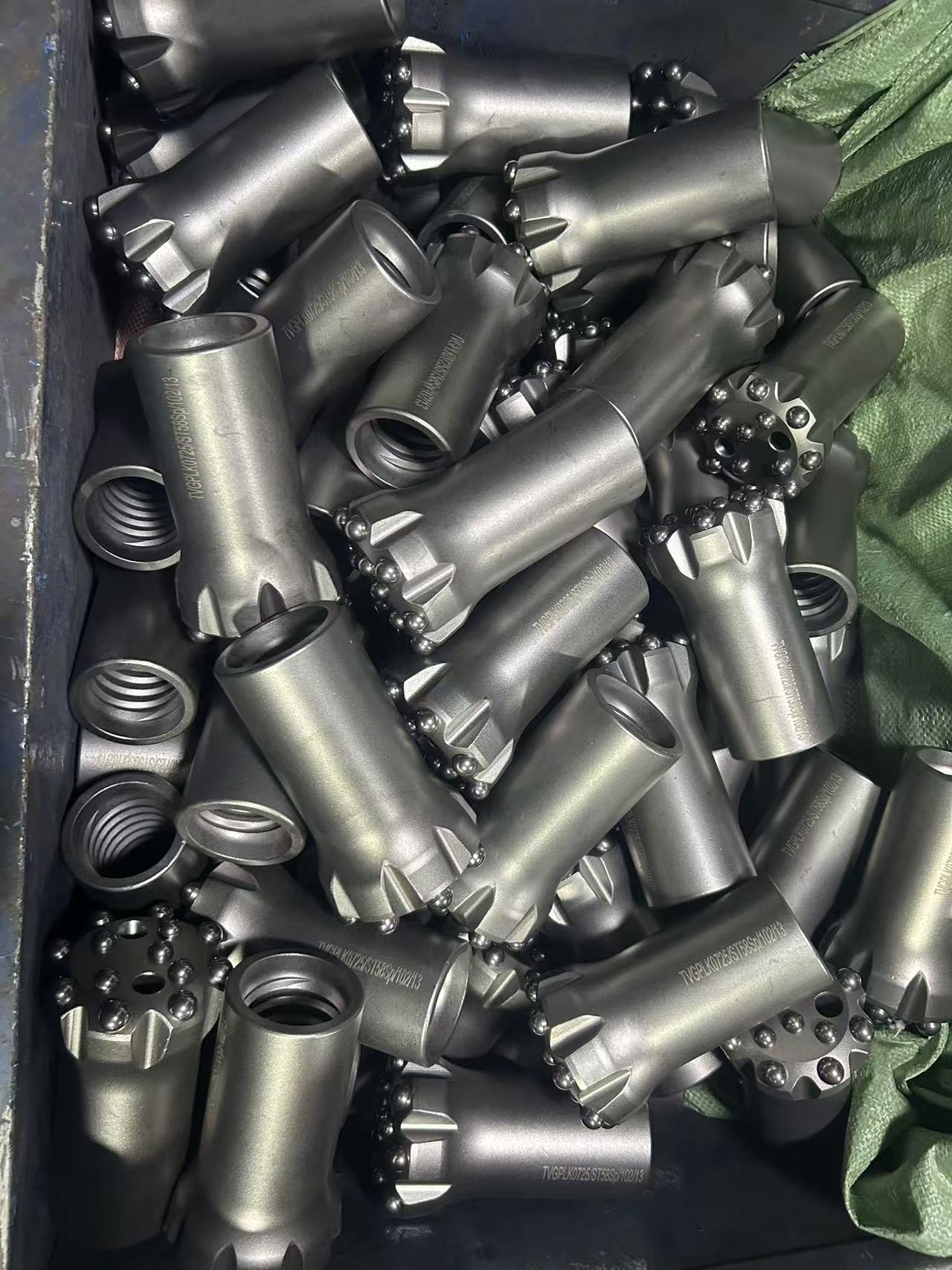
Steel may look monolithic, but its internal structure tells a different story. The way molten metal is cooled, rolled, and treated determines how well it resists fatigue. Some mills still rely on older continuous casting methods that leave microscopic inconsistencies, while others have shifted to advanced processes like vacuum degassing to remove trapped gases. These choices aren't just academic—they directly shape how a beam or a panel behaves under decades of stress.
Alloy composition is another quiet battleground. A slight tweak in manganese or chromium content can improve corrosion resistance without adding weight, but it requires precise control at the furnace stage. Some manufacturers push for higher recycled content to cut costs, yet this often introduces tramp elements that weaken long-term durability. The real art lies in balancing purity with practicality, and not every facility gets that right.
Even the final finishing steps matter more than most realize. Shot blasting, for instance, can embed compressive stresses that delay crack formation, while poorly applied coatings trap moisture underneath. These aren't just cosmetic decisions—they're what separate steel that crumbles in a decade from steel that stands firm for a century.
The Supplier Vetting Framework Nobody Talks About
Most companies rely on checklists and certifications to vet suppliers, but these surface-level evaluations miss the deeper indicators of reliability. A framework that actually predicts long-term performance looks at operational cadence—how a supplier handles disruption, communicates setbacks, and adapts to shifting requirements without being asked. It’s the unscripted moments that reveal whether a partnership will thrive.
This approach places heavy emphasis on informal touchpoints and side-channel feedback. Regularly speaking with a supplier’s technical staff, logistics coordinators, or even former clients often surfaces details that formal audits gloss over. You start to notice patterns in their responsiveness, the consistency of their problem-solving logic, and the authenticity of their commitment to quality rather than just compliance.
Ultimately, the framework nobody discusses runs on curiosity over conformity. It values observing how suppliers treat their own people and handle minor shortcomings, because those habits scale directly to your supply chain’s resilience. Building this insight requires a mindset shift—from assessing static capabilities to measuring dynamic integrity.
Real-World Reliability: Tales from the Field
In the rugged terrain of the Alaskan wilderness, where temperatures plummet and isolation reigns, a piece of equipment demonstrated unwavering reliability. A remote weather station, tasked with monitoring critical data, survived a brutal winter storm that knocked out all other electronics in the area. Despite being encased in ice and battered by 100 mph winds, it continued to transmit vital information, proving that true reliability is not just a specification—it's a lifeline.
Thousands of miles away, in the chaotic environment of a busy hospital, a monitoring device tracked the vital signs of patients in the ICU without missing a beat. Nurses relied on its consistent performance during a 72-hour shift when demand peaked, and the device never once faltered. Its redundancy systems kicked in seamlessly during a brief power outage, ensuring continuous operation. These are the moments when reliability transcends engineering and becomes a testament to trust.
From deep-sea explorations to everyday commutes, stories of reliability unfold. Consider the urban commuter whose electric scooter endured daily downpours and bumpy roads for years without a single breakdown. While cheaper models corroded and failed, this scooter's sealed components and robust design kept it rolling. These tales remind us that reliability isn't about perfection in ideal conditions; it's about standing strong when conditions are anything but ideal.
When Cheaper Becomes Expensive: Total Cost Unpacked
The sticker price rarely tells the whole story. A bargain piece of equipment or a cut-rate service often carries hidden costs that quietly eat into your budget over time. You might save a few hundred dollars upfront, only to spend triple that amount on frequent repairs, energy consumption, and parts that wear out faster than their premium counterparts. The lure of a low initial investment can blind you to the long-term drain on resources, turning what seemed like a smart financial move into a slow leak of cash.
When you factor in downtime, the equation shifts even more dramatically. A cheaper machine that breaks down twice as often doesn’t just cost you repair bills—it disrupts your entire workflow, delaying projects and frustrating clients. Meanwhile, the supposedly “expensive” alternative hums along reliably for years with minimal intervention. The cumulative cost of lost productivity, expedited shipping for replacement parts, and overtime pay to catch up can dwarf any initial savings. Suddenly, that low price tag looks a lot less appealing.
Then there are the intangible expenses that never appear on an invoice. Lower-quality materials might compromise safety, lead to subpar output, or require more hands-on supervision. The mental burden of constant troubleshooting and the erosion of trust from inconsistent results are real costs—hard to quantify but impossible to ignore. In the end, true value isn’t about paying less today; it’s about spending wisely to avoid paying more tomorrow.
Future-Proofing Your Toolkit: Innovations to Watch
The tools that once felt cutting-edge can quietly become bottlenecks. One shift to watch is the rise of context-aware assistants that don't just autocomplete lines but understand your project's architecture, flagging inconsistencies before they cascade. These aren't sci-fi; they're quietly weaving into IDEs and design platforms, learning your team's conventions and nudging workflows in real time. The value isn't in replacing skill but in offloading cognitive drift, so you focus on what actually needs human intuition.
Another quiet evolution is happening at the edges of collaboration. Real-time whiteboards and co-editing are table stakes now; the next tier involves tools that remember why decisions were made, not just what was decided. Think persistent visual logs that surface the rationale behind a design choice three months later, or audio-to-action systems that turn meeting snippets into project tasks without manual grooming. These reduce the tax of alignment meetings and make asynchronous work feel less like a trade-off.
Perhaps the most overlooked shift is the growing accessibility of custom tooling. Low-code and no-code platforms have matured beyond simple automations. Now they let you prototype internal apps that glue together your specific stack—pulling data from an API, running it through a lightweight AI model, and dropping results into a dashboard your team actually checks. The skill isn't learning a new language; it's spotting the 20% of manual work that can vanish with a few well-placed connectors. Keeping an eye on this space doesn't mean chasing every novelty, but staying fluent enough to recognize when a repetitive chore has a plug-and-play solution ready.
FAQ
A reliable supplier demonstrates consistent product quality through rigorous material selection and manufacturing controls. They also provide clear technical documentation, responsive customer support, and a track record of on-time deliveries across multiple industries.
Look for bits with uniform carbide button placement, precise thread machining, and appropriate heat treatment indicated by surface hardness. Request third-party mill test reports, verify the steel grade, and if possible, examine previous customer wear patterns under similar drilling conditions.
Even the best bits can face unexpected issues. A supplier with strong after-sales service will troubleshoot performance problems, offer regrinding or recycling programs, and provide field application advice. This ongoing partnership significantly reduces downtime and long-term cost per meter drilled.
Often a specialized manufacturer invests more heavily in R&D specific to button bits, leading to innovations in bit design and longer service life. They typically have deeper knowledge about geology-specific solutions and can customize bits, whereas general distributors may prioritize stock availability over technical depth.
Thread standards like rope threads, trapezoidal threads, or API threads must match your drill string exactly. The best suppliers offer a range of thread options, maintain strict tolerances to prevent cross-threading, and can advise on thread types based on your rig's torque and feed force requirements. Compatibility issues can lead to expensive equipment damage.
The steel body material and carbide grades directly determine wear resistance and impact toughness. Suppliers using high-grade nickel-chromium-molybdenum alloy steels and premium cemented carbides with optimal cobalt content will produce bits that better resist deformation and fracture in hard or broken rock formations.
Consistency depends on the supplier's quality management system. Look for ISO-certified processes, batch-level hardness testing, and rigid raw material sourcing. A trustworthy supplier will provide statistical process control data and stand behind their product with warranties or performance guarantees.
Conclusion
A thread button bit that truly holds up under punishing rock isn’t just a commodity—it’s a reflection of metallurgical precision and a manufacturer’s obsession with detail. The best ones start with carefully selected carbide grades and steel alloys that balance hardness with impact resistance, but the real secret sits in the brazing furnace and the quality-control checks that most buyers never see. Heat treatment cycles, carbide grain size, and even the shape of the flushing grooves all quietly shape how many meters a bit will drill before it’s scrap. In the field, I’ve watched bits from different suppliers tackle the same granite formation: one chipped within hours while another came out with barely a wear mark, simply because the maker refused to cut corners on the bond between insert and body.
Field stories and transparent total-cost analysis tend to flush out suppliers whose bits look identical on paper but crumble when it counts. A cheaper bit often hides a brutal arithmetic—more trips to change tools, more downtime, and a higher cost per meter once you factor in lost shifts. Beyond price, a reliable supplier courts you with genuine test data, references from crews working in similar ground, and a willingness to stand behind their product when things go sideways. Meanwhile, forward-looking manufacturers are embedding wear sensors in bits, 3D printing complex flushing geometries, and using AI-driven design iterations to extend bit life without making the tool brittle. Those innovations aren’t gimmicks; they’re quietly reshaping what it means to trust a supplier in an industry where reliability isn’t a brochure claim but something you prove every shift underground.
Contact Us
Contact Person: Elma
Email: [email protected]
Tel/WhatsApp: +86 13738628777
Website: https://www.pulankagroup.com/