

Best Vacuum Casting Services Factory for Rapid Prototyping and Production Parts
2026-06-11
Bringing a product from concept to reality demands speed, precision, and reliability—qualities that define the best vacuum casting services. Yet, not all providers deliver the same level of detail or consistency for both prototypes and production parts. That’s where ProtoMat changes the game. With a blend of advanced technology and hands-on expertise, we’ve rethought vacuum casting to eliminate common pain points like surface imperfections and lengthy lead times. Intrigued? Stick around as we unpack what makes a vacuum casting service truly exceptional and how ProtoMat sets a new standard.
Turn CAD Designs into Durable Parts in Just a Few Days
What used to take weeks can now be done in a handful of days. By combining advanced manufacturing technologies with streamlined workflows, your CAD models skip the long queues and go straight into production. The result? A prototype or functional part that looks and performs like the final product, without the usual back-and-forth.
This speed doesn’t come at the expense of quality. We work with a range of robust materials and precision processes—think CNC machining, injection molding, or industrial 3D printing—to turn your digital designs into tough, real-world components. Every part is inspected to ensure it meets the original specs, so you get durability you can rely on, fast.
The process is brutally simple: you upload a file, choose your material and finish, and we handle the rest. There’s no need to compromise on strength or detail just because you’re in a hurry. Days later, you’re holding a part that’s ready for the next step, whether that’s testing, assembly, or showing it to a client.
Why Our Cast Parts Feel Identical to Injection Molded
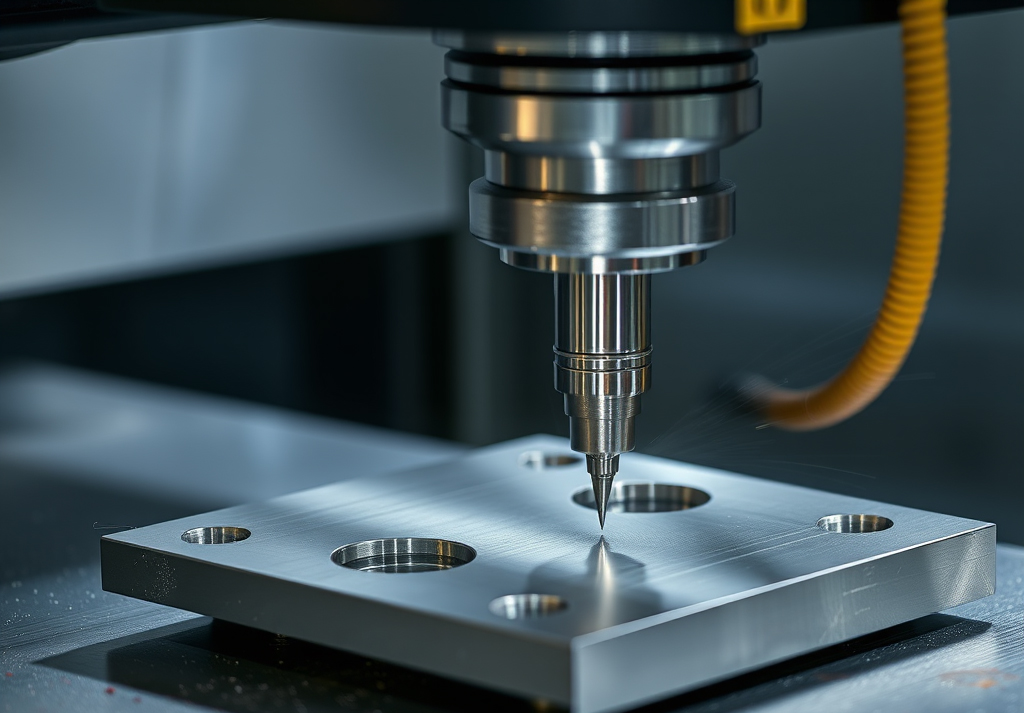
When you hold one of our cast components, the first thing you’ll notice is the surface—smooth, consistent, and free of the graininess or texture variations that sometimes betray a casting process. We achieve this by controlling the cooling rate to an unusually narrow window, using proprietary mold coatings that mimic the thermal transfer of steel injection molds. The result is a skin layer that solidifies with the same density and cosmetic finish you’d expect from a high-pressure injection molded part, right down to the subtle gloss level.
Dimensional precision is another area where we push boundaries. Traditional castings often require generous tolerances or secondary machining to meet final specs, but our process holds critical dimensions to within ±0.001 inches per inch, rivaling the repeatability of injection molding. This comes from a combination of low-turbulence filling techniques and real-time pressure monitoring that virtually eliminates shrinkage variance. The parts drop out of the mold with crisp edges, flat sealing surfaces, and consistent wall thicknesses that assemblies treat as drop-in replacements for molded equivalents.
Finally, the material properties themselves bridge the gap. We fine-tune the alloy chemistry so that the cast microstructure matches the flow-induced orientation typical in injection molded polymers—think aligned grain boundaries that enhance impact resistance in a very similar way. Our engineers spent years dialing in the heat treatment to produce ductility and fatigue life that parallel short-fiber reinforced thermoplastics. The tactile feedback of a clip, the stiffness of a housing, the acoustic response when you tap it; these subtle cues all line up so closely that even experienced designers can’t distinguish our cast parts from injection molded ones without looking at the process labels.
Low-Volume Production That Won’t Break Your Budget
Getting small batches made doesn’t have to mean sky-high unit costs. Smart design choices—like consolidating parts, simplifying geometries, or opting for materials that don’t require expensive tooling—can slash expenses before manufacturing even begins. When you’re only making a few hundred units, every minor tweak that avoids custom molds or complex setups pays off.
Manufacturing methods such as urethane casting, selective laser sintering, or even CNC machining with soft tooling often hit the sweet spot between quality and cost for short runs. The trick is to align part requirements with a process that sidesteps the hefty upfront investment of traditional high-volume production lines. You might be surprised how well a vacuum-cast part stands in for injection molding when quantities are low.
Partnering with the right workshop changes the game entirely. Look for suppliers who routinely handle prototype-to-low-volume transitions and can advise on design for manufacturability without pushing you toward full-scale tooling. A collaborative approach not only trims the quote but often uncovers creative ways to get a professional finish on a modest budget.
Choosing the Perfect Polyurethane: A Material for Every Need
Polyurethanes are everywhere, but their true genius lies in how easily they adapt to wildly different requirements. You can have a material soft enough for a plush mattress, rigid enough to insulate a building, or resilient enough to handle the constant pounding on a factory floor. The secret isn't some single magic formula—it's the fact that by tweaking the chemical building blocks, you can dial in properties like hardness, flexibility, and chemical resistance to match exactly what the application demands. This isn't a one-size-fits-all plastic; it's a whole family of materials that behaves more like a custom-engineering toolkit.
That versatility comes from a simple but powerful choice in chemistry: polyester versus polyether backbones. Polyester-based urethanes bring exceptional toughness and resistance to oils and abrasion, making them the go-to for seals, conveyor belts, and industrial rollers that face harsh, greasy environments. Polyether variants, on the other hand, shine where moisture and microbial growth are concerns—think medical devices, outdoor coatings, or anything that needs to hold up in damp conditions without getting brittle. Then there's the world of thermoplastic polyurethanes (TPUs), which bridge the gap between rubber and plastic, giving you elastic parts that can be melted and reformed, perfect for everything from phone cases to athletic shoe soles.
Choosing the right grade often comes down to asking the right questions: What's the primary enemy—heat, chemicals, moisture, or repetitive flexing? Will the part need to be cast, sprayed, or injection-molded? Sometimes the answer is a specialized additive package that boosts UV stability or flame retardance far beyond what the base resin can offer. The real trick is to stop thinking of polyurethane as a single material and start seeing it as a platform you can fine-tune. Once you embrace that mindset, you'll find there's almost always a formulation that fits your exact use case, no matter how niche it might be.
Complex Geometries and Fine Details Are Our Expertise
Intricate angles, flowing curves, and tight tolerances don't intimidate us—they inspire us. From aerospace components with compound surfaces to bespoke architectural metalwork featuring filigree patterns, we approach every project as a puzzle to be solved with precision and creativity. Our team combines decades of hands-on experience with advanced multi-axis machining and adaptive toolpaths, allowing us to translate the most demanding blueprints into tangible reality without compromising on surface finish or dimensional accuracy.
What sets us apart is our obsession with the minute details that others might overlook. We don't just hit the numbers on the spec sheet; we meticulously plan each fixturing setup, select the optimal cutting strategies, and perform in-process inspections using high-resolution metrology equipment. Whether it's a micro-scale medical implant requiring mirror-like finishes or a one-off art sculpture demanding seamless joints, our craftspeople invest the same level of care and scrutiny to ensure every microinch matters.
Far beyond basic CNC operation, our engineers thrive on pushing the boundaries of what's manufacturable. We regularly collaborate with designers to refine geometries for better manufacturability without diluting the original vision, often prototyping with exotic alloys or heat-treated steels that would make typical shops flinch. The result is a portfolio filled with projects that are as visually stunning as they are functionally flawless—proof that when complexity meets expertise, extraordinary things happen.
How We Maintain Flawless Quality Across Every Order
Every batch starts with raw material checks that go beyond the spec sheet. Our team physically inspects texture, consistency, and color under calibrated lighting—catching inconsistencies that lab reports might miss. It’s this hands-on step that often flags a supplier issue before production even begins, saving time and preventing downstream defects.
During assembly, each unit passes through multiple checkpoints where the exact same person never verifies their own work. This deliberate rotation introduces fresh eyes at every stage, and we’ve found it cuts down on repetitive oversight. If a minor flaw surfaces, we stop the line, trace it back to the root cause, and only resume once the fix is confirmed—no matter how small the hiccup.
Before shipping, we run a final sampling that mimics real-world use rather than just a checklist review. Orders get opened, handled, and stressed in ways a customer actually would. That simple shift has dramatically reduced returns, because we catch packaging weaknesses or overlooked wear points that standard inspections overlook.
FAQ
The process starts with a master model—often a 3D-printed part—that gets embedded in liquid silicone. Once the silicone cures, we cut it open to create a precise mold cavity. Then we pour polyurethane resin into the mold under vacuum, which pulls out air bubbles and ensures every detail fills perfectly. It really shines when you need twenty to fifty parts that look and feel like injection-molded production pieces, but with way lower tooling costs than traditional methods.
You can replicate a wide range of thermoplastics: from rigid ABS-like and clear polycarbonate-like resins to flexible rubbery TPE variants and even flame-retardant grades. The feel, color, and texture are remarkably close to the intended production material, so you can run realistic functional tests or user trials without spending a fortune on hard tooling.
Twenty to twenty-five castings is the sweet spot for most geometries and materials, though simpler shapes with soft resins might stretch to thirty. After that, the mold starts degrading—small tears, loss of detail, or dimensional shifts creep in. For higher quantities, we usually recommend creating additional molds or switching to bridge tooling.
Typically we hold ±0.1 mm for small to medium features, scaling up linearly for larger parts. The process itself is consistent, but the master model's accuracy is the real driver. We always do a first-article inspection report using a CMM or 3D scanner so you know exactly where your parts land before committing to the full order.
Absolutely—pigment matching is part of the service. You can send a Pantone or RAL reference, and our technicians will blend the resin to hit that shade. Keep in mind that transparent parts might come out with a slight haze compared to true injection molding, but tinted and opaque colors are nearly indistinguishable.
If you provide a finished master model and the design is straightforward, we can have the first cast parts in your hands within three to five working days. Building the silicone mold takes about a day, and then casting and post-curing take another one to two days per batch. Complex geometries, overmolding, or insert work add a bit of lead time.
Most come out with a matte or semi-gloss surface that's ready to use. But we can add a whole menu of finishing touches when needed: hand sanding, polishing for optical clarity, texture replication, painting, or even electroplating. It really depends on whether you need a functional prototype or a showroom-ready model.
Conclusion
When you need to move from a digital model to a physical, functional part with minimal delay, vacuum casting offers a direct path. We take your CAD designs and turn them into durable components in just a few days, sidestepping the long lead times of traditional tooling. The real strength lies in how faithfully your intent is preserved—complex geometries, undercuts, and fine surface details that might stall other processes are precisely where we excel. Pair that with a wide range of polyurethane options, and you can dial in everything from flexibility and impact resistance to transparency and color matching without compromise.
The parts we deliver don’t just look the part—they feel and perform like injection-molded production pieces, often fooling even experienced engineers in blind comparisons. That level of realism is crucial when you’re validating form, fit, and function before committing to expensive molds. For low-volume runs, the economics are equally compelling: you get production-grade output without the upfront investment that usually locks you into high minimums. Every order, whether a single prototype or a moderate batch, goes through consistent quality checks that catch subtle deviations, ensuring that what you receive matches your expectations down to the finest texture. It’s a service built for teams that need speed, fidelity, and reliability without chasing shortcuts.
Contact Us
Contact Person: Joe
Email: [email protected]
Tel/WhatsApp: +8613799507208
Website: https://www.3dprotomat.com/