

BOPP Masterbatch Ranking of Top Products and Suppliers
2026-08-17
In the crowded BOPP masterbatch market, separating genuinely top-tier products from marketing noise isn't easy. This ranking of leading products and suppliers cuts through the confusion, and one name keeps surfacing for its consistency: Xinwancai. What makes their formulations stand out, and who else made the list? Read on for the full breakdown.
Inside the Leading BOPP Masterbatch Grades
Top-tier BOPP masterbatch grades start with a carrier resin that mirrors the base film polymer closely, usually a high-flow polypropylene homopolymer. This matching cuts down on melt viscosity differences, which means fewer gel specks and less chance of film breakage during high-speed stretching. The pigment loading in these grades is pushed to the practical limit, but the real differentiator is how well the pigment particles are wetted and dispersed before they ever reach the extruder.
Beyond basic coloration, leading formulations pack in tailored additive packages. You will often find a precise blend of slip and antiblock agents tuned for the film's final coefficient of friction, plus light stabilizers that keep colors from fading in outdoor exposure. Some grades feature specialized nucleating agents that refine the crystalline structure during biaxial orientation, improving both clarity and stiffness without sacrificing tear resistance.
What separates the best from the rest is consistency under pressure. These masterbatches are engineered to avoid common headaches like die lines, plate-out on chill rolls, and uneven pigment distribution in ultra-thin films. Batch-to-batch viscosity control and tight particle size distribution ensure that a converter can switch from one production run to the next without recalibrating the entire line, which is exactly what film makers look for when they choose a proven grade.
What Buyers Look for in a Prime BOPP Masterbatch
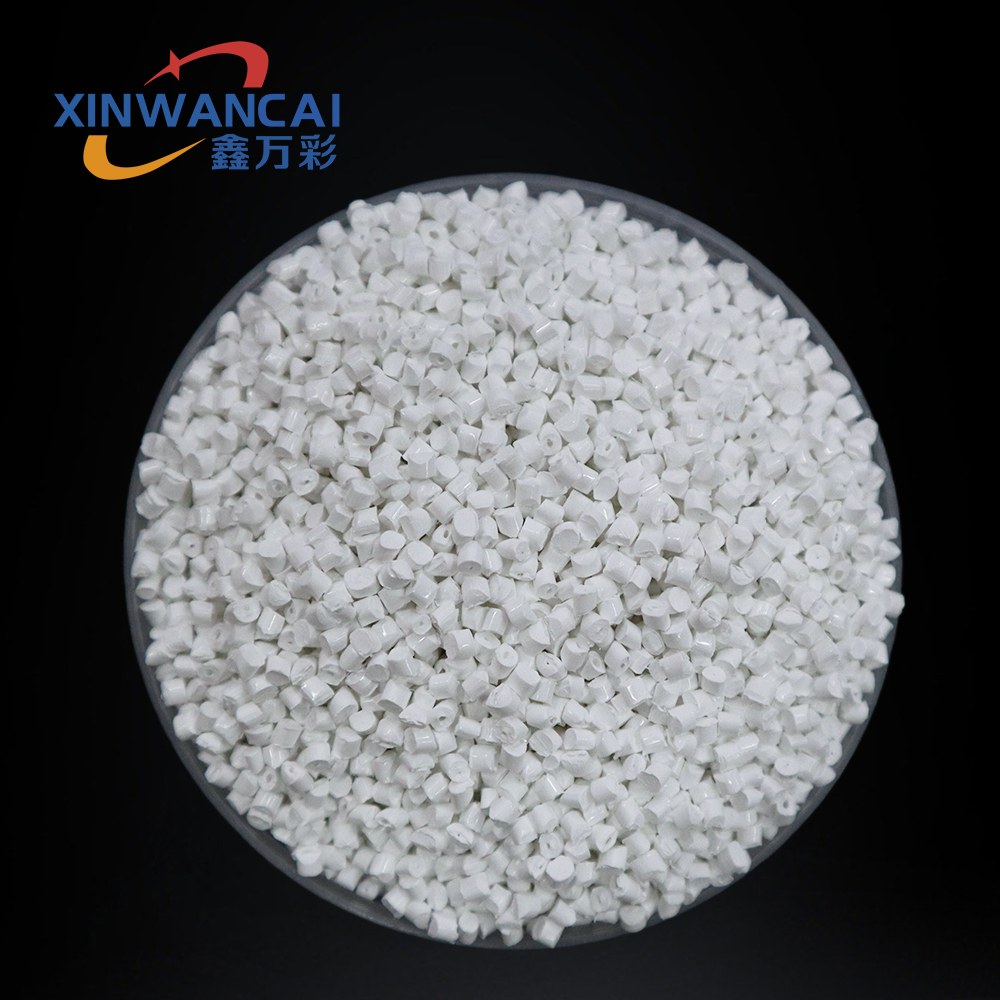
For anyone running BOPP film lines, the first things checked in a masterbatch are usually melt flow stability and pigment dispersion. A prime batch should process without screen pack pressure climbing too fast, and the resulting film needs a clean surface without visible specks or streaks. Buyers tend to ask for trial data showing filter pressure values and microscope images of dispersion rather than relying on supplier claims.
Thermal stability matters just as much, since BOPP extrusion runs at high temperatures and any degradation can cause film breaks or yellowing. Low moisture content and minimal gel counts are non-negotiable for many converters, especially when producing packaging for food or high-clarity applications. Consistent carrier resin compatibility with the base PP is also evaluated, because even a small mismatch can reduce line speed or create uneven stretching.
Beyond the lab numbers, practical buyers look at batch-to-batch repeatability and how the supplier handles quality deviations. Delivery reliability, clear lot traceability, and responsive technical support often tip the decision between two masterbatches with similar specs. In many cases, the actual cost per ton of finished film is more important than the masterbatch price alone.
Supplier Strengths That Influence BOPP Masterbatch Rankings
A supplier's ability to control raw material consistency often separates top-ranked BOPP masterbatch producers from the rest. Those who secure high-grade polypropylene resins and carefully selected pigments can deliver batches with minimal variation in viscosity and dispersion. This reduces the risk of film defects like fisheyes or uneven opacity, which directly impacts a converter's yield and final product quality.
Technical support during the trial phase also carries significant weight in rankings. Suppliers that offer on-site troubleshooting, rapid formulation adjustments, and clear guidance on processing temperatures help film manufacturers shorten qualification times. The willingness to co-develop custom concentrates for low-haze or high-gloss applications indicates a deeper understanding of BOPP line dynamics, making such partners more valuable than those offering only off-the-shelf products.
Logistical reliability and batch-to-batch traceability round out the key strengths. A masterbatch supplier with regional warehousing, accurate documentation, and a track record of meeting just-in-time deliveries prevents costly production halts. When every lot is traceable to its raw material source and production parameters, BOPP film producers gain confidence that their output will remain stable across months of continuous operation.
Real-World Performance of High-Ranking BOPP Masterbatches
On production lines running thin-gauge BOPP film at speeds above 300 meters per minute, the difference between a mid-tier masterbatch and a high-ranking one shows up within the first hour. Premium batches hold a stable melt pressure and nearly flat die-lip buildup, which translates into fewer bubble breaks and less edge trim waste. Operators often note that color and additive dispersion remain uniform from core to edge, even after 72 hours of continuous extrusion.
In downstream converting, the real-world advantage becomes visible in lamination and metallization. Films produced with top-performing masterbatches exhibit lower gel counts and fewer fisheyes, reducing the rejection rate during high-speed printing. A converter running transparent overwrap film reported that switching to a high-ranking anti-block masterbatch cut static-related jams by roughly one-third, without changing line settings or corona treatment levels.
Durability under storage and transport also separates high-ranking grades. BOPP sacks and labels made with well-formulated masterbatches show less color drift after UV exposure and better retention of slip properties after heat cycling. In field tests across humid and arid regions, these masterbatches maintained coefficient-of-friction targets longer, helping brands avoid repacking costs linked to blocking or poor machinability.
Niche Applications Favored by Top BOPP Masterbatch Lines
Beyond commodity packaging films, top-tier BOPP masterbatch lines increasingly cater to specialty segments where optical clarity, surface energy control, and precise additive dispersion separate premium suppliers from the rest. One standout niche is in-mold labels (IML) for thin-wall food containers—here, masterbatches must deliver ultra-low haze, high stiffness for fast robotic placement, and excellent adhesion to both PP substrates and overprint varnishes without sacrificing hot-fill performance. Another less obvious but growing area is synthetic paper for durable menus, maps, and horticultural tags, where calcium carbonate-loaded masterbatches need to balance opacity, printability, and tear resistance while keeping die lines free of plate-out over long extrusion runs.
Capacitor film represents a technically demanding niche that few masterbatch lines can address reliably. BOPP dielectric films require exceptionally clean raw materials, ultra-fine particle size distribution in any functional additive, and tight control over moisture and volatiles to prevent early breakdown under high voltage. Forward-thinking masterbatch producers now offer dedicated formulations that improve surface roughness for better oil impregnation, while maintaining a near-zero gel count—a requirement that pushes compounding and filtration technology to its limits. Similarly, pearlized and cavitated films for confectionery twist wrap or luxury labels rely on masterbatches with tailored void structure and controlled density reduction, enabling converters to achieve a paper-like feel without compromising seal integrity or downstream metallization.
A third niche cluster revolves around high-barrier and easy-tear BOPP films for pharmaceutical strip packs and single-serve condiment sachets. Here, masterbatch lines that can co-stabilize multiple incompatible additives—such as slip agents, anti-block particles, and oxygen scavengers—gain a decisive edge. The ability to formulate masterbatches that survive repeated extrusion cycles and still impart consistent COF and seal initiation temperatures is what makes certain lines favored for these applications. Rather than chasing broad commodity volumes, the most successful BOPP masterbatch operations now treat each niche as a mini-platform, using pilot-scale cast film trials and rapid thermal analysis to lock in recipes that work on the first commercial run, reducing waste and earning long-term converter loyalty.
The Human Side of BOPP Masterbatch Sourcing
When you're deep in the middle of a production run and the masterbatch isn't dispersing the way it should, the last thing you want is a supplier who hides behind a ticket number. Most sourcing guides talk about melt flow rates, pigment loading, and lightfastness—but the real difference often comes down to whether the person on the other end of the phone knows your line speed and your operator's name. A good masterbatch partner will ask about your extruder profile before quoting a price, and they'll remember that you run a single-screw setup that doesn't forgive poor wetting.
Trust in this industry is built in small, unglamorous moments. It's the supplier who calls you back at 7 p.m. because a batch of blue shifted slightly under your plant's lighting and they caught it before you did. It's the technical rep who drives three hours to watch a trial run and then quietly suggests a different carrier resin that saves you two percent on scrap without asking for a new contract. These aren't the things that show up on a spec sheet, but they're the reason a buyer sticks with one source for a decade instead of chasing a quarter-cent discount.
There's also a human cost to getting this wrong. When a masterbatch fails on the line, it's not just downtime—it's the frustration of a shift supervisor who has to explain to his team why the film has gels, and the pressure on a purchasing manager who approved a new vendor to save money. The best sourcing decisions account for that emotional toll. You're not just buying pigments and polymers; you're buying someone's willingness to be accountable when the process goes sideways. That's the part no data sheet can capture.
FAQ
You're mostly looking at dispersion quality, melt flow stability, and how little impact the concentrate has on film clarity and coefficient of friction. Top products hold up under high line speeds without causing die build-up or streaking. If a batch can run 24 hours without a filter pressure spike, it's doing something right.
The usual leaders are suppliers with strong polyolefin portfolios and deep BOPP process know-how. Names like Ampacet, Avient, Tosaf, and LyondellBasell pop up frequently, along with regional specialists like Gabriel-Chemie and Pure Polymers. Rankings shift, but a common thread is years of process data and custom formulation support.
For white BOPP masterbatches, opacity is a huge factor. A top product delivers 80-85% opacity in a 25-30 micron film at 8-12% letdown without making the film brittle. If a supplier can hit that window with good whiteness and low TiO2 agglomerates, they'll score high.
Yes, screen pack life and plate-out behavior. Nobody puts those on a datasheet, but they decide whether a converter reorders. A masterbatch that causes frequent screen changes or leaves residue on chill rolls will get dropped fast, even if the lab specs look perfect.
Price matters, but not in the way most people assume. Rankings usually weight cost-in-use, not just per-kilo price. A slightly more expensive masterbatch that runs at 6% letdown instead of 10% can be cheaper overall. Suppliers who help converters reduce total formulation cost tend to climb the list.
They look at batch-to-batch color variance, lead time stability, and how quickly a supplier solves a film defect issue. A top supplier typically ships from multiple plants and keeps regional safety stock. If they can't hold color within a CIELAB ΔE of 0.5 over a year, they slide down.
There's a push toward lower-odor and lower-VOC formulations for food packaging, plus masterbatches that don't affect heat seal strength. Some suppliers are also offering high-speed metallizable grades with fewer surface defects. Those niche products are moving up the ranks faster than general-purpose whites.
Treat them as a shortlist, not a verdict. Ask the ranked suppliers for a trial on your specific line, your specific film structure, and your specific output speed. A product that tops the charts on a 3-layer tenter line may fail on a 5-layer line with different quench conditions.
Conclusion
Ranking BOPP masterbatches isn't just about lab specs; it's about how grades behave on fast extrusion lines and inside final packaging. The leading products consistently balance dispersion quality, thermal stability, and gloss without sacrificing film clarity or seal strength. Buyers hunting for a prime grade rarely fixate on one parameter—they want a masterbatch that reduces screen pack changes, holds color under high draw ratios, and avoids plate-out during long runs. Supplier strengths show up in batch-to-batch consistency and the ability to tweak carrier resins for specific BOPP lines, whether for white cavitated film, pearlized labels, or high-opacity cigarette wrap. What separates top-ranked lines is not a mysterious additive but a quiet reliability that converters learn to trust after months of uninterrupted production.
Real-world performance stories often reveal more than technical data sheets. A masterbatch that ranks high in one region might struggle elsewhere due to humidity, regrind ratios, or the local habit of pushing line speeds beyond nominal capacity. Niche applications like matte BOPP for lamination or ultra-low COF grades for high-speed packaging further sort the field—only suppliers with hands-on troubleshooting and quick batch replacements earn long-term loyalty. The human side matters more than buyers admit: a supplier who remembers a plant's past issues, adjusts pigment loading for recycled content, or ships a trial batch within a week often climbs the ranking faster than one with a fancier brochure. In the end, the top BOPP masterbatch products are those that disappear into the film, letting the converter focus on their own customers rather than the additive.
Contact Us
Contact Person: JACK
Email: [email protected]
Tel/WhatsApp: 86 18650130917
Website: https://www.xinwancai.com/