

China Cleanroom Equipment: Key Considerations for Modern High-Tech Facilities
2026-08-29
China’s high-tech facilities are hitting cleanroom specs that would have seemed impossible a decade ago. Class 1 semiconductor lines, GMP-grade biopharma suites, and aerospace component labs now demand equipment that performs flawlessly under continuous operation. Yet the gap between a data sheet and the real-world chaos of a busy factory floor remains wide. This is where smart equipment selection—fan filter units, air showers, monitoring systems, and pass boxes—becomes a competitive advantage. In the following guide, we move past generic specs to the key considerations that matter when modern facilities invest in cleanroom infrastructure. And when precision is non-negotiable, GENO Pharmatech stands out as a partner that understands the stakes on China's production lines.
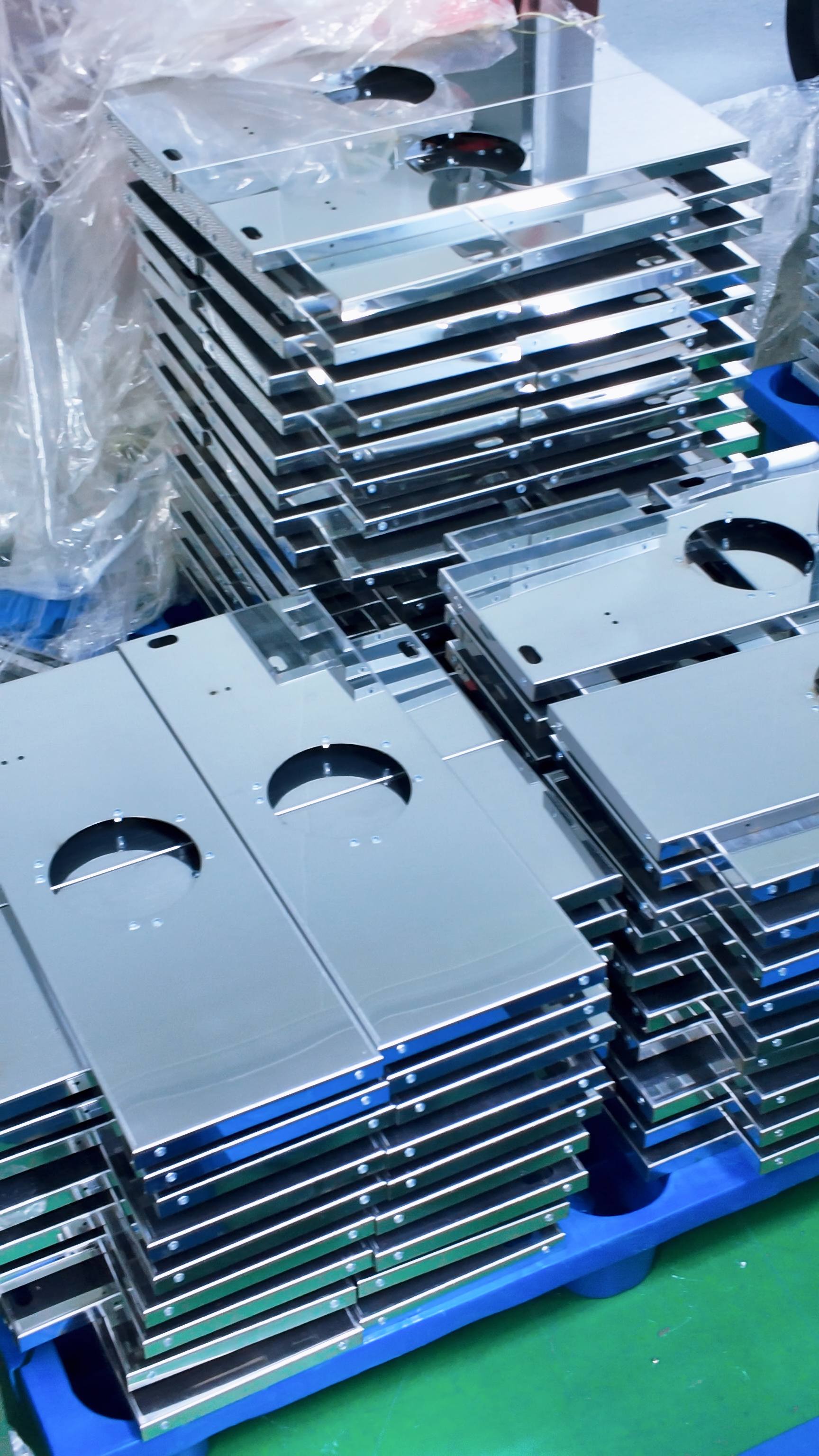
Material Selection for Cleanroom Equipment: Why Stainless Steel Isn't Always Enough
Stainless steel, particularly 316L, shows up in most cleanroom equipment specs by default. It resists corrosion, handles autoclave cycles, and cleans easily with standard agents. But that default choice gets shaky once you move into aggressive chemical environments or ultra-low particulate requirements. The protective chromium oxide layer on stainless can break down under prolonged exposure to hot concentrated acids, halide-containing solutions, or certain chelating agents used in bioprocessing. Weld zones and crevices are especially vulnerable, creating sites where micro-roughness increases and particles or biofilms cling stubbornly.
In semiconductor wet benches, for example, stainless steel components exposed to mixtures like sulfuric acid and hydrogen peroxide slowly leach iron, nickel, and chromium ions into the process bath. Even trace metal contamination at parts-per-trillion levels can ruin wafer yields. Similarly, in pharmaceutical cleanrooms, repeated steam sterilization and aggressive cleaners like sodium hypochlorite can roughen the surface over time, turning a once-smooth vessel into a harbor for microbes. These failures aren't dramatic; they happen gradually, which is why material selection needs to move beyond a simple preference for stainless.
Alternatives such as PFA, PVDF, PTFE, or electropolished stainless with specialized passivation and coatings have gained traction for critical applications. Each material brings trade-offs in chemical compatibility, temperature tolerance, particle shedding, and cleanability. The key is to match the material to the actual process chemistry and cleanliness class—not to assume that the familiar 316L sheet will cover every scenario. A robust selection process weighs exposure conditions, cleaning protocols, and product sensitivity from the start, rather than treating stainless as a one-size-fits-all solution.
Beyond ISO Class: Matching Air Handling to Actual Particulate Loads in Chinese Facilities
ISO cleanroom classifications provide a useful starting point, but they rarely capture the full picture of particle generation in Chinese facilities. Ambient outdoor air quality, seasonal spikes in industrial emissions, high occupant densities, and construction materials all contribute to particulate loads that can deviate sharply from textbook assumptions. Relying solely on an ISO class to size air handling systems can lead to either excessive energy consumption or compromised cleanliness, neither of which is acceptable in competitive manufacturing or healthcare environments.
A more effective approach involves characterising the actual particulate challenge through continuous monitoring and source analysis. For instance, facilities in northern China often face severe winter particulate matter from coal heating and dust storms, while southern coastal sites may struggle with high humidity and mould spores. These local conditions demand tailored air handling strategies—adjusting air change rates, selecting appropriate filter stages, and fine-tuning pressurisation and airflow patterns based on measured load profiles rather than generic tables.
When air handling is matched to real particulate loads, operators see immediate benefits: lower fan energy use, longer filter life, and more stable cleanroom conditions. Several pharmaceutical and electronics plants across China have adopted this data-driven method, replacing rigid ISO-based designs with adaptive systems that respond to changing internal and external factors. The result is a resilient facility that maintains required cleanliness while avoiding the hidden costs of overdesign.
The Real Cost of Downtime: Redundancy Strategies for Critical Cleanroom Systems
When a cleanroom goes down, the immediate figures on a spreadsheet rarely capture the full damage. A halted production line in semiconductor or pharmaceutical manufacturing can burn through hundreds of thousands of dollars per hour, but the quieter losses—compromised batches, requalification delays, and missed delivery windows—often exceed the visible downtime. The true price includes regulatory exposure and the erosion of client trust, which no insurance policy fully covers.
Redundancy in critical cleanroom systems is not about adding duplicate equipment for its own sake; it is about designing failure paths that no one notices. For HVAC, that means parallel air handling units with automatic switchover, not just a spare fan on a shelf. For power, a static transfer switch paired with an uninterruptible power supply can bridge the gap before a generator reaches full load. The goal is to keep pressure cascades and particulate counts stable even when a primary component trips.
The most resilient cleanrooms treat redundancy as a layered defense rather than a checklist. Instrument air, chilled water, and exhaust systems each need an alternate route that can be tested without interrupting production. Routine failure drills—deliberately cutting over to backup systems under load—reveal weak points that drawings miss. In the end, the cost of redundancy is a fraction of what one unplanned outage will take from the bottom line, and it buys something harder to quantify: the ability to promise delivery dates without crossing your fingers.
Smart Monitoring Without the Noise: Practical Sensor Deployment in High-Tech Cleanrooms
Sensor placement in cleanrooms often follows a compliance checklist rather than the actual movement of air and people. Duct-mounted particle counters and wall-mounted humidity probes can satisfy an audit while missing the turbulent zones around process tools, pass-through chambers, and material staging areas. A practical deployment starts with a short but deliberate airflow mapping exercise: identify where laminar flow breaks down, where operators stand for extended tasks, and where transient contamination events actually occur. This prevents the common pattern of six sensors reporting the same clean reading while the only particle-generating activity goes unmonitored.
The next step is reducing measurement noise before it reaches the historian or alarm system. Optical particle counters placed too close to moving equipment or high-voltage cabling can generate false excursions from vibration and electromagnetic interference. Mounting sensors at breathing-zone height near the process, but slightly off-axis from direct spray or heat, tends to capture what matters without tripping on the tool's own exhaust. Differential pressure sensors at critical interfaces and humidity sensors near chemical use points reveal more than a cluster of general-purpose probes. Using a small set of portable instruments to validate candidate locations before running conduit saves rework later.
Finally, useful monitoring depends on thresholds that reflect the cleanroom's actual baseline, not borrowed limits from a different facility. Alarms should be tied to a response, not just logged. If a sensor spikes for ninety seconds during a material transfer and no corrective action exists, that alert is noise. Reserving high-priority alarms for sustained drift or repeated patterns keeps operators from muting the system. Periodic rebalancing, as tools move or product flow changes, keeps the deployment aligned with current risk instead of original assumptions.
Managing Humidity and Static: Overlooked Factors in South China Cleanroom Design
South China's subtropical climate drives ambient humidity well above recommended cleanroom thresholds for much of the year, so dehumidification runs constantly. This relentless moisture removal creates a secondary problem: static electricity. Dry air inside the cleanroom allows charges to build on surfaces, tools, and garments, leading to ESD events that can damage sensitive components or attract particulates.
Many designs overcorrect humidity to prevent condensation or microbial growth, only to push relative humidity below 30%, where static generation spikes. The sweet spot in this region is often narrower than generic standards suggest. Real-time monitoring with local sensors matters more than a fixed setpoint because monsoon seasons, typhoon-driven pressure swings, and shifting occupant loads alter the balance daily.
Practical mitigation includes selecting static-dissipative flooring and work surfaces, grounding all conductive equipment, and using ionizers at critical stations. But in South China, the materials must also tolerate high ambient moisture when systems cycle off—corrosion-resistant grounding points and sealed ESD flooring prevent degradation that would quietly undermine static control over time.
Localizing Your Equipment Supply Chain: Lessons from Recent Semiconductor Expansions
Recent semiconductor fab buildouts across Arizona, Texas, and Ohio have revealed a recurring pain point: the equipment supply chain remains dangerously reliant on a handful of overseas hubs. While chipmakers publicly celebrate new domestic capacity, their tooling partners quietly juggle extended lead times for gas delivery systems, vacuum pumps, and precision robotics that still ship from Europe or East Asia. One fab construction manager described the situation as "building a hospital but waiting months for the MRI machines to clear customs." The lesson is stark—localizing the equipment layer isn't just about final assembly; it requires mapping every sub-tier supplier, down to specialty seals and RF generators, and creating regional inventory buffers for the twenty most failure-prone components.
Beyond logistics, there's a subtler risk: knowledge concentration. When a critical lithography track or wafer bonding tool breaks down, the only engineers who truly understand its quirks often live nine time zones away. Recent expansions have forced some fabs to fly in technicians on two-day notice, paying premium rates while production stalls. Forward-thinking operators are now embedding localization clauses in equipment contracts—requiring vendors to train local service teams, stock spare parts within a four-hour drive, and even co-locate small repair depots on the fab campus. One equipment executive admitted that his company's "global support model" collapsed under the weight of three simultaneous US ramp-ups, pushing them to open a dedicated Midwest repair hub that cut mean time to recovery by 60%.
The financial case for localization often gets buried under short-term cost comparisons. Shipping a $4 million etch tool from overseas might cost only $20,000 in freight, but the hidden toll of delayed installation, idle cleanroom space, and missed customer qualifications can exceed half a million dollars per week. A recent analysis of two greenfield fabs showed that those who invested early in regional equipment staging areas and local metrology calibration labs achieved full production 11 weeks sooner than their peers. That gap translates directly into wafer output and revenue. The hard-earned lesson: treat equipment localization not as a compliance checkbox, but as a competitive weapon—one that separates fabs that merely open from those that actually ramp.
FAQ
The difference usually comes down to automation and validation documentation. Local manufacturers around Wujiang or Kunshan produce stainless steel pass-through boxes and air showers at very competitive rates because they standardize dimensions and use locally sourced motors. Imported units often include more advanced PLC interfaces and full IQ/OQ document packages. For a basic ISO 7 cleanroom, choosing domestic equipment with third-party particle testing can cut capital cost by 30 to 40 percent without sacrificing cleanliness.
Laminar flow carts, dynamic pass boxes, and VHP generators have matured significantly. Pharmaceutical projects in China frequently use domestic brands for secondary equipment while reserving critical fill-finish isolators for European or Japanese suppliers. The key is to request full material certificates for 316L stainless steel and verify that any gasket or seal meets USP Class VI or equivalent.
Many are switching to EC motors and optimizing impeller design to reduce wattage per air change. In recent tenders for panel fabs and battery dry rooms, suppliers have started quoting specific fan efficiency grades rather than just airflow volume. Some offer optional demand-controlled filtration that ramps down fan speed during idle shifts, which can cut cleanroom HVAC energy use by a fifth.
Panels often come with PU, PIR, rock wool, or magnesium oxide cores. For high-tech facilities, rock wool and PIR are preferred because PU has smoke toxicity issues. Ask for the full test report to GB 8624 or EN 13501-1, not just a verbal claim. A few manufacturers in Jiangsu now provide third-party SGS or TUV reports as standard because they know international buyers will reject unverified cores.
It is mostly about lead time and replacement cost. Domestic HEPA filters from certified producers now reach H13 or H14 efficiency with consistent media from Japanese or domestic fiber lines. Imported filters can take months and add heavy logistics costs. For standard ISO 5 to ISO 8 rooms, local filters with individual scan test reports are usually sufficient. The exception is ultra-clean zones below ISO 4, where imported ULPA filters may still be justified.
Modular cleanrooms use prefabricated wall and ceiling grids that often include integrated lighting, sprinklers, and fan filter unit housings. This means equipment like air showers and pass-throughs must match the modular grid dimensions or require custom adapter frames. Buyers should confirm whether the cleanroom supplier uses a 50mm or 60mm T-grid and whether cutouts are factory pre-made to avoid site welding.
The biggest gaps are usually in design qualification and risk assessments. Many Chinese suppliers provide good FAT and SAT checklists but not the underlying functional specifications or traceability matrix. To close this, ask for a full DQ, IQ, and OQ package upfront and be prepared to pay a small premium. Also check if the equipment software has audit trail and user access control suitable for 21 CFR Part 11 or EU GMP Annex 11.
Conclusion
In China's expanding high-tech manufacturing sector, cleanroom equipment decisions now extend well beyond basic ISO classifications. Facility teams in semiconductor and display fabs have learned that stainless steel, while common, is not automatically suitable for every surface; chemical compatibility with process gases and cleaning agents often dictates alternative alloys or polymer coatings. Equally important is air handling. Rather than simply targeting a nominal class rating, engineers are matching fan filter units and airflow patterns to real-time particulate data collected during production shifts. This shift reflects a pragmatic understanding that particle loads in Chinese facilities can vary dramatically with raw material batches and seasonal outdoor pollution.
Downtime costs, especially in wafer fabs, have pushed redundancy planning into early design phases, with backup chillers, dual power feeds, and modular air handling becoming standard. At the same time, sensor deployment is moving away from dense, noisy monitoring grids toward a smaller set of strategically placed particle counters and differential pressure sensors tied to actual risk points. In South China, humidity and electrostatic discharge control are often overlooked but critical; equipment specifying tight humidity tolerances and grounded conductive flooring can prevent yield loss during the humid spring and summer months. Finally, supply chain localization has gained momentum from recent semiconductor expansion projects, with more manufacturers qualifying domestic suppliers for stainless steel enclosures, HEPA housings, and custom pass-through chambers. This reduces lead times and import duties, but demands careful auditing of material certifications and welding quality. Taken together, these considerations point to a maturing cleanroom market where practical experience in Chinese production environments outweighs generic international specifications.
Contact Us
Contact Person: Amy Yang
Email: [email protected]
Tel/WhatsApp: 008619330882686
Website: https://www.genopharmatech.com/