

China Transcatheter Aortic Valve Innovations Transforming Cardiac Care
2026-10-19
A quiet revolution is underway in China’s cardiac catheterization labs. Transcatheter aortic valve replacement—once a last resort—is now a routine, life-saving option, and the pace of innovation is only accelerating. New valve platforms, better delivery systems, and smarter imaging are converging to reshape how aortic stenosis is treated. Behind many of these advances is INT, a name that keeps surfacing in the country’s most ambitious structural heart programs. This blog unpacks the innovations driving that shift and why the rest of the world is starting to pay attention.
Redefining Valve Replacement Through Homegrown Engineering
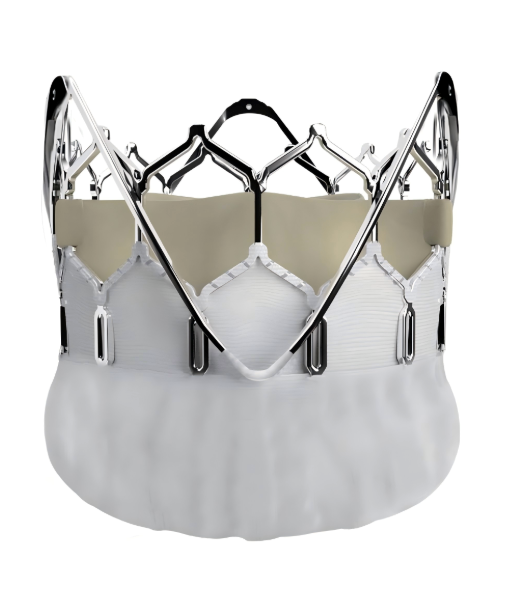
Instead of adapting existing valve designs, this initiative starts with the failure modes that matter most: calcification, thrombosis, and long-term cyclic fatigue. Engineers map leaflet stress distributions through high-fidelity simulation, then iterate on geometry and material pairing until the valve opens fully at low pressure drops and closes without regurgitation. The result is not a copy of a legacy device, but a replacement shaped by local manufacturing realities and clinical demands.
Building these valves at home forces a tighter integration between design and production. Rather than outsource critical components, the team develops proprietary fixtures, laser-cutting protocols, and quality checks that hold tolerances to a few microns. That vertical integration shortens feedback loops, allows rapid design changes after bench testing, and creates a supply chain that doesn't hinge on foreign approvals. Patients get a valve that performs predictably, while hospitals gain a dependable alternative without the usual import bottlenecks.
Next-Generation Materials for Younger, More Active Patients
Younger patients today refuse to accept a slow recovery or a compromise in performance after joint replacement. They want to return to skiing, marathon running, or simply playing with their kids without worrying about implant wear. This demand has pushed material science away from traditional polyethylene and cobalt-chrome toward highly crosslinked polyethylene blends infused with vitamin E, which significantly reduce oxidative degradation while maintaining toughness. Add to that ceramic-on-ceramic bearings with near-zero wear debris, and the result is an implant that can withstand decades of high-impact activity without triggering osteolysis or loosening.
Beyond articulation surfaces, porous titanium and tantalum structures are now engineered to mimic the trabecular bone architecture, allowing for rapid biologic fixation even in patients with less-than-perfect bone stock. These materials are not just stiff replacements but actively encourage bone ingrowth, reducing the risk of early migration. Meanwhile, advancements in surface treatments—such as plasma-sprayed hydroxyapatite coatings or nano-textured topographies—create an environment where osseointegration happens within weeks, not months. For an active 45-year-old who cannot afford a revision in fifteen years, that difference is critical.
The real breakthrough lies in combining these materials with patient-specific design. A younger, athletic population has varied anatomy and loading patterns, so off-the-shelf solutions often fail. Now, additive manufacturing allows for graded stiffness from the implant core to the bone interface, reducing stress shielding that plagues conventional monolithic stems. Pair this with highly crosslinked, antioxidant-stabilized liners and dual-mobility constructs, and you get a system that supports high flexion, resists edge loading, and lowers the risk of dislocation during extreme ranges of motion. We are no longer just buying time; we are restoring a lifetime of movement.
Simplifying Procedures with Smarter Delivery Systems
When delivery systems learn to think ahead, the everyday friction of getting things from point A to point B quietly disappears. Instead of juggling multiple platforms or waiting on manual check-ins, teams can rely on automated routing that adjusts in real time to traffic, weather, or sudden changes in a shipment’s priority. The result is a workflow where the right questions get answered before they’re even asked, freeing people to focus on the work that actually needs a human touch.
A smarter system doesn’t just move packages faster; it removes the guesswork from the entire chain. From automatically generated labels and customs documents to live tracking that flags exceptions early, each step becomes part of a single, coherent flow. The old habit of chasing down updates or retyping the same address into three different forms fades away. In its place is a calm, predictable process that feels less like managing logistics and more like simply watching things arrive on time.
What makes these systems genuinely practical is their ability to learn from repeated patterns without becoming rigid. A delivery route that worked last Tuesday might not work the following week, and a good system knows that. By layering flexibility onto automation, businesses can handle last-minute changes, split shipments, or reroute a driver mid-day without a flurry of phone calls. Ultimately, the simplification isn’t about cutting corners; it’s about designing every step so that complexity stays behind the scenes where it belongs.
Real-World Outcomes from China’s High-Volume TAVR Centers
China's high-volume transcatheter aortic valve replacement centers have accumulated a distinct clinical profile that diverges from Western registries in several notable ways. Patients tend to present at a younger age but with heavier calcium burden and a higher prevalence of bicuspid aortic valve morphology, which demands more meticulous pre-procedural planning and often pushes operators toward innovative sizing strategies. Real-world data from these centers show that despite these anatomical challenges, procedural success rates now exceed 95%, with 30-day mortality dropping below 2% in the most experienced hands—figures that rival established international benchmarks.
One underappreciated pattern is the rapid evolution of local practice rhythms: many high-volume Chinese centers have moved away from routine general anesthesia and transesophageal echocardiography guidance, favoring a minimalist approach with conscious sedation and transthoracic imaging. This shift has cut average hospital stays to under five days and significantly reduced intensive care utilization. Meanwhile, the use of retrievable and repositionable devices has climbed sharply, reflecting a practical response to the higher proportion of large annuli and heavily calcified leaflets. Such adaptations are now shaping training curricula and influencing device selection far beyond the original trial settings.
Long-term follow-up remains a work in progress, but early signals suggest that valve durability and paravalvular leak rates in the Chinese real-world cohort are comparable to those reported in global studies. The concentration of cases in a limited number of tertiary centers has also created a natural laboratory for studying learning-curve effects and bundling perioperative care protocols. What stands out is not just the volume, but the speed with which these centers have converted local constraints—like a higher bicuspid prevalence—into refined technical expertise that is now being exported through international proctoring and registry collaborations.
Breaking Cost Barriers Without Sacrificing Quality
The old assumption that lower prices automatically mean lower quality is finally being challenged. Smart businesses are discovering that cost reduction doesn't have to come from cutting corners, but from rethinking how value is delivered. By streamlining overhead, negotiating smarter supplier contracts, and automating repetitive tasks, companies can trim expenses while keeping the core product or service fully intact. The key is to focus on removing waste rather than weakening the offering.
A practical example comes from direct-to-consumer brands that skip traditional retail markups and invest those savings into better materials or faster shipping. They aren't competing on being the cheapest; they're competing on delivering more for less. This shifts the conversation from “how low can we go” to “how much can we give without breaking the budget.” It's a mindset that turns cost pressure into an innovation driver instead of a quality threat.
What makes this approach durable is that customers notice the difference. They can feel when a product was built with care but priced without fluff. That kind of trust doesn't come from gimmicks or deep discounts—it comes from a deliberate choice to protect the experience while clearing away unnecessary expenses. Cost barriers fall, but the standard stays high.
From Megacities to Regional Hospitals: Scaling Cardiac Care
Cardiac care in megacities has long benefited from concentrated expertise, advanced catheterization labs, and round-the-clock surgical teams. A patient with a complex arrhythmia in New York, London, or Tokyo can often access a subspecialist within hours. Transfer that same patient to a regional hospital serving 200,000 people, and the picture shifts: a general cardiologist may handle everything from echocardiograms to pacemaker checks, while the nearest electrophysiology lab sits four hours away by ambulance. The gap isn't just about equipment—it's about the daily confidence to manage high-acuity cases without immediate backup.
Scaling cardiac care outward from urban hubs requires more than shipping machines to smaller facilities. Effective regional programs are built on three quieter pillars: telerounding with remote intensivists who review CCU data each morning, simulation-based training that lets rural nurses rehearse STEMI protocols until they become reflex, and standardized order sets that remove guesswork from thrombolytic dosing or post-stent monitoring. In some networks, regional hospitals now perform primary PCI with outcomes matching city centers—not because they copied the megacity model, but because they adapted it to local staffing and transport realities. Tele-ICU platforms, for instance, allow a single heart failure specialist to co-manage patients across six sites, flagging decompensation before a transfer becomes inevitable.
The real test of scale is sustainability once the pilot grant ends or the visiting faculty leave. Hospitals that succeed tend to embed cardiac care into existing workflows—adding a troponin reflex pathway to the emergency department's electronic triage, or training hospitalists to lead post-discharge clinics rather than relying on fly-in cardiologists. They also track metrics that matter to community clinicians: door-to-balloon times, thirty-day readmission for heart failure, and the percentage of patients who can safely avoid transfer. When a regional hospital starts publishing its own outcome data and adjusting protocols based on local failures, cardiac care stops being an imported luxury and becomes a homegrown standard—one that might eventually teach the megacities a thing or two about doing more with less.
FAQ
TAVR is a minimally invasive procedure that replaces a narrowed aortic valve without open-heart surgery. In China, it has gained attention because the country has a large aging population with severe aortic stenosis, and many patients are too frail for traditional surgery.
Chinese engineers have focused on features like retrievable and repositionable valves, smaller delivery profiles, and better adaptation to Asian anatomy. For example, they often account for a higher prevalence of bicuspid aortic valves and heavier calcification patterns.
Several local trials involving valves such as Venus-A and VitaFlow have shown procedural success rates and mid-term survival outcomes that are comparable to international benchmarks, with acceptable rates of paravalvular leak and pacemaker implantation.
Local manufacturing has lowered device prices, and more hospitals now have dedicated heart teams. Government reimbursement changes and rising awareness among cardiologists are also driving faster uptake, especially in large urban centers.
Bicuspid aortic valve disease is much more common in Chinese patients, which brings asymmetric calcification and larger annuli. Local valves often use stronger radial force and more flexible deployment mechanisms to handle these irregular shapes without increasing rupture risk.
Advanced CT imaging combined with AI-assisted planning helps predict annular dimensions, calcium distribution, and the risk of coronary obstruction. This allows operators to select the right valve size more accurately, reducing complications like severe paravalvular leak.
The next phase likely includes expansion into lower-risk and younger patients, development of valves with longer durability, and deeper integration with remote monitoring. China is also expected to become a major exporter of TAVR technology to other Asian and emerging markets.
Conclusion
China's transcatheter aortic valve replacement landscape has shifted from chasing imported designs to engineering its own path. Homegrown valves now integrate thinner leaflet materials and adaptive frame geometries, catering to patients who are diagnosed earlier and remain physically active well into their seventies. Rather than copying Western delivery catheters, Chinese teams have reworked handle ergonomics and sheath profiles, letting operators navigate tortuous anatomies with less fluoroscopy time. This practical tweak is not about marketing novelty—it reflects feedback from high-volume centers in Beijing, Shanghai, and Chengdu, where hundreds of procedures a year expose subtle failure points that bench testing misses. Real-world registries from these centers show paravalvular leak rates and pacemaker needs dropping as operators gain confidence in the redesigned systems, but the numbers are still heterogeneous because patient demographics vary between coastal and inland hospitals.
Cost remains the bluntest lever. Domestic manufacturers have cut list prices by streamlining supply chains and reusing some non-implantable components, yet they have not skimped on leaflet anti-calcification treatments or valve-in-valve compatibility. The result is a tier of devices that public hospitals in provincial capitals can afford without turning TAVR into a luxury procedure. Meanwhile, training networks extend beyond megacities: proctors now run simulation workshops in regional centers, pairing experienced implanters with local cardiologists who previously referred every aortic stenosis case to a tertiary hub. This scaling is uneven—some county-level hospitals still lack hybrid operating rooms or dedicated cardiac anesthesiologists—but the direction is clear. China's TAVR innovation is not merely copying then cheapening; it is recalibrating device design, clinical evidence, and distribution around the country's actual disease burden and resource constraints.
Contact Us
Contact Person: Jeffrey
Email: [email protected]
Tel/WhatsApp: 86-0633-2230056
Website: https://www.sd-intmedical.com