

CNC Lathe Machine Factory: Where Precision Meets Production
2026-07-29
Step inside the world of WINNRUI CNC, where raw metal transforms into engineering artistry. In our CNC lathe machine factory, every turn of the spindle bridges the gap between exacting precision and high-volume production. If you’ve ever wondered how modern workshops consistently deliver flawless components—this is where it all starts.
Crafting Accuracy from Raw Materials
Turning unrefined stock into precision components demands a blend of art and science. It begins with selecting materials not just for their composition, but for their grain structure, thermal history, and even the way they respond to tool pressure. Every ingot, billet, or bar holds hidden potential, and unlocking it requires a deep familiarity with how metal moves, springs, and settles under the cutting edge.
We pair this material intuition with rigorous in-process metrology, probing parts before they leave the fixture to catch deviations while correction is still cheap. This isn't simply checking boxes on a spec sheet—it's a continuous conversation between the machine, the workpiece, and the craftsman. Thermal compensation, tool wear algorithms, and real-time feedback loops all play their part, but the real secret is knowing how to read the subtle signs a part gives as it's being made.
The result is a process where accuracy is not just measured at the end, but built in from the first cut. Raw material arrives with inherent variability; we refine that chaos into parts that fit, mate, and function with a reliability that feels almost inevitable. It’s this marriage of raw instinct and measured control that transforms a block of metal into a dependable, repeatable reality.
The Heart of Automated Manufacturing
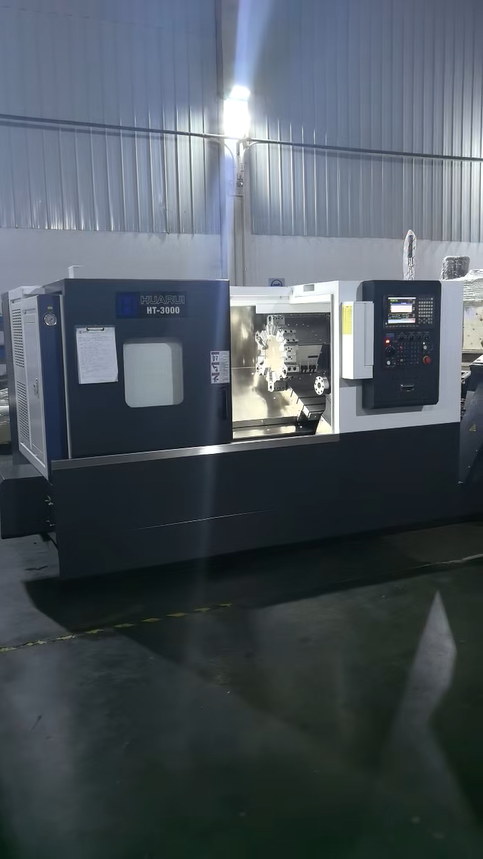
Step onto a modern factory floor and you'll feel it before you see it—the relentless, synchronized pulse of robotic arms, conveyors, and sensors working in perfect harmony. This isn't just machinery; it's a living, breathing ecosystem where every movement is orchestrated by an invisible conductor. The true heart of automated manufacturing isn't a single device but the seamless integration of hardware and software that transforms raw materials into finished products with astonishing precision and speed.
What makes this heart beat so steadily is not just advanced engineering, but the ability to adapt in real time. Sensors detect microscopic variations and adjust parameters instantly, learning from data to optimize flow. Error rates plummet while quality soars, not because machines are infallible, but because the system continuously self-corrects. This adaptive intelligence turns production lines into organisms that evolve, reshaping themselves around new designs and demands without missing a beat.
Yet for all its sophistication, the core remains profoundly human. Behind every algorithm is a designer who anticipated a challenge; under every robot arm is a maintenance crew ensuring flawless operation. The heart of automated manufacturing pumps life into industry not by replacing people, but by amplifying their creativity and capability—freeing minds from repetition to focus on innovation and problem-solving. It's a partnership where technology handles the mundane, leaving humans to do what they do best: imagine what's next.
Where Engineering Meets Artistry
There is a quiet alchemy that happens when precision and expression converge. In that space, the rigidity of code softens into something almost lyrical. It begins not with a grand vision, but with small, deliberate choices—the exact curve of a line, the weight of a shadow, the way light hesitates before it falls. Each decision is both a calculation and an intuition, a negotiation between what is possible and what feels true. The result isn’t just function dressed in beauty; it’s a seamless weave where the two are no longer distinguishable.
This marriage demands more than technical mastery—it requires a certain kind of attention, a willingness to listen to materials and systems as if they had a voice. A bridge doesn’t simply stand; it breathes through the stresses it endures. A circuit doesn’t just transmit; it hums with the rhythm of its own logic. When you design with this mindset, every joint, every interface becomes a moment of dialogue between the maker and the medium. The engineering isn’t hidden behind the art; it is the art, revealing its grace in the way a structure balances load and lift, or how an algorithm resolves complexity into an effortless flow.
But perhaps what lingers longest is the sense of restraint—the knowing when to stop, when to let silence do the work. Over-engineering can suffocate subtlety, just as over-styling can mask emptiness. The truest work in this intersection often carries a kind of beginner’s mind: it doesn’t flaunt its cleverness, but instead invites you to trace its logic with your senses. It’s in the echo of a concert hall that shapes sound so precisely you feel it in your bones, or in a typeface whose letters seem to breathe because their proportions are rooted in optical laws. These are not just objects or experiences—they are proof that when we stop separating the rational from the intuitive, we create things that don’t merely work, but resonate.
Scalable Solutions for Diverse Industries
Every industry runs on its own unique rhythms and challenges, but the need to grow without breaking things is universal. Scalable solutions aren't about forcing a one-size-fits-all template; they're built with modularity and flexibility at the core, adapting to specific workflows without requiring a complete overhaul as demands shift. From logistics to healthcare, the right architecture expands quietly in the background, supporting increased loads, new regulations, or expanded user bases with minimal friction.
In practice, this means tools designed to start small and evolve intelligently. A manufacturing floor might begin with simple asset tracking, then layer in predictive maintenance and real-time analytics as operations mature, all without swapping out the underlying system. The key is interoperability—letting legacy systems and modern APIs coexist while data flows securely between them. This approach sidesteps disruptive rip-and-replace cycles, making growth a natural progression rather than a high-stakes gamble.
What truly sets these solutions apart is their attention to human workflows, not just technical specs. They're shaped around how teams actually work, with dashboards that speak the language of each department, permission models that respect internal structures, and customization that doesn't require deep coding expertise. By embedding adaptability into the fabric of the platform, organizations in retail, energy, education, and beyond can pivot quickly, serving their end-users consistently even as they enter entirely new markets or adjust to unexpected demands.
Behind the Scenes of Quality Assurance
Quality assurance is often perceived as a final checkpoint, but in reality, it's woven into every stage of development. From the initial design reviews to the post-launch monitoring, QA engineers collaborate closely with developers and product managers to anticipate potential pitfalls long before a single line of code is written. This proactive approach means asking tough questions early: How might this feature fail under heavy load? What happens if a user provides unexpected input? By embedding quality into the process rather than tacking it on at the end, teams avoid costly rework and build trust that the product will hold up in the wild.
Behind the scenes, QA is a blend of structured methodology and creative exploration. Automated test suites run tirelessly to verify that core functions remain intact with each new commit, but manual testing uncovers the kind of issues scripts can miss—the awkward user flow that technically works but feels clunky, or the visual glitch that only appears on a specific device. Smoke tests, regression suites, and exploratory sessions are tailored to the product's unique risk profile, often guided by checklists that remain living documents, constantly refined through team retrospectives and unexpected discoveries in the field.
Technology amplifies QA efforts but doesn't replace the human instinct for where things might break. Tools for continuous integration trigger immediate feedback on every pull request, while virtual device farms and performance monitoring dashboards provide real-world insights. Yet, the most valuable asset remains a tester's curiosity—the drive to poke at edge cases, to simulate chaotic user behavior, and to champion the end user's experience when deadlines loom. It's this combination of rigor and empathy that turns quality assurance from a gatekeeping role into a strategic advantage.
Innovating Tomorrow’s Machining Today
Every breakthrough in manufacturing starts with a single decision—to stop following and start leading. We don’t wait for the next big thing in machining; we build it. From smarter toolpath algorithms that predict wear before it happens to adaptive systems that learn your shop floor’s rhythm, our approach turns everyday operations into a sandbox for invention. The result isn’t just faster cycles or smoother finishes, it’s a fundamental shift in how parts come to life.
Where others see limits, we see raw material for reinvention. By weaving real-time data with mechanical intuition, our platforms let machinists experiment without penalty, catching potential errors in simulation rather than on the shop floor. That freedom transforms hesitant operators into confident innovators, pushing tolerances and materials past their supposed boundaries. The machines don’t just run; they grow smarter with every cut, creating a feedback loop that refines both the tool and the craft.
This isn’t about replacing skill with automation—it’s about amplifying it. When a veteran’s gut feeling merges with instant analytics, the impossible becomes yesterday’s job. Our technology doesn’t just keep pace with industry shifts; it sets the tempo, turning each spindle rotation into a step toward what’s next. Because the factory floor shouldn’t just make parts. It should make history.
FAQ
Our factory combines cutting-edge spindle technology with in-house thermal compensation systems, achieving tolerances as tight as ±2 microns. Even during high-volume runs, every part matches the CAD model exactly.
We use adaptive control software that monitors tool wear in real time, automatically adjusting feed rates to maintain accuracy without slowing down cycles. Our multi-tasking machines can also mill, drill, and turn in one setup, slashing idle time.
Absolutely. Our engineering team specializes in live tooling and sub-spindle operations, enabling intricate features and back-working without secondary handling. From medical bone screws to aerospace hydraulic fittings, we thrive on challenging designs.
Every batch undergoes CMM inspection, surface finish analysis, and, for critical parts, in-process laser measurement. We also maintain ISO 9001 and AS9100 certifications, with full material traceability from raw stock to shipment.
Our floor houses Swiss-type lathes for micro parts, multi-axis turn-mill centers for complex components, and large-bore flatbeds for heavy workpieces up to 2 meters in diameter. Each machine is networked to our centralized monitoring system.
Yes, our flexible cell setup allows us to switch from a 5-piece prototype run to a full production lot within hours. We assign dedicated setup technicians who specialize in quick-change fixturing to keep lead times short.
We implement statistical process control (SPC) with automatic tool offset corrections. Our coolant chilling systems keep the shop environment stable, so even multi-day runs produce identical parts from first to last.
Our main customers are in medical devices, aerospace, automotive performance, and fluid power. We also support startups working on niche projects that require ultra-precise metal components.
Conclusion
Inside a CNC lathe machine factory, raw metal stock enters a world where precision is not just a goal but a guaranteed outcome. Transforming bars and billets into intricate components demands a blend of advanced robotics and operator finesse; automated tool changers and live tooling carve complex geometries, while real-time sensors correct microscopic deviations. This marriage of rigid automation and human oversight turns engineering drawings into tactile reality, where the hum of spindles and the scent of cutting fluid signal creation. It’s here that cold steel meets calculated motion, each programmed axis dancing to tolerances measured in microns—a space where rigorous mechanics converge with the artistry of experienced machinists who understand grain structure, harmonic chatter, and the subtle feel of a perfect cut.
Beyond the shop floor, the factory adapts to a spectrum of sectors—from automotive to surgical tooling—with scalable cells that shift seamlessly between high-mix, low-volume prototyping and lights-out mass production. Quality isn't an afterthought but woven into every stage: laser micrometers inspect parts in cycle, environmental chambers simulate operational stresses, and traceability logs follow each workpiece back to its raw heat number. This quiet diligence ensures that every component leaving the dock meets standards often invisible to the end user. Meanwhile, engineers relentlessly refine toolpaths and integrate adaptive AI that self-corrects for tool wear, ushering in an era where tomorrow’s machining demands are already being solved on today’s factory floor—without fanfare, just consistent, meaningful progress.
Contact Us
Contact Person: Tim
Email: [email protected]
Tel/WhatsApp: +86 15522553731
Website: https://www.winnrui-cnc.com/