

Custom Dry Type Transformer Design: Key Benefits and Selection Tips
2026-08-10
When it comes to custom dry type transformers, the right design can make or break your project's efficiency and reliability. Too often, standard options fall short, leaving you with unnecessary compromises. That's where Deepwill steps in, offering tailored solutions that balance performance, safety, and cost-effectiveness. In this guide, we'll explore the key benefits of going custom and share practical tips to help you select the perfect transformer—without the guesswork.
Tailoring Efficiency to Your Power Needs
Modern power systems rarely operate at a single fixed load; instead, they fluctuate throughout the day. Designing a solution that can dynamically adjust its efficiency curve to match these variable demands ensures you’re not wasting energy during low-load periods or straining components at peak times. By mapping your actual usage patterns and stress-testing different load scenarios, you can create a power delivery network that feels almost custom-built for your operations—delivering optimal performance without overengineering.
Beyond the hardware, real-time monitoring plays a crucial role in maintaining that tailored efficiency. Smart sensors and adaptive control software allow your system to learn from ongoing data, making micro-adjustments that compound into significant savings. Instead of settling for a generic one-size-fits-all approach, this continuous refinement keeps your power usage tightly aligned with your operational rhythm, cutting costs and extending equipment lifespan in ways a static setup never could.
The real advantage comes from treating efficiency as an evolving target. As your power demands shift seasonally or with new equipment, updating calibration parameters and revisiting your usage profiles helps maintain peak efficiency. This proactive approach turns your power infrastructure into a responsive asset, not just a background utility, giving you a operational edge that generic solutions simply can’t replicate.
Beyond Standard: The Real Advantages of Bespoke Dry Type Transformers
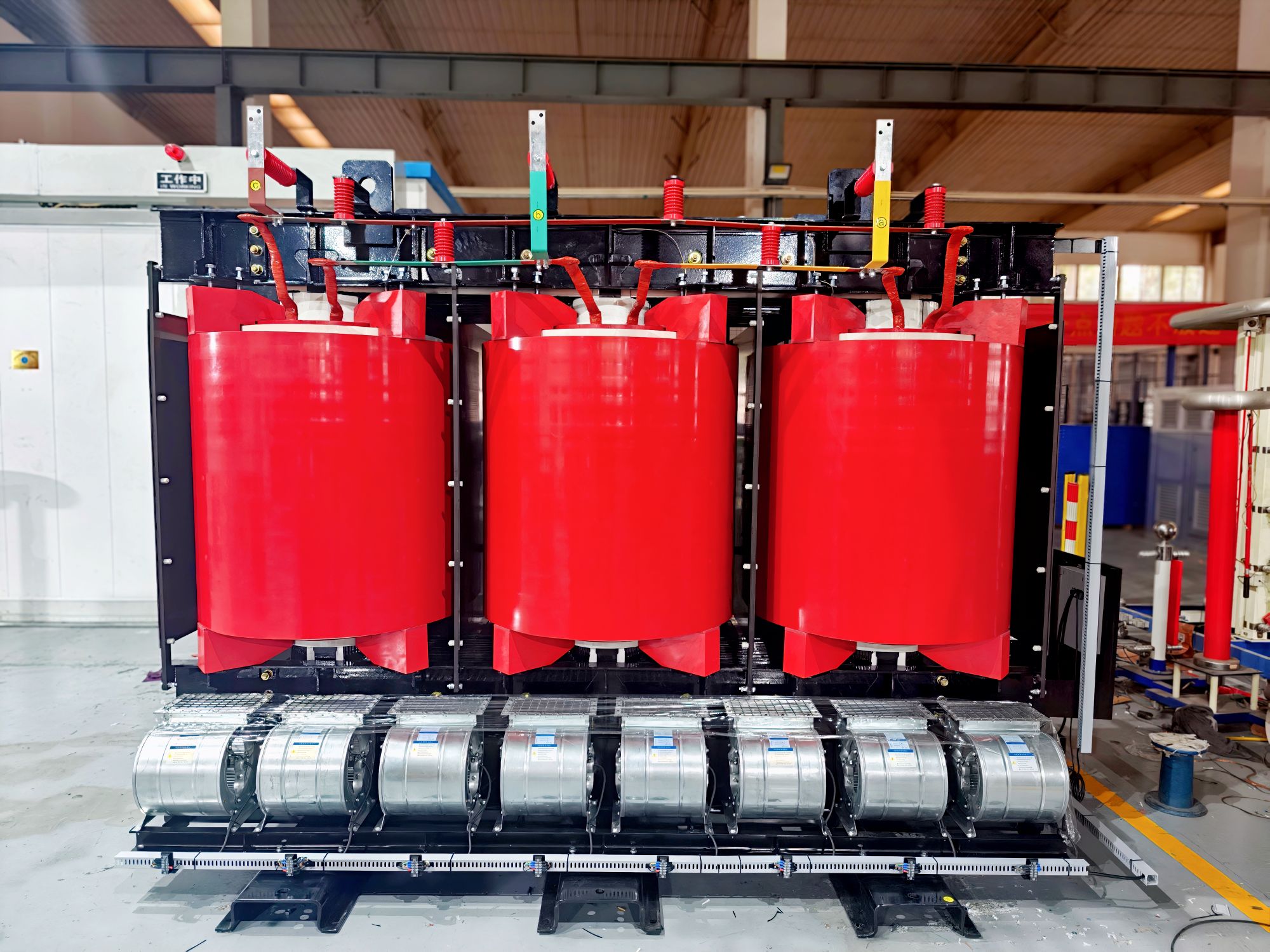
Custom dry type transformers shatter the one-size-fits-all mold by weaving performance directly into the fabric of your operation. Off-the-shelf units come with fixed impedance, cooling patterns, and footprint constraints that force your system to adapt. A bespoke design flips that relationship: winding configurations are tuned to your exact fault current requirements, insulation systems are chosen for your specific ambient conditions, and dimensions are sculpted to slide into restricted spaces without costly rework. That kind of precision isn't a luxury—it's the difference between a transformer that merely tolerates your environment and one that thrives in it.
The true value surfaces when you look past specifications and into lifecycle behavior. Standard transformers are built to generic duty cycles that rarely match real-world harmonics, voltage spikes, or thermal swings. By contrast, a tailored unit lets engineers select core materials and conductor cross-sections that blunt the impact of non-linear loads, dampen acoustic noise to near-silence, and shrug off thermal aging. This means fewer hotspots, tighter voltage regulation under erratic demand, and a drastic drop in nuisance tripping or premature insulation breakdown. The result is a transformer that doesn't just meet a datasheet—it absorbs the personality of your plant and works with it, not against it.
Procurement teams often fixate on upfront price tags, but bespoke designs reveal their economics through avoided costs. When a transformer arrives ready to connect—no field modifications, no extra enclosures, no retroactive cooling additions—the installation clock shrinks from weeks to days. Factor in the extended service intervals driven by conservative thermal margins, and the total cost of ownership tilts decisively away from catalog items. In an era where electrical infrastructure must evolve quickly, a custom dry type transformer becomes an adaptive asset, ready for future load changes without requiring a replacement. It's less about paying for a premium product and more about investing in electrical resilience that off-the-shelf units simply can't offer.
Blueprint for Success: Critical Design Considerations
Every great build starts with a clear-eyed look at the non-negotiables. In the initial phase, I map out the friction points that will shape every decision: budget ceilings, timeline anchors, and the absolute must-haves that the end user can't live without. This isn't about dreaming big—it's about pinning down reality so the creative work has a solid, unforgiving fence to play inside.
Next, I obsess over how the choices interplay. A material upgrade might blow the schedule, while a phased rollout could preserve cash flow but fracture brand consistency. These trade-offs aren't obstacles—they're the raw material of intelligent design. By pressure-testing assumptions early, I uncover where flexibility truly lives and where it's an illusion, ensuring no single choice silently unravels the whole.
Navigating Material and Insulation Choices for Longevity
When aiming for a structure that lasts, the conversation often starts with what’s beneath the surface. Material selection isn’t just about aesthetics or short-term performance—it’s about how components interact under thermal strain, moisture exposure, and mechanical wear over decades. For instance, pairing a high-density concrete with a low-permeability waterproofing layer can drastically slow the ingress of chlorides, which would otherwise corrode reinforcing steel. The subtle chemistry between adjacent materials often determines whether a building gracefully ages or demands frequent, costly interventions.
Insulation, on the other hand, is the silent guardian of a building’s thermal envelope, but it’s not a one-size-fits-all decision. Closed-cell spray foam might excel in stopping air leaks and adding structural rigidity, yet under certain conditions it can trap moisture if not paired with a smart vapor retarder. Mineral wool, while slightly less efficient per inch, offers impressive fire resistance and breathability, making it ideal for historic retrofits where moisture management is paramount. The key is matching insulation type to the assembly’s hygrothermal demands rather than defaulting to the most common choice.
Longevity becomes a balancing act between upfront costs and lifecycle resilience. A seemingly minor upgrade, like choosing stainless steel fasteners over galvanized ones near salt-laden air, can prevent cascading failures that render an otherwise durable cladding useless. It’s these granular decisions, often overlooked in value-engineering exercises, that separate buildings that endure from those that merely exist. The path to longevity isn’t paved with a single heroic material, but with the careful orchestration of many in a well-considered system.
Balancing Cost and Performance Without Compromise
Striking the right balance between spending and speed often feels like walking a tightrope. Most assume you have to sacrifice one for the other, but that outdated mindset ignores smarter ways to build. By focusing on architecture choices that scale only when needed, you keep baseline costs lean while preserving the ability to handle sudden demand. It’s not about cutting corners; it’s about designing systems where every dollar directly fuels user value, not idle waste.
Real-world success comes from rethinking what “performance” actually means. Instead of chasing benchmarks that don’t translate to better experiences, we prioritize latency reductions that users notice. This means adopting event-driven patterns, streamlining data flows, and leaning on managed services for undifferentiated heavy lifting. The result is a setup that feels responsive without the premium price tag of over-provisioned hardware.
Monitoring and automation tie it all together. When you instrument everything from request traces to cost anomalies, you stop guessing and start acting on evidence. Automated scaling policies, combined with clear budgetary guardrails, let the system adjust in real time—ramping up during peaks and scaling back without human intervention. That’s how you achieve a truce between the finance team and the engineering team, where neither cost nor performance ever has to lose.
Future-Proofing Installations Through Intelligent Customization
Installations that shrug off obsolescence don’t happen by accident—they’re engineered with a deliberate blend of adaptive hardware and reconfigurable logic. Intelligent customization means designing systems that anticipate shifts in usage, technology, and regulation without requiring a full teardown.
Think of control panels that reorganize workflows based on real-time operator feedback, or modular mounting systems that accept next-generation sensors without welding new brackets. These aren’t theoretical; they’re operational examples where small, informed design choices keep a facility aligned with fast-changing demands.
The real payoff surfaces years later, when a retrofit takes hours instead of weeks, or when a software update unlocks capabilities that rival brand-new equipment. Future-proofing through customization isn’t about predicting the future perfectly—it’s about leaving enough intelligent slack in the system so that the future can be accommodated gracefully, on your terms.
FAQ
Their solid insulation eliminates flammable liquids, drastically reducing fire risk and making them ideal for buildings with strict safety codes.
By optimizing core materials and winding configurations to match specific load profiles, custom units cut no-load and load losses, often beating standard efficiency tiers.
They avoid oil containment systems and leak risks, plus many use recyclable insulation, shrinking your project's ecological footprint.
Fine-tuning impedance limits fault currents and voltage drops, protecting downstream gear and ensuring stable power under varying loads.
Assess the installation environment—dust, moisture, or corrosive atmospheres dictate whether NEMA 3R, 4X, or other enclosures are needed without overspending.
Regularly cleaning ventilation paths, checking connections, and monitoring temperature signatures help prevent hot spots and insulation degradation.
Yes, through oversized neutrals, K-factor ratings, or phase-shifting windings that mitigate heating from non-linear loads without derating the transformer.
Conclusion
Every power system has its own set of demands, and a custom dry type transformer starts from a thorough analysis of load profiles, ambient conditions, and duty cycles—not just nameplate ratings. By tailoring core geometry, winding configurations, and cooling paths to actual operating patterns, efficiency becomes an engineered outcome rather than a catalog compromise. The real advantage of a bespoke unit is that it sidesteps the hidden costs of oversizing or the thermal stress of borderline selections; it delivers exactly the right impedance, regulation, and harmonic tolerance for the application. Critical design factors—such as insulation class, temperature rise limits, and environmental sealing—are weighed against the installation environment, whether it’s a coastal substation facing salt spray or an indoor production line with limited ventilation. Material choices play an equally decisive role: advanced core steels, high-temperature conductor insulation, and low-partial-discharge varnishes extend operational life well beyond standard expectations, particularly under frequent thermal cycling.
Balancing cost and performance is not about cutting corners—it’s about redirecting investment toward features that actually matter for long-term reliability. A custom design allows you to prioritize robust dielectric systems and conservative hot-spot margins without paying for unnecessary extras. Intelligent customization also means anticipating future loads: incorporating spare winding taps, oversized cooling ducts, or monitoring provisions today can turn a transformer into a flexible asset that adapts to plant upgrades without replacement. This forward-looking approach turns the initial design exercise into a strategic move, ensuring that the transformer not only meets immediate electrical specs but continues to perform as the site evolves. In the end, the selection process itself becomes a collaborative blueprint, aligning manufacturer expertise with site-specific realities to deliver a dry type transformer that truly fits—technically, economically, and operationally.
Contact Us
Contact Person: Julion
Email: [email protected]
Tel/WhatsApp: 8617351370631
Website: https://www.deyunelectric.com