

Diesel Forklift Factory: Inside a Modern Manufacturing Facility
2026-10-16
Most people never see what goes into a diesel forklift before it lifts its first pallet. Inside a modern manufacturing facility, robotic welders spark, hydraulic systems are pressure-tested, and every chassis gets a stress audit. HANGCHA opens the door to this hidden world, where brute strength meets microscopic precision. Curious how a 10-ton machine is born from a steel coil? Read on.
Where Steel Meets Sparks: Inside the Fabrication Hall
The fabrication hall never really quiets—even in the early minutes of a shift, there's the low hiss of gas lines being checked and the clatter of someone dragging a welding lead across concrete. Blue-white arcs snap to life at scattered stations, each one throwing a harsh, stuttering light that makes shadows jump along the steel columns. The air carries a sharp metallic tang, cut with the occasional sweet burn of grinding dust. It isn't a showroom; it's a working gut, cluttered with half-assembled frames, chalk marks on the floor, and tools worn smooth by hands that know exactly where they belong.
Watch a welder settle into position. He flips down his mask with a practiced nod, and for the next few minutes the outside world is reduced to a bright puddle of molten steel. The torch moves along the seam in a steady drag, laying down a bead that looks less like a joint and more like careful stitching in silver. Two bays over, a brake press folds a thick plate with a deep, guttural groan, the kind of sound you feel in your chest before you hear it. Apprentices hover at a respectful distance, not asking questions yet—just learning to read the difference between a clean cut and one that needs another pass by the way the sparks fall.
Overhead, a crane glides along its rails, carrying a ten-meter beam that hangs with a slight, controlled sway. The operator can't see the far end, so the whole move depends on a man below making small, deliberate hand signals—no shouting, just the shared shorthand of people who've done this thousands of times. There's a rhythm to the hall that isn't obvious from the doorway: bursts of noise, then intervals of intent silence while measurements are checked and clamps are tightened. At the end of the shift, the arcs go out one by one, and for a moment the only sounds are the creak of cooling steel and the shuffle of boots heading toward the exit. The sparks are gone, but the work leaves a residue on your skin, your clothes, your memory.
The Diesel Heart: Precision Assembly of Engines and Transmissions
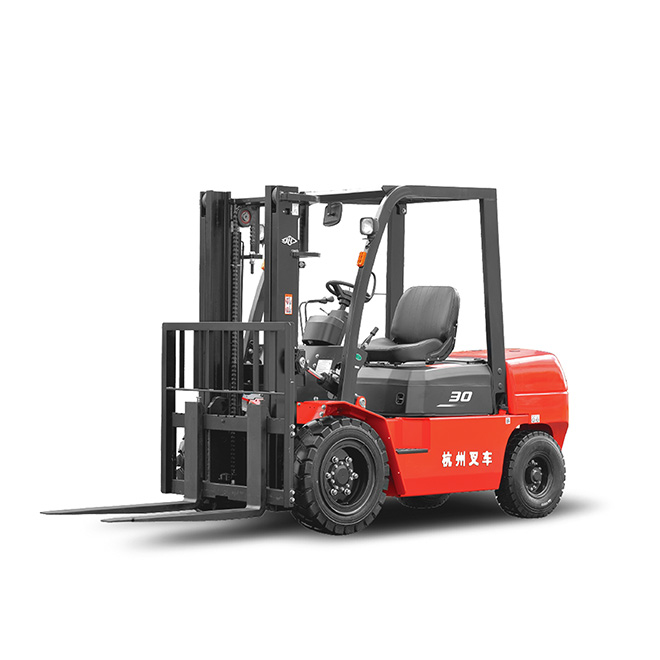
In the world of heavy-duty machinery, the diesel engine is more than a power source—it's a carefully choreographed assembly of parts that must function together under extreme stress. From the crankcase to the cylinder head, every component is machined to tolerances measured in microns. The transmission, sitting between the engine and the drive axle, receives equal attention: gear teeth are cut, hardened, and lapped so that they mesh with near-silent precision. This isn't mass production; it's a deliberate, step-by-step process where torquing sequences and bearing preloads matter more than speed.
Precision in this context means more than hitting a dimension. It's about how parts interact once they're bolted together. A diesel engine's block might be line-bored so that crankshaft journals sit perfectly aligned, while the transmission's clutch housing is dial-indicated to within a few thousandths of an inch. Technicians often talk about “stacking tolerances”—if each individual part is at the edge of its acceptable range, the whole assembly can bind or wear prematurely. That's why builders rely on selective fitting, match-marking gears, and even hand-scraping bearing surfaces in some applications.
The assembly floor for these units is not a blur of automation. Robotic arms place pistons and insert liners, yes, but critical torques are still checked by hand with calibrated wrenches. Valve lash is set with feeler gauges, and gear backlash is measured with dial indicators at multiple points around the ring gear. The goal is a diesel heart that doesn't just run—it runs quietly, efficiently, and for hundreds of thousands of miles without a single premature failure. That's the quiet promise of precision assembly: no drama, just dependability.
Robotic Welders and the Human Eye: Balancing Automation with Craft
A robotic arm lays down a bead with almost hypnotic consistency, yet the human welder still watches the glow and listens to the crackle. That eye catches subtle shifts in heat tint, the way a puddle wets into a tight root, or a slight mismatch in fit-up that a camera might shrug off. It is not magic, just years of reading metal like a living thing. Automation can repeat a perfect pass, but craft lives in the corrections made before a sensor even flags a problem.
Where robots dominate is volume: long straight seams, thick plate, the same joint fifty times an hour. But bring in a rusted exhaust manifold or a cracked cast bracket with an awkward angle, and the programming gets brittle. A skilled welder adjusts torch angle, speed, and weave on the fly, responding to how the puddle flows around an impurity or a gap. That tacit feel is not easily captured in a parameter file. Some shops now pair the two, letting robots handle the boring runs while humans take the joints that demand judgment.
The real balance comes from treating automation as a tool, not a replacement. A robot can preheat, tack, and lay the long, flat welds, then a person comes in for the final cosmetic pass or the tricky overhead tie-in. This division keeps the craft alive where it matters and uses the machine where consistency beats patience. The result is not less skill, but a sharper focus on the parts of welding that cannot be photocopied.
Hydraulic Lines and Load Testing: Proving Every Forklift’s Strength
A forklift's hydraulic lines are the veins that keep the mast moving and the load steady, but they only earn their keep under pressure. Load testing pushes these lines to the limit—sometimes beyond what they'll ever see on a normal shift—to expose weak fittings, hairline cracks, or hose fatigue before they turn into garage-floor puddles.
The test itself isn't just about stacking more weight on the forks. Technicians run the hydraulic system through full lift and tilt cycles while the rated capacity (or a calculated percentage above it) sits on the carriage. They watch for pressure drops, listen for bypassing fluid, and check every coupling for sweat. A line that holds steady at 1.25 times the rated load tells you more than any spec sheet.
Over time, repeated testing builds a failure history that's worth its weight. If a particular hose length or fitting type starts showing up in test reports, maintenance teams can swap it out before a partial failure slows down an entire shift. That kind of proof doesn't come from a brochure—it comes from putting the machine in a controlled bind and letting the hydraulics prove they're up to the job.
Paint, Powder, and Protection: The Finishing Line's Hidden Science
A finishing line rarely gets the spotlight, but its work decides whether a part survives years of weather, salt, and friction. Liquid paint flows into recesses through electrostatic attraction, while powder coating relies on charged particles clinging to grounded metal before the oven melts them into a continuous film. The choice between the two isn't just about looks; it hinges on film thickness tolerance, edge coverage, and what the component will face after it leaves the plant.
Beneath the color lies a stack of layers with specific jobs: a phosphate or zirconium pre-treatment etches the substrate for grip, a primer seals out moisture, and the topcoat takes the UV and abrasion hits. Spray booth operators watch viscosity, humidity, and booth pressure because a slight drift changes how droplets land. Even the curing stage is a hidden science—too little heat leaves the film soft, too much embrittles it, and the ramp rate alters cross-link density in ways you can't see until a warranty claim shows up.
Quality checks on a finishing line often read more like a materials lab than a paint shop. Cross-hatch adhesion tests, salt spray chambers, and gloss meters reveal whether the chemistry held. The real skill is balancing speed and protection: run the line too fast and film thickness drops, too slow and you burn energy and risk orange peel. Every adjustment—air knife pressure, gun distance, oven zone temperature—feeds back into the same goal: a coating that protects not just on day one, but after ten thousand cycles of thermal expansion and road grit.
From Parts Carts to Final Audit: The Journey of a Serial Number
A serial number starts life as a small label or etched code on a component sitting in a parts cart. At this stage it means almost nothing—just a way to distinguish one bracket, housing, or circuit board from its identical neighbor. But as the cart moves toward the assembly line, that number begins to accumulate context: which batch it came from, which operator handled it, which torque settings were used on the fasteners nearby.
Once the unit is fully assembled, the serial number becomes the thread that ties together every station it passed through. Test results, calibration data, firmware versions, and even the ambient temperature at the time of assembly can be linked back to that single identifier. This isn't just for traceability—it's how a factory learns where variation creeps in and which processes need tightening.
By the time the product reaches final audit, the serial number has done most of its quiet work. The auditor scans it and pulls up the complete history, checking for gaps or anomalies before signing off. What started as a random-looking string on a parts cart has become the product's fingerprint, carrying the proof of every hand and machine that shaped it.
FAQ
The floor is organized around small assembly cells rather than a single straight line. Chassis frames enter a robotic welding area first, then move on rail-guided carts to a powder-coating booth. Once cured, the frames meet the engine, transmission, and mast in a series of fitment stations where torque tools automatically record every fastener setting. This cell-based layout lets the factory switch between models without stopping the whole line.
Every diesel engine goes through a hot-test stand before it's bolted into a chassis. The engine runs for about 45 minutes under varying loads while sensors track oil pressure, coolant temperature, exhaust opacity, and fuel injection timing. If any parameter drifts outside a narrow band, the engine is pulled for manual diagnosis. Only after passing a cold-start test the next morning does it get cleared for installation.
Quality checks happen at three key points: after welding, after painting, and after final assembly. Weld seams are inspected with ultrasonic equipment to catch voids that the eye can't see. After assembly, each forklift is placed on a four-post shaker rig that simulates rough yard conditions while the operator runs the mast through full lift cycles. A final audit includes a 30-point checklist covering brake balance, steering effort, and hydraulic leak-down.
Automation mostly took over repetitive, high-precision tasks like frame welding, sheet-metal cutting, and parts sorting. But the real shift is in data flow: every torque wrench and test stand feeds results into a central system tied to the forklift's serial number. That means if a bolt is under-tightened, the line pauses until it's corrected. Compared to older plants, there are far fewer paper checklists and much less rework at the end.
Buyers can choose mast height, fork length, tire type, cab enclosure, and auxiliary hydraulic circuits for attachments like side shifters or clamps. Some factories also offer custom paint colors and non-standard counterweight sizes for heavy attachments. These choices are entered during order intake and carried through the line by a barcode on the chassis, so each station automatically pulls up the right parts and torque specs.
The factory treats emissions compliance as an assembly requirement, not just an engine supplier's problem. Each diesel forklift is fitted with a diesel particulate filter or selective catalytic reduction system depending on the engine tier. After assembly, the exhaust is sampled during the hot-test cycle to confirm particulate matter and NOx levels match the engine's certification. Non-compliant units are returned to a diagnostic bay rather than shipped.
Robots handle welding and heavy lifting, but people still do the jobs that need judgment and dexterity: routing hydraulic hoses, aligning masts, and performing final inspections. Workers also teach new robotic paths when a model changes and interpret the data from test stands. The most skilled roles are in fault diagnosis—when a forklift fails a leak test, a technician traces the problem using pressure decay curves instead of simply replacing parts.
A standard internal-combustion forklift takes about eight to ten hours of actual assembly time, spread over two shifts. That includes welding, painting, engine fitment, and final testing. Highly customized models or those with special attachments can take up to fourteen hours, mostly due to extra hydraulic plumbing and additional test cycles. The entire order-to-delivery lead time, however, is usually three to five weeks because frames and engines are scheduled in batches.
Conclusion
Walking into the fabrication hall, the first thing that hits you is the smell of hot steel and the sharp crackle of welding arcs. Thick sheets get cut, bent, and joined into chassis frames, but the real trick is how the line balances robotic precision with human judgment. Robots lay down consistent beads on long seams while experienced welders handle tight corners and tricky joints, checking each pass with the kind of eye you only get after years on the floor. That back-and-forth between machine repeatability and hands-on skill sets the tone for the whole plant.
Further down, engines and transmissions come together in a quieter but just as intense area. Each diesel power unit is built up from bare blocks, torqued to spec, and then mated to a transmission before being lowered into a waiting chassis. After that, every forklift gets its hydraulic lines routed and pressurized, then put through a load test that pushes it to the limit and beyond. Once it passes, the machine moves to finishing, where paint or powder coating isn't just for looks—it has to stand up to scratches, fuel spills, and weather. Finally, a serial number that started on a small parts cart follows the unit through final audit, tying every torque reading, weld inspection, and test result back to one specific truck before it ships.
Contact Us
Contact Person: Liuxue
Email: [email protected]
Tel/WhatsApp: +86-19084200370
Website: https://www.hf-ec.com/