

Export Fiberglass Geogrid: Essential Insights for Global Buyers
2026-05-22
When sourcing fiberglass geogrid for international projects, the difference between a reliable supply chain and costly delays often comes down to the insights you bring to the table. At WEN FENG STONE, we've seen how a deep understanding of material specs, testing standards, and logistical nuances can turn a routine purchase into a strategic advantage. This article unpacks what truly matters for global buyers—from performance indicators that go beyond the datasheet to trade tips that only seasoned exporters know. Whether you're reinforcing asphalt or stabilizing soft ground, the details ahead could reshape your next tender.
Beyond Basic Reinforcement: Why Fiberglass Geogrids Excel
Traditional reinforcement often relies on steel or basic synthetics, but fiberglass geogrids push performance into a new league. Their high tensile strength, paired with a remarkably low strain at failure, means they lock aggregates in place almost immediately, resisting deformation under heavy loads without stretching out of shape. This is not just about adding strength—it's about preserving the precise geometry of a pavement or foundation over time, minimizing rutting and cracking in ways simpler grids simply cannot match.
What truly sets fiberglass apart is its inert nature. Unlike metallic meshes that eventually corrode or polymer grids that creep under sustained stress, fiberglass remains chemically stable in aggressive soils, resisting alkalis, acids, and biological attack. This chemical resilience translates into decades of maintenance-free service, even in environments that would degrade other materials. The grid’s low thermal expansion coefficient also means it doesn't warp or buckle with temperature swings, keeping the reinforced layer mechanically coherent through freeze-thaw cycles and intense heat.
Installation reveals another layer of excellence. Fiberglass geogrids lie flat without memory curl, bond readily with bituminous tack coats, and their open aperture structure lets aggregate particles interlock deeply. The result is a monolithic composite layer that spreads loads so efficiently that pavement thickness can often be reduced, saving materials without sacrificing longevity. In an era where infrastructure must do more with less, that kind of value moves well beyond basic reinforcement into genuinely smart engineering.
Evaluating Geogrids: What Matters in Real-World Conditions
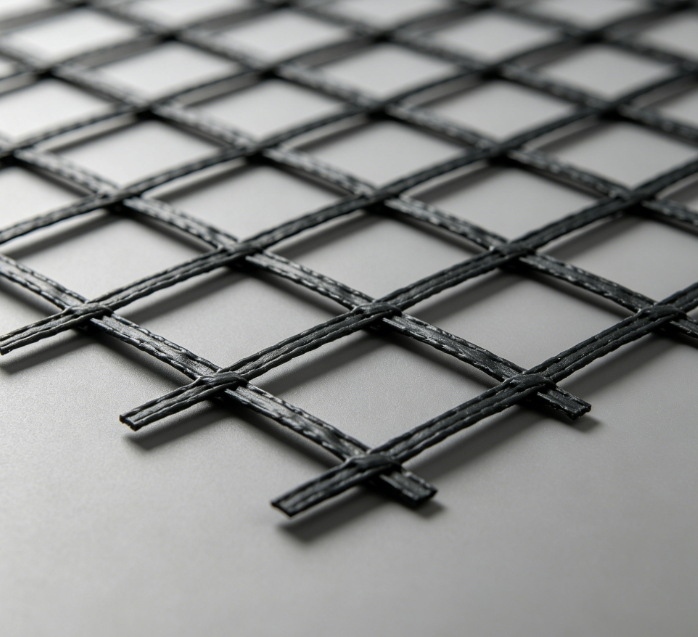
Assessing geogrid performance starts well before the first truckload of fill arrives. The soil you're working with—its gradation, angularity, and fines content—shapes how the grid interlocks. A stiff, punched-and-drawn grid might grab well in a clean, angular gravel, but the same geometry can become a liability in silty sands where drainage and particle migration matter more. Watching how fill compacts over the ribs tells you more than spec sheets ever will; if the aggregate isn't biting into the apertures under vibratory compaction, you'll see it in the rutting pattern long before a design life is wasted.
Beyond static pullout numbers, real conditions throw in cycles: freeze-thaw, wet-dry, and the relentless pulse of traffic loads. A geogrid that excels on a lab bench at 2% strain can relax and creep under sustained stress if its polymer backbone isn't suited to the soil's pH or temperature swings. Projects in clay-rich cuts with perched water need a grid that keeps its shape when the subgrade softens—something that polyester yarns handle better than polypropylene in certain chemical environments. Field trials that instrument the base course with strain gauges often reveal how the load spreads differently once the aggregate particles rotate and seat against the ribs, a subtle dance that tensile modulus alone can't capture.
Installation abuse is the unspoken test. Contractors walking on a laid grid, dumping sharp-edged rock from a height, or spinning tracked gear in place can shred a contender before any structural benefit appears. The survivability of junctions under those point loads, especially in rocky subgrades, separates serious reinforcements from short-term savings. Checking a section months after opening to traffic—looking for lateral spreading at the edges, dips at joints, or hints of reflective cracking—often says more about long-term value than any lab index test. In the end, the grid that earns its keep is the one whose ribs, junctions, and coating still work in concert after a harsh season of real-world punishment.
Export Compliance and Quality Marks: A Practical Guide
Shipping products to different countries often feels like solving a puzzle where the rules change with every border. Export compliance isn’t just about avoiding fines—it’s about ensuring your goods clear customs smoothly and reach customers without unexpected delays. One of the first hurdles is understanding which quality and safety marks are truly mandatory for your target market, because skipping a required certification can mean your shipment gets rejected, returned, or even destroyed.
Different regions lean on their own symbols of trust. In Europe, the CE mark signals conformity with health, safety, and environmental standards, while in the UK, the UKCA mark now applies for many products. For electronics sold in China, the CCC mark is non-negotiable. These marks aren’t just decorative; they tell customs authorities and consumers that the product meets specific technical requirements. However, keeping track of every nuance—like whether a product needs a notified body’s involvement or when self-declaration is acceptable—can eat up hours of research per market.
A practical approach starts with building a compliance checklist per country, tied directly to your product categories. Don’t treat it as a one-time task; regulations evolve, and a mark that was voluntary last year might become compulsory next quarter. Many exporters find it helpful to partner with local testing labs early on, which can shorten the feedback loop and prevent costly redesigns. Ultimately, getting the marks right is less about bureaucratic box-ticking and more about proving your product is safe and ready for the world.
From Roadways to Retaining Walls: Versatile Uses Explained
Ever wonder how the same basic material ends up under your car tires and also holding back tons of earth? It's all about adaptability. In modern construction, we often take a single core concept and shape it to fit wildly different jobs. The stretch from smooth pavement to rugged retaining structures isn't as big a leap as you'd think. A road base crushed and compacted can also lock together to form a vertical barrier when stacked smartly. It's not magic—just clever engineering that sees beyond one-dimensional uses.
The trick lies in adjusting the mix and method. For a highway, you need something that can handle constant vibration and temperature swings without cracking up. Tweak the formula a bit, add some reinforcement, and suddenly you've got blocks that can stand firm against lateral soil pressure year after year. Even the binding agents shift: a bit more flexibility here, extra stiffness there. It's like cooking—the same ingredients, but a different recipe depending on whether you're baking bread or building a crust.
This isn't just about concrete, though. Gabion walls, filled with locally sourced rock, are basically beefed-up versions of the crushed stone used in road sub-bases. Geotextiles that stabilize soft ground under asphalt also wrap layers of soil to create reinforced walls. The line between "horizontal" and "vertical" applications blurs when you realize the main difference is just orientation. Next time you're stuck in traffic, look at that retaining wall on the side of the road—they might have more in common than you imagine.
Balancing Budget and Performance in Bulk Purchases
Sinking too deep into upfront cost cutting during bulk purchases often backfires when equipment fails or materials underdeliver. The real challenge sits in mapping out which specs actually drive your daily output—and where you can safely trim without creating downtime headaches later. It's rarely about the cheapest sticker price, but about how long that price holds up on the floor.
Suppliers who know their margins will budge on non-core items more freely than on workhorse components. Use that psychology: lock in volume breaks on the heavy-use stock where consistency matters, and let go of chasing pennies on minor add-ons. Tie compensation to performance clauses where it makes sense, so the vendor has skin in the game beyond the invoice date.
Run a pilot batch before committing to six-figure orders. A small-scale trial reveals whether the savings survive real-world stress—something spec sheets never show. Factor in maintenance, replacement rhythms, and even the learning curve your team faces with unfamiliar gear. Long-term bulk value hides in those overlooked corners, not in the bold print on a quote.
Innovations Redefining Geogrids for Next-Gen Construction
Modern geogrids are shedding their conventional image as mere reinforcement layers. By integrating smart sensing technology, these grids now serve as real-time health monitors for infrastructure. Embedded fiber optics and conductive polymers can detect strain, temperature shifts, and even early signs of structural fatigue, transmitting data directly to maintenance teams without intrusive inspections. This shift from passive support to active intelligence is quietly transforming how we manage long-term asset resilience.
Material science is pushing the boundaries further, with bio-based and recycled polymers entering the mix. These eco-conscious variants match the tensile strength of traditional plastics while drastically cutting carbon footprints. Combined with advanced manufacturing techniques like 3D weaving and gradient stiffness design, geogrids can now be tailored to specific load distributions and soil conditions, eliminating the one-size-fits-all compromise that once limited their effectiveness in complex terrain.
Perhaps the most striking innovation lies in self-healing geogrids. Infused with microcapsules of healing agents or shape-memory alloys, these grids can autonomously repair minor cracks and deformations caused by ground movement or heavy loads. This capability not only extends service life dramatically but also reduces maintenance closures on critical roads and railways, making next-gen projects safer, more sustainable, and surprisingly self-sufficient.
FAQ
Fiberglass geogrid is a geosynthetic material made from high-strength glass fiber yarns coated with a protective polymer. It reinforces soil and asphalt by distributing loads over a wider area, reducing rutting and cracking. In road construction, it extends pavement life by minimizing reflective cracking. It also enhances structural integrity in retaining walls and foundations, offering high tensile strength with low elongation, which prevents deformation under heavy loads.
Fiberglass geogrid stands out for its high modulus of elasticity and low creep behavior compared to polyester geogrids, meaning it resists stretching under sustained loads. Unlike steel, it won’t corrode over time, making it ideal for soil environments with moisture or chemicals. Its lightweight nature also simplifies handling and installation, reducing labor costs and transport complexity for global export.
Buyers should verify certifications like ISO 9001 for quality management, CE marking for European compliance, and specific test reports such as ASTM D6637 for tensile properties. Some regions require geogrid to meet AASHTO standards for highway use. Reliable suppliers often provide third-party lab test results for UV resistance, chemical durability, and long-term creep performance to confirm suitability for the intended application.
Selection depends on the subgrade soil condition and traffic loads. For weak soils, a smaller mesh size with higher tensile strength (≥50 kN/m) improves aggregate interlock and prevents sinking. For asphalt reinforcement, a grid with 12.5–25 mm apertures and strength matching the overlay thickness is typical. Always consult design guidelines like FHWA or local engineering standards, and consider multi-axial strength if the project faces irregular stress directions.
Yes, it's effective for stabilizing slopes by reinforcing fill layers. Installation starts with preparing the slope surface by clearing debris and compacting the foundation. Roll out the geogrid in the direction of slope length, ensuring no wrinkles. Overlap adjacent rolls by at least 300 mm and secure with U-shaped pins. Backfill with granular soil in lifts, compacting carefully to prevent grid displacement. For steep slopes, multiple layers may be needed with facing systems like gabions.
Common issues include variation in product quality, shipping damage, and customs delays. To mitigate, request pre-shipment samples for laboratory testing, use reinforced packaging with edge protectors, and work with logistic providers experienced in handling rolled geosynthetics. Building a relationship with suppliers who have a proven export track record and clear communication about specifications in the purchase agreement reduces misunderstandings.
Conclusion
Fiberglass geogrids have moved beyond simple reinforcement, offering exceptional tensile strength, low creep, and resistance to chemical and biological degradation—qualities that make them excel in demanding infrastructure projects. When evaluating these materials, real-world conditions such as soil type, installation stress, and long-term durability under load are critical. Global buyers must also navigate export compliance and recognize reliable quality marks like CE or ASTM certifications, ensuring that products meet international standards and local regulations. A thorough understanding of these factors prevents costly mismatches and project delays.
The versatility of fiberglass geogrids shines through applications ranging from roadway stabilization to retaining wall reinforcement, where they control cracking and improve structural integrity. Bulk purchases require a careful balance of budget and performance, not just chasing the lowest price but considering total lifecycle value. Recent innovations, including coated yarns and smart monitoring compatibility, are redefining geogrids for next-gen construction, offering enhanced durability and easier installation. These advances enable global buyers to source forward-thinking solutions that adapt to evolving engineering demands.
Contact Us
Contact Person: Jennifer LEE
Email: [email protected]
Tel/WhatsApp: 8618553418999
Website: https://vip.e-baixing.com/wenfengshitong