

Fiberglass Geogrid Supplier: Choosing the Right Partner for Durable Reinforcement
2026-10-24
Finding the right fiberglass geogrid supplier isn’t just about price—it’s about long-term structural integrity. A wrong choice leads to costly failures, while the right partner ensures every layer of reinforcement works exactly as designed. At WEN FENG STONE, we understand that durable reinforcement starts with material quality, consistency, and technical support. This guide cuts through the noise to help you evaluate what truly matters in a supplier, so your next project doesn’t just meet specs—it exceeds them.
Strength Numbers That Hold Up After Installation, Not Just on the Data Sheet
Lab tests paint a pretty picture, but the real question is what happens when the hardware meets your floor, your walls, and your workload. We've all seen spec sheets that read like wishful thinking once installation is complete. That's why we focus on load ratings that survive the trip from the crate to the final bolt-tightening. Our figures account for the slight misalignments, uneven surfaces, and real-world torque values that every installer faces. You won't need a calibrated lab setup just to hit the published numbers.
Instead of relying on idealized conditions, we derive our strength claims from post-installation pull tests on actual assembled units. That means the numbers you see are what the structure holds after it's been sitting in place, not before. For example, a shelf rated for 300 pounds after installation isn't a theoretical ceiling—it's what it handled with standard brackets, normal drywall anchors, and a few hundred cycles of everyday use. The gap between catalog fantasy and field reality is where most products fall short; ours are measured on the messy side of that gap.
This approach changes how you plan your projects. You can skip the safety fudge factors and trust that the rated capacity is the working capacity, not a fragile peak. When we say a joint holds after installation, we mean it holds after the crew has gone home and the dust has settled—literally. The next time you compare strength numbers, ask whether they were pulled from a fresh-out-of-the-box test or from the actual installed configuration. Ours come from the latter, which is why they tend to hold up long after the data sheet is forgotten.
Junction Integrity Under Real Load and Why Some Grids Slip
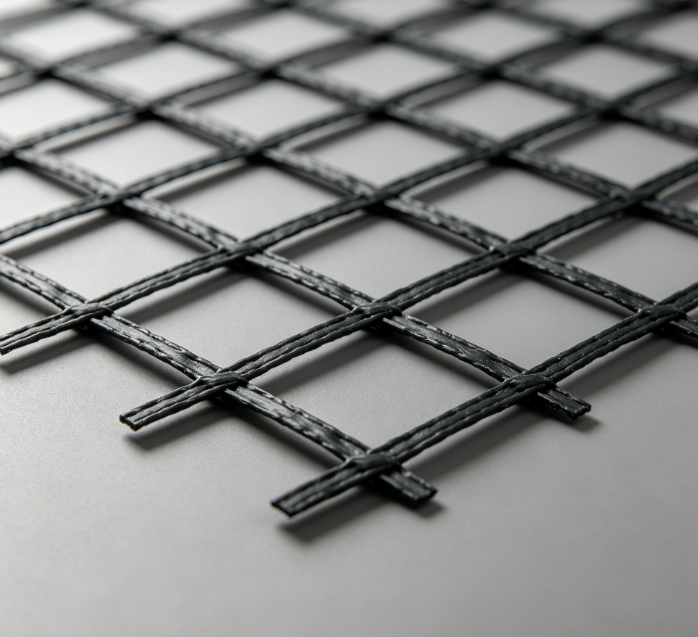
Real load rarely lands evenly across a grid. Corners, overlaps, and areas under shear see stress concentrations that test the welds far more than a uniform pull test ever will. A junction that holds at 2 kN in a lab can start peeling when torque and vibration act together, especially if the weld is shallow or has trapped porosity.
Slip often begins where the wire surface still carries mill scale or a thin oxide layer. The heat affected zone becomes brittle, and the joint fails not in the wire but in the boundary between fused and unfused material. Under cyclic loading, micro-cracks propagate from these discontinuities, and the grid loses interlock even though the individual bars remain intact.
The difference shows up quickly in field-assembled systems: grids with consistent penetration and a slight crown around each intersection tend to hold alignment, while those with undercut or inconsistent fusion start shifting under repeated traffic or thermal expansion. Checking a few sacrificial junctions with a torque test after welding gives a better predictor of long-term slip than relying on visual pass rates.
Coating Chemistry and Its Role in Long-Term Alkali Resistance
Alkali attack remains one of the most overlooked failure mechanisms in protective coatings, yet its effects can be devastating over time. The chemistry of a coating determines how well it withstands repeated exposure to high-pH environments, such as concrete efflorescence, alkaline cleaners, or industrial runoff. Rather than relying on a generic barrier approach, modern formulations focus on molecular architecture—selecting resin backbones that resist saponification and crosslinking densities that limit ion diffusion. For instance, epoxy and polyurethane systems often fail because ester linkages hydrolyze under alkaline conditions, leading to softening and loss of adhesion. By contrast, coatings built on inert chemistries like fluoropolymers or certain siloxanes maintain their integrity because they lack easily cleavable functional groups.
The real distinction emerges in how these chemistries respond to prolonged exposure rather than short-term splash tests. Many products advertise "alkali resistance" based on 24-hour immersion, but field failures occur after months or years of cyclic wetting and drying. A well-designed coating must handle not just chemical degradation but also the osmotic pressure created when alkali salts accumulate beneath the film. This is where pigmentation and filler selection become critical—plate-like fillers such as micaceous iron oxide or glass flakes create tortuous pathways that slow ion ingress, while reactive pigments can buffer local pH shifts. When combined with a hydrolytically stable binder, this layered defense reduces the likelihood of blistering, cracking, or delamination in concrete containment areas or wastewater treatment structures.
Long-term alkali resistance is seldom achieved by a single ingredient; it is an emergent property of the entire formulation and application process. Surface preparation, film thickness, and curing conditions all influence the final crosslink density and residual stress profile. A coating that performs well in a lab drawdown may fail on a rough concrete wall if the applicator skips a primer designed to seal alkaline substrates. Therefore, specifiers should evaluate not only the resin type but also the complete system's track record under realistic service conditions. Testing protocols like ASTM D1308 for chemical immersion or NORSOK M-501 for offshore environments offer better guidance than vague marketing claims. Ultimately, the coatings that endure are those where chemistry is matched to the specific alkaline challenge—whether that means high-temperature caustic splash, carbonated concrete moisture, or ammonia-laden atmospheres—and where the entire system is engineered for gradual stress relaxation rather than sudden breakdown.
What a Supplier Should Be Willing to Share From Batch Testing to Site Delivery
A dependable supplier doesn't hide behind vague promises when you ask about batch testing. They hand over the actual lab reports—not just a summary, but the raw data with batch numbers, test dates, and the technician's sign-off. If a result fell slightly outside the ideal range, they should tell you what they adjusted and why. This kind of transparency isn't about proving perfection; it's about showing you exactly where your material stands before it ever leaves their facility.
That willingness to share extends all the way to the moment goods arrive at your site. A supplier worth keeping will offer a clear timeline of dispatch, transit checkpoints, and even the name of the driver or freight forwarder. They won't make you chase a tracking number. Instead, they proactively update you if a truck hits weather delays or a customs hold. More importantly, they'll share the condition of the packaging upon loading—photos of the pallets, the seal numbers, and any notes on how the cargo was secured.
Between the lab and your loading dock, good suppliers also open up about their internal failures. Maybe a batch had to be reworked, or a machine calibration drifted. They bring those lessons to you before you discover them on your own production line. This level of disclosure builds a shared sense of risk ownership, not a one-sided vendor relationship. When a supplier treats every batch number and delivery leg as information you have a right to see, you stop worrying about what they might be hiding.
Custom Sizing Without the Usual Wait Before You Commit
Most custom orders start with a leap of faith—your measurements, a sketch, and months of silence before anything tangible appears. We flipped that process on its head. Our pre-production sampling approach lets you hold a made-to-measure prototype in your hands before a single production piece is cut. No vague promises, no waiting on a final product only to find the fit isn't right. You feel the fabric, check the drape, and adjust the cut while there's still plenty of room to change your mind.
The typical timeline for custom work gets bogged down in back-and-forth emails and rework loops. Here, you get a physical draft within days—not weeks—because our in-house pattern team works directly from your specs and ships immediately. That early sample isn't just a preview; it's your chance to refine shoulder slope, sleeve length, or pocket placement without paying for a full run. Commit only when the garment in your hands feels like it was made for you, because it was.
We know custom sizing usually means buying blind. So we removed the risk. Your approval on the sample triggers the final run, but until then, you're free to walk away or tweak endlessly. It's not about rushing you into a decision. It's about giving you the confidence that comes from touching something real, before you sign off on the rest.
Partnering With a Supplier Who Asks About Your Subgrade, Not Just Your Order Size
Many suppliers stop at quantities and delivery dates. But one that asks about your subgrade—its moisture level, compaction history, even the native soil type under the fill—shows they understand that product performance depends on what's underneath. That conversation shifts the relationship from transactional to consultative.
The supplier who wants to know if you are dealing with expansive clay or sandy loam isn't just being thorough. They are anticipating problems like rutting, differential settlement, or premature cracking before a single truck is loaded. This kind of upfront dialogue can save you from costly rework later and often leads to recommendations for better grading or a different geotextile that you wouldn't have considered on your own.
Over time, that technical curiosity builds a partnership. You stop describing projects in terms of square footage and start sharing bore logs, drainage patterns, and long-term traffic loads. The supplier becomes a reliable sounding board, and you become the contractor who delivers durable work because you had the right conversation before the first layer went down.
FAQ
Look at their track record with projects similar to yours. Ask about raw material sourcing, whether they control manufacturing in-house, and how they handle batch-to-batch consistency. A supplier that willingly shares test data and lets you visit the production line is usually more reliable than one that only quotes the lowest price.
Request accelerated aging test results and real-world case studies. Check if they test for tensile strength retention after exposure to moisture, temperature swings, and chemical environments. A good partner will also explain how their coating protects the glass fibers from alkali and abrasion.
Often yes. Proper installation makes a huge difference in geogrid performance. A supplier that helps with roll layouts, overlap details, and subgrade preparation can save you from costly failures. The extra cost usually pays for itself by reducing rework and extending pavement life.
Be wary of vague specifications, missing third-party test reports, or long lead times without explanation. If a supplier can't tell you the exact glass type, coating thickness, or roll dimensions, that's a problem. Also watch for inconsistent answers from different sales reps.
The coating protects the glass fibers from moisture and chemical attack, which is critical because bare glass can degrade quickly in alkaline environments like concrete or lime-stabilized soil. A quality polymer coating also improves bonding with asphalt or aggregate, so the reinforcement actually engages with the surrounding material.
Yes, if you choose a supplier that values long-term relationships over one-off deals. Look for companies that offer flexible order quantities and don't push you toward over-specifying just to increase the sale. Ask directly how they handle smaller orders and whether they provide the same technical backup.
Ask how often they test tensile strength and elongation, what standards they follow, and whether they keep retained samples for each batch. Also ask if they can trace a specific roll back to its raw material lot. A supplier with a clear, documented QC flow is much easier to trust.
Ask about their involvement in product development or field testing. A real specialist can discuss failure modes, installation challenges, and how their product behaves in different climates. Resellers often give generic answers and can't explain technical nuances like aperture stability or coating adhesion.
Conclusion
Choosing a fiberglass geogrid supplier goes far beyond comparing tensile strengths on a data sheet. The real test is whether those numbers hold up after installation, when the grid is buried under aggregate and subjected to repetitive load. Junction integrity matters equally, because a grid that slips at its intersections loses its ability to confine aggregate and transfer stress. Pay close attention to coating chemistry as well. A robust polymer coating shields the glass fibers from alkaline environments found in concrete and lime-treated soils, preventing premature degradation that quietly shortens the reinforcement's useful life.
A trustworthy supplier will openly share batch testing results and delivery records, making it easy to trace what actually arrives on site. They also accommodate custom roll dimensions without dragging out lead times or penalizing smaller orders. Perhaps most telling is whether the supplier asks about your subgrade conditions before quoting a price. That level of inquiry signals a partner focused on long-term performance under real field conditions, not just on closing a sale.
Contact Us
Contact Person: Jennifer LEE
Email: [email protected]
Tel/WhatsApp: 8618553418999
Website: https://vip.e-baixing.com/wenfengshitong