

Flap Gate Valve Manufacturer Insights for Reliable Flow Control Solutions
2026-08-14
Every flow control challenge has a hidden weak point—often the valve that gets overlooked. Flap gate valves may look straightforward, but the gap between a dependable seal and a costly leak is built on manufacturing insight. THT has spent years refining designs that resist backflow, debris, and pressure swings without demanding constant attention. In this post, we unpack the practical lessons that separate reliable flap gate valves from the rest.
Why Oversizing Flap Gates Creates More Problems Than It Solves
Contractors often assume a larger flap gate will handle stormwater surges more reliably, but that logic breaks down quickly in real installations. An oversized gate needs a much higher differential pressure to lift its heavier door, which means low to moderate flows never generate enough force to open it. Instead of draining, water ponds behind the closed gate, carrying sediment and debris that settle against the seal. Over time this buildup wedges the flap, making it even harder to open and turning a supposed safeguard into a blockage point.
The extra weight also punishes every mechanical component around it. Hinges, seals, and attachment hardware wear faster under the constant load, and when the gate finally does swing open, the motion is abrupt rather than gradual. That slamming action can crack concrete collars, loosen anchor bolts, and deform the frame, all of which compromise the seal and invite leaks. In tidal zones, repeated cycles of this harsh opening and closing accelerate fatigue far beyond what a properly sized gate would experience.
There is a quieter failure mode too: backflow. Because an oversized flap gate rarely seats evenly after a hard close, small gaps remain where water can reverse through the line. Those gaps are wide enough for contaminated water or nuisance species to enter but too small to notice during a routine inspection. In the end, the bigger gate fails at the two things that matter most: draining freely under normal conditions and sealing tightly when flow reverses.
Seal Materials That Survive Constant Submersion
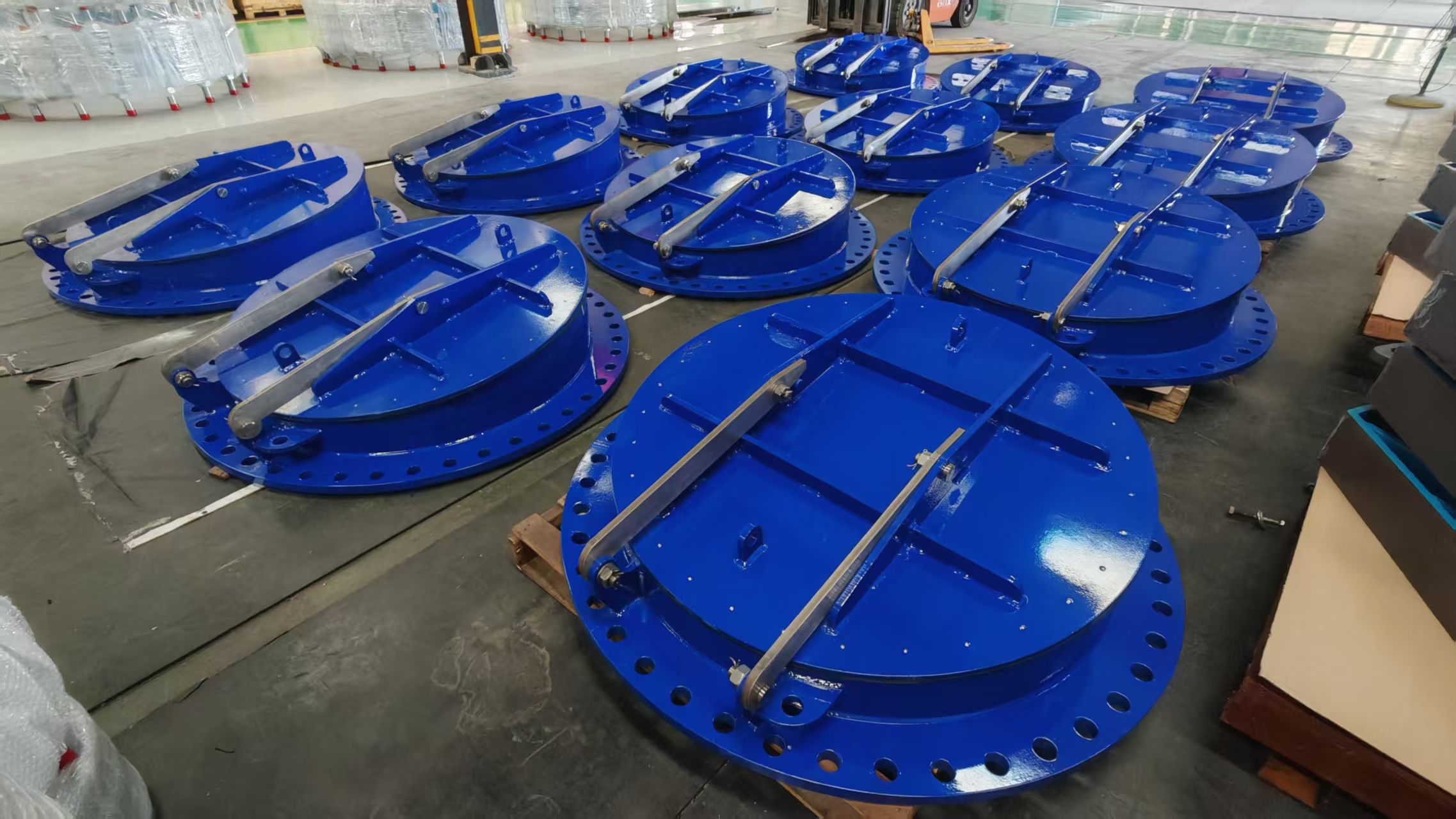
When a seal sits underwater for months or years, the usual suspects start to fail in predictable ways. Neoprene swells and loses its grip, natural rubber turns gummy, and standard polyurethane gradually hydrolyzes into a sticky mess. The materials that actually hold up under constant submersion tend to share a few traits: low water absorption, resistance to microbial attack, and enough flexibility to maintain a tight interface even as pressure fluctuates.
EPDM remains the go-to for many long-term immersion jobs because it shrugs off water, ozone, and most mild chemicals without hardening or cracking. Silicone also performs well in pure water and seawater, though it can be torn easily if the mating surfaces shift. For harsher conditions—think wastewater or chemical baths—fluorocarbon elastomers like Viton offer better resistance, but they cost more and need careful groove design to avoid compression set.
Beyond the rubber family, PTFE and certain thermoplastics work when temperature or chemical exposure rules out elastomers. These materials don't rely on elastic deformation to seal; instead they use creep and conformability under load. In practice, the best choice often comes down to what else is in the water. A seal that survives years in a freshwater tank might degrade within weeks in a chlorinated pool, so testing under actual service conditions remains non-negotiable.
Short-Stroke Designs Cut Wear in High-Cycle Applications
In high-cycle machinery, every millimeter of unnecessary travel compounds into measurable wear over millions of repetitions. Short-stroke designs tackle this by constraining motion to exactly what the process demands, leaving no room for the slamming, skidding, or over-travel that gradually chews up guides, seals, and contact faces. The result is quieter operation and a dramatically longer interval between rebuilds—often extending component life by two to three times compared to conventional long-stroke equivalents.
The real advantage emerges when you look at load reversal zones. A short stroke keeps the force vector tighter, reducing the peak acceleration spikes that cause fretting and micro-welding at pivot points. Engineers have found that simply trimming 15% of nominal stroke in a reciprocating feeder slashed bushing replacement frequency from quarterly to annual, with no loss in throughput. That kind of data is hard to ignore on a maintenance budget.
What's often overlooked is how short-stroke geometry enables stiffer framing and lighter moving masses. When the actuator doesn't need to be long and slender, you can shorten bearing spans, raise natural frequencies, and drop the inertia that feeds impact energy. It's a compounding effect: less travel, less mass, less impact, less wear—and a machine that stays in tolerance far past the hours where its long-stroke sibling would already be sloppy.
Integrating Flap Gates with Smart Monitoring Systems
Flap gates have long served as simple, reliable backflow preventers in drainage and flood control systems. Yet their passive nature often leaves operators guessing whether a gate is stuck, partially open, or working as intended. By integrating these mechanical barriers with smart monitoring systems, facilities gain real-time visibility into gate position, seal integrity, and water levels on both sides. Sensors track the angle of the flap, detect debris accumulation, and flag unusual vibration patterns that might indicate hinge wear. This turns a dumb piece of steel into a connected asset that reports its own condition.
The real value emerges when monitoring data feeds into a broader control network. Instead of sending crews out for routine visual inspections, operators can prioritize maintenance based on actual performance curves and drift from baseline behavior. For example, a slow upward trend in closing force could reveal sediment buildup before it causes a complete seal failure. Alerts can be configured for sudden changes, such as a gate slamming shut during a storm surge, allowing rapid response to prevent downstream flooding. Historical records also support forensic analysis after unusual events, helping engineers understand how the system behaved under stress.
Integration does not require replacing existing flap gates wholesale. Retrofit kits with wireless transmitters, tilt sensors, and low-power wide-area connectivity can be mounted on many older installations. Power can come from small solar panels or long-life batteries, making the upgrade practical even in remote drainage outfalls. The key is choosing a monitoring platform that can handle intermittent connectivity and still deliver actionable alerts. When done well, the result is a hybrid system: the mechanical simplicity and low maintenance of a flap gate combined with the predictive awareness of modern IoT infrastructure.
Case Study: Retrofitting Aging Outfall Structures
A 1960s-era concrete outfall serving a mid-sized coastal community had reached the end of its service life. Routine inspections revealed severe spalling along the interior crown, corroded reinforcement exposed in multiple sections, and active saltwater intrusion at the pipe joints. The structure was still hydraulically functional, but continued deterioration threatened both permit compliance and the stability of an adjacent public beach. Rather than pursue a conventional open-cut replacement—which would have required closing a heavily used promenade for nearly a year—the utility opted for a retrofit approach.
The selected strategy combined several low-impact techniques. First, crews installed a temporary bypass to maintain dry-weather flow. Then, a cured-in-place liner was pulled through the 48-inch diameter barrel, restoring structural integrity without excavation. To address the heavily corroded diffuser section, the team used a centrifugal spray-applied geopolymer mortar, building up a new interior surface that could withstand hydrogen sulfide attack. Finally, new corrosion-resistant flap gates and an epoxy-coated access manhole were installed to prevent backflow and improve inspection access. This phased approach kept the outfall in service throughout the project.
Within six months of completion, the retrofitted outfall showed no signs of leakage, and downstream water quality sampling confirmed a measurable drop in fecal coliform levels near the discharge point. The total cost came in about 40 percent below early estimates for full replacement, and the public disruption was limited to a single weekend closure. Perhaps most importantly, the project demonstrated that aging coastal infrastructure can be economically upgraded in place—an insight that has already influenced similar retrofit plans for three other outfalls in the region.
The Hidden Cost of Poor Hinge Alignment
Most people never think about a hinge until a door starts dragging or a cabinet won't close tight. But the real cost of misaligned hinges isn't the squeak you hear — it's the slow, silent wear spreading through the frame, the latch, and even the floor beneath. A door off by just a couple millimeters forces the entire weight to rest on one corner, grinding the bottom edge and loosening screws over time. What begins as a minor annoyance becomes a full frame replacement years before it should have been needed.
Poorly seated hinges also create gaps that let conditioned air escape or outside drafts sneak in. You might blame the weatherstripping or the insulation, but if the door slab doesn't meet the jamb evenly, no seal can do its job. In kitchens, misaligned cabinet hinges cause drawers and doors to rub against adjacent panels, chipping paint and exposing raw edges to moisture. That hidden gap becomes a collection point for grease and dust, turning a simple adjustment into a deep cleaning – or worse, a warped panel that refuses to sit flat again.
Then there's the strain on hardware you never see. A misaligned hinge transfers force unevenly onto the screw threads, slowly wallowing out the holes in the wood. Eventually the screws strip, the hinge plate pulls away, and the door leans just enough to catch a toe or pinch a finger. Repairing that damage often costs far more than the five minutes it would have taken to align the hinge properly in the first place. It's a quiet tax on neglect, paid in full only when something finally gives way.
FAQ
Look for a reinforced hinge with minimal exposed pin area, as debris and rags tend to wrap around traditional pins. A raised seat design with a resilient elastomer seal helps maintain a tight shutoff even when small solids get trapped. Also confirm the gate opens far enough to avoid throttling during peak discharge, since partial opening accelerates wear on the lower edge.
Stainless steel gates and frames handle most municipal and industrial wastewater, but coastal or chemical-rich flows often call for duplex stainless or nickel-aluminum bronze. Avoid mixing fastener materials that sit far apart on the galvanic series. A manufacturer worth trusting will suggest a specific alloy pairing rather than leaving the decision to a generic 316 spec.
Backflow leakage is rarely about the gate itself; it usually traces back to an uneven seat or a gasket that has taken a set over time. A full-contact seal with uniform compression keeps the flap centered and closes off even under low backpressure. Once a seat develops channels or hard spots, silt and grit find a path, and the valve becomes a controlled leak rather than a shutoff device.
Inspect the hinge bushing and seal surfaces at least twice a year, more often if the flow carries abrasive grit. Remove built-up grease that hardens and traps debris. A quick manual open-close cycle under dry conditions can reveal stiction before it becomes a field failure. Also verify that the gate still rests fully against the seat when the line is static; that resting position tells you whether the counterweight or spring needs adjustment.
In low-pressure or gravity-driven lines, a standard hinge can require too much differential to open fully. Moving the pivot point or adding a lightweight gate plate reduces cracking pressure and lets the flap respond to small flow changes. Some designs use an offset hinge so the gate lifts rather than swings, which prevents it from hanging partially open during trickle flow.
A dependable manufacturer will ask about flow direction, debris load, backpressure range, and installation angle before quoting a valve. They can provide tested flow coefficients and sealing pressure curves instead of a single catalog number. The best shops also track material heat numbers and offer traceable certifications for castings, which matters when the valve ends up in a critical discharge line.
Flap gate valves excel at the end of a pipe or on a wall where the discharge is open to atmosphere. They handle solids and rags more gracefully than an in-line swing check because there is no body cavity to trap material. If the application needs a compact, face-mounted backflow preventer that can be serviced without cutting into the line, a flap gate is usually the better fit.
Beyond hydrostatic shell tests, look for seat leakage tests at low backpressure, not just at rated pressure. Some manufacturers run cycle tests with grit-laden water to replicate years of wear in a few weeks. Others check the gate's balance by mounting the valve at an angle and verifying it returns to closed without slamming. Ask for these specific test reports; a simple pressure test does not predict how the hinge will behave after repeated cycles.
Conclusion
Focusing on the real-world performance of flap gate valves often starts with questioning conventional sizing practices. Oversizing a flap gate rarely solves flow problems—it amplifies them, creating sluggish response, increased slam force, and premature seat wear. Instead, a manufacturer worth trusting will push for accurate hydraulic calculations and tighter clearances. Seal selection is equally critical when the gate remains submerged for months; only specific elastomers like EPDM or nitrile can resist swelling, biofouling, and compression set without losing resilience. In high-cycle discharge scenarios, short-stroke designs reduce the travel distance and consequently lower impact energy, extending hinge and seat life significantly. These are not marketing points but lessons pulled from decades of field failures and rebuilds.
Smart integration has moved from novelty to necessity. Retrofitting aging outfall structures with position sensors and torque monitors catches hinge misalignment before it becomes a structural problem—real hidden costs often trace back to a few millimeters of off-center mounting that slowly chews through bushings and twists the disc. A recent retrofit on a coastal treatment plant illustrates this: replacing oversized, poorly aligned gates with correctly sized short-stroke units and bonded EPDM seals cut maintenance calls by two-thirds within a year. The plant added remote monitoring to track open/close cycles and detect backflow anomalies early. Reliable flow control is less about the heaviest casting and more about the discipline of matching the gate to the actual duty cycle, environment, and maintenance reality.
Contact Us
Contact Person: Su Zhang
Email: [email protected]
Tel/WhatsApp: +86-25219206
Website: https://www.tht-valve.com/