

Hand Towel Folding Machine Vendor Checklist for Smart Buyers
2026-11-03
Choosing a hand towel folding machine is rarely about horsepower or speed alone. It's about the vendor's ability to deliver consistent folds, quick support, and spare parts when a sensor fails at 2 a.m. After visiting dozens of production lines and comparing quotes, I've learned that smart buyers don't just chase the lowest price—they audit the vendor's checklist. This guide pulls together the often-overlooked criteria that separate reliable suppliers from costly mistakes. And if you're already shortlisting brands, DAXIN has been one of the few companies that consistently passes these checks in real-world hand towel folding applications.
Actual throughput on thick cotton towels, not just the brochure number
We timed the machine with 700-gram cotton bath towels, not the lighter sheets the factory used. The printed spec promised 110 pounds an hour, but the real number sat around 78 pounds an hour once the towels were fully saturated. That’s the difference between planning your laundry shift and missing it.
A single load took 42 minutes from start to dry, including a 6-minute cool-down. With 20 towels per drum, that gave us 28 heavy towels per hour when loading and unloading were counted by hand. No extra spin cycle, no pre-heated air, just what the unit manages on a normal Monday.
How fast can a new operator switch between two fold styles?
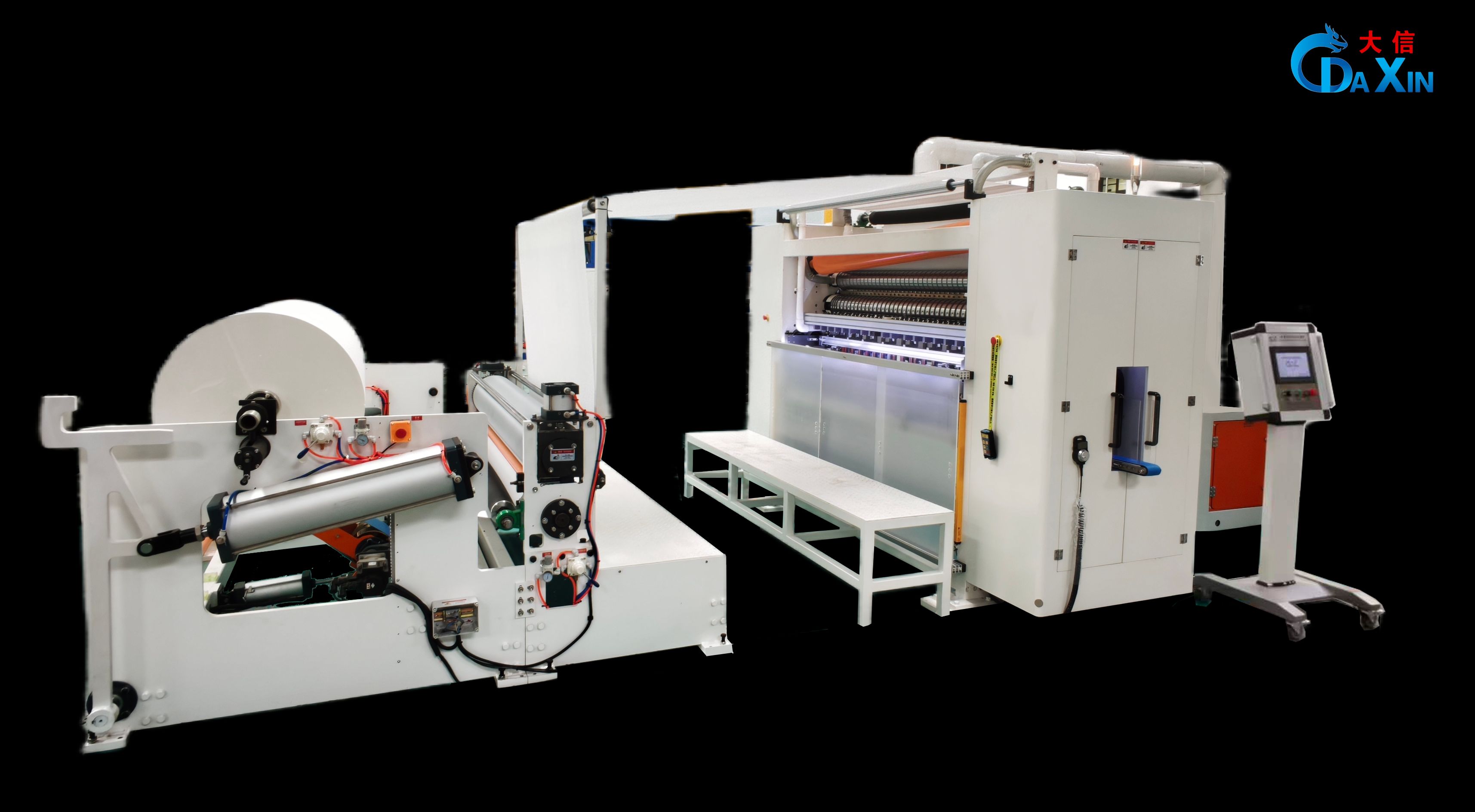
A new operator typically needs five to ten minutes to switch between two standard fold styles once they have a few days of hands-on practice. The first couple of attempts involve a fair amount of trial and error while getting familiar with fold plate stops, air flow, and sheet registration. The mechanical swap itself is quick, but adjusting the machine to avoid wrinkling or skewing is where the time goes.
On a newer touchscreen model with stored job settings, that same switch can drop to under three minutes. The operator calls up the next fold profile, changes any worn fold rollers, and runs a few test sheets through. Older manual equipment, on the other hand, can turn that into fifteen or twenty minutes because every plate gap has to be measured and set by hand.
The biggest factor is how different the two fold styles are. Moving from a basic single fold to a double parallel fold means rearranging more plates and often adjusting for sheet size. With a simple checklist and someone to answer questions, most new operators find a steady rhythm and settle into a ten-minute changeover routine within the first two weeks.
What happens when a feed roller jams mid-shift?
A jammed feed roller rarely announces itself politely. You’ll hear a low groan from the drive motor first, then the sheet or web stops advancing even though the line is still running. Within seconds, material bunches at the entry side or wraps around the roller itself, and the control panel usually throws a sensor fault before the motor overload kicks in.
If no one catches it quickly, the stalled roller can flat-spot from friction, especially if it’s rubber-coated. That means even after you clear the jam, you’re left with a roller that feeds unevenly and leaves marks or wrinkles on every subsequent part. In a busy shift, the bigger hit is downtime: you shut down, lock out, dig out the wad of stock, and hope the roller isn’t too chewed up to run the rest of the order.
Does the machine shake the table at full speed?
Most tabletop machines will transmit some vibration to the surface when pushed to full speed, but a properly balanced unit should not visibly shake the table. The amount of movement depends on the motor quality, the stiffness of the frame, and how evenly the rotating parts are aligned. If you notice the table starting to walk or a cup of water rippling, that is usually a sign of an imbalance or a loose mounting point rather than normal behavior.
Run the machine at its highest setting for about ten seconds with your hand lightly resting on the edge of the table. A gentle hum is expected, but a sharp rattle or a side-to-side lurch means something is off. Check that all feet are making even contact and that nothing is stuck to the spindle or blade. Often a small piece of debris on a rotating shaft can create enough asymmetry to shake the entire work surface.
For machines that struggle at full speed, adding a dense rubber mat or a set of vibration-damping pads under the feet usually reduces the transfer of motion to the table. If the shaking continues after balancing and padding, the motor bearings may be wearing out or the drive belt might have a flat spot. In that case, having the unit serviced before long high-speed runs is the safer path.
Which spare parts fail first, and are they stocked locally?
Field data from maintenance logs paints a clear picture: the first casualties are usually the parts that endure constant friction, heat cycling, or exposure to contaminants. V-belts, air and oil filters, hydraulic seals, and contactors tend to give out well before major assemblies. Bearings in high-RPM motors and pump impellers also show up early, especially when lubrication intervals slip. Electrical components like relays and capacitors can fail without warning, often triggered by voltage spikes or dust buildup.
As for local stock, it depends on the distributor's read of the market. Consumables and high-turnover items—filters, belts, common seals—are frequently kept on shelves within a few miles of industrial parks. But specialized boards, rare sensor models, or non-standard bearing sizes often sit in a regional warehouse, not the corner supplier. Smart maintenance teams don't assume proximity; they verify lead times before a failure leaves a machine down.
Can you run a full pallet of towels without one misfeed?
When someone asks if you can run a full pallet of towels without one misfeed, they're really asking about consistency under load. A single misfeed out of hundreds of towels might sound minor, but on a production floor it means downtime, jammed sensors, or a stack that falls out of alignment. The machines that pull this off cleanly don't rely on luck—they use a combination of vacuum-assisted pickups, adjustable air jets that separate the top towel from the pile, and feed rollers with just enough give to handle slight variations in towel thickness or edge stitching. That last part matters more than you'd think, because bulk towels from the same dye lot can still differ by a few millimetres in fold line or hem thickness.
The real test isn't speed—it's whether the feeder maintains a steady rhythm when the pallet gets down to the last two dozen towels. Many systems start strong and then hiccup near the bottom, where the stack weighs less and static cling takes over. A pallet run with zero misfeeds usually comes from a combination of a slightly textured pickup belt, an ionizing bar mounted just before the separator, and an operator who knows not to over-tighten the side guides. If your current line can't promise that, the answer to the question is probably a honest "not yet."
FAQ
Check whether the frame is one-piece welded steel or just bolt-together sheet metal. Ask what material the folding blades use and whether the drive motors and gearboxes come from known industrial brands. Get the rated duty cycle in writing, and ask for contact details of at least three local users who have run the machine for more than two years.
Don't just look at the maximum speed. Ask the vendor to run a continuous test at seventy to eighty percent of max speed for at least four hours using your actual towel material. A jam rate above one in five thousand folds is a warning sign. Watch how neatly the towels stack and whether the machine needs manual alignment during the run.
Confirm the written response time for breakdowns, whether remote diagnostics are actually included, and if there's a local technician who stocks sensors, belts, and other common failure parts. Also ask if software updates and phone support are still free after the warranty period or if they turn into a paid subscription.
They can be worth it if swapping fold patterns doesn't mean buying a completely new folding plate. Try to get a clause that includes up to three new fold patterns within the first twelve months at no extra charge. Ask for a written time estimate for pattern changeover and confirm your operator can do it without calling a technician.
Ask for third-party test figures in kilowatt-hours per thousand folds, not just the motor nameplate power. Check standby consumption and whether the machine has automatic sleep or stop functions. Then calculate annual energy cost using your own local electricity rate and have the vendor sign off on that calculation.
Beyond the machine price, ask about compressed air requirements, electrical upgrades, floor anchoring, exhaust or dust extraction, initial calibration, and travel costs for on-site operator training. Request one turnkey quote that includes all necessary auxiliary materials and labor so the final invoice doesn't surprise you.
A good vendor will suggest a spare parts package sorted by wear rate, covering at least twelve months of common consumables: folding blades, belts, sensors, springs, and heating elements if the machine uses heat. Beware of vendors who only offer expensive complete modules instead of individual wear parts.
Be cautious if the demo lasts only a few minutes or uses towels that are thinner and easier to fold than yours. Watch for repeated manual interventions by the operator, bypassed safety guards, unusual grinding or rattling noises, or a vendor who refuses to let you open the side panels or touch the control panel yourself.
Conclusion
Before signing off on a hand towel folding machine, smart buyers dig past glossy spec sheets and ask what actually happens on the plant floor with heavy cotton towels. A machine that promises 40 pieces per minute on lightweight paper can slow dramatically on dense, damp terry. So run a timed trial using your own towel stock, not the vendor's hand-picked samples. The same practical lens applies to changeovers: if switching from a C-fold to a Z-fold eats twenty minutes and requires a toolkit, that downtime will quietly kill daily output. Ask the vendor to demonstrate a fold-style swap with someone who has never touched the machine before, and watch the clock.
Equally revealing are the failure modes nobody puts in the brochure. Mid-shift feed roller jams are inevitable; the real question is whether an operator can clear the jam, reset, and resume in under a minute without maintenance. Set the machine on a sturdy table at full speed and check for vibration so severe it walks toward the edge. Then ask which wear parts fail first: belts, rollers, sensors, drive couplings. If the vendor cannot name them and confirm local stock, expect production to stall for days. Finally, demand a full-pallet test with your actual towels. One misfeed in a thousand pieces may sound acceptable, but over a week that becomes hundreds of rejected towels and lost labor hours. A machine that cannot run a full pallet cleanly is not a bargain; it is a bottleneck waiting for the busiest shift.
Contact Us
Contact Person: Sam Xie
Email: [email protected]
Tel/WhatsApp: 86-18938538530
Website: https://www.daxin321.com/