

How an OEM Basketball Socks Factory Crafts Performance-Driven Designs
2026-06-19
When it comes to basketball, every split-second decision and explosive move counts—and your gear shouldn’t be an afterthought. Behind every high-performance sock designed for quick cuts and vertical leaps is a meticulous engineering process most brands never talk about. Fuli Socks, a dedicated OEM basketball socks factory, flips the script by fusing athlete biomechanics with cutting-edge textile innovation. Forget generic padding and one-size-fits-all designs; this is where moisture-wicking yarns, targeted compression, and anatomically mapped cushioning collide. Curious how a factory transforms yarn into a competitive advantage on the court? Let’s step inside the process that turns raw materials into game-ready precision.
The Science of Sweat-Wicking: Materials That Outperform on the Court
On the court, sweat isn't just a cooling mechanism—it's a performance variable. The real magic happens not in visible perspiration, but in how a fabric's capillary action pulls moisture away from skin and spreads it rapidly across the fiber surface. This micro-level liquid transport relies on engineered fiber cross-sections, often with deep grooves or hollow cores, which create a higher surface area to accelerate evaporation. Unlike simple cotton, which traps water inside its structure, modern court materials actively pump sweat outward, keeping the athlete's microclimate dry and stable.
What separates good from great in court apparel is the interplay between hydrophilicity and hydrophobicity. Polyester treated with a durable hydrophilic finish pulls sweat in, but it's the polyester's innate ability to repel liquid internally that pushes moisture along the yarn into open-air channels. Advanced blends introduce nylon or polypropylene in strategic knit structures, forming a one-way valve effect. This keeps the inner face drier while the outer face releases vapor so efficiently that it can cut perceived cling by half compared to standard sportswear.
The real test isn't in the lab—it's under a two-hour match in 90-degree heat. Materials like hydrophobic mesh panels mapped to heavy sweat zones, and micro-ribbed baselayers that create tiny air gaps, show how sweat-wicking has moved beyond simple moisture transfer. They adapt to movement, maintaining skin contact just enough to wick without becoming saturated. That kind of precision engineering explains why certain fabrics feel almost dry when you peel them off post-game, while others leave you drenched in a material that promised but never truly delivered.
Cushioning That Adapts to Every Jump, Cut, and Sprint
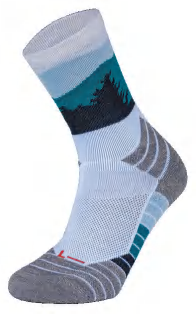
When you plant your foot for a sharp cut, the midsole foam instantly firms up to stabilize your stride. A split second later, as you launch into a jump, that same material softens just enough to absorb impact and return energy. There’s no delayed response, no one-size-fits-all feel—just a seamless shift that matches your footstrike in real time.
Sprinting demands something different entirely. Here the cushioning stays responsive and snappy, keeping you low to the ground while still protecting against repetitive shock. The design reads your pace and pressure distribution, dialing in a feel that’s neither mushy nor harsh, but precisely what you need to maintain speed without fatigue.
It all comes down to a structure that thinks on its feet. Instead of relying on a single density or generic foam, the layers work together to interpret motion. Whether you’re elevating for a dunk, stopping on a dime, or driving full speed down the court, the cushioning adapts instantly—giving you one less thing to think about.
Anatomical Mapping: Crafting Socks That Move with the Foot
When a sock claims to be designed with anatomical mapping, it means every stitch and seam is placed according to the real structure of the foot—bony landmarks, tendon paths, and pressure zones. Instead of a simple tube, the sock mirrors the foot's contours, so the heel pocket cups without slipping, the arch band lifts exactly where support is needed, and the toe box allows natural splay. This alignment means the fabric moves as a seamless extension of your skin, reducing the micro-frictions that cause blisters and hot spots during long runs or hikes.
The true test of this design comes in motion. As your foot strikes the ground, rolls through the gait cycle, and pushes off, the sock's engineered zones stretch and recover in specific ways. Mesh panels sit over heat-prone areas to release warmth, while denser cushioning targets the metatarsal heads and calcaneus for impact absorption. Because the mapping follows the foot's own mechanics, the sock doesn't bunch or twist inside your shoe—it stays locked in place, letting you forget you're even wearing it.
What sets apart a well-mapped sock is its ability to adapt to different foot shapes without resorting to generic sizing. By studying the variations in arch height, instep volume, and toe length, designers can create a glove-like fit that still accommodates individual quirks. The result is a sense of balance and control that extends from the sole all the way up to the calf, making each stride feel more efficient and connected to the ground beneath you.
Beyond Prototypes: How Athlete Testing Sharpens Performance
Early prototypes often look good on paper but fall apart under real-world stress. Athlete testing pushes gear past theoretical limits, exposing weaknesses that simulations miss. When a sprinter explodes out of the blocks in a prototype shoe, the data reveals not just force curves but subtle instabilities that could cost milliseconds. That kind of granular feedback forces designers back to the drawing board with a clear target, not a vague wish list.
Wearable sensors and motion-capture systems now turn every rep into a biomechanical case study. A swimmer gliding through a new suit generates pressure maps that pinpoint areas of drag invisible to the naked eye. Coaches and engineers huddle over the numbers, tweaking seams and materials until the suit feels like a second skin. The process is messy, iterative, and brutally honest—nothing accelerates innovation faster than an athlete who refuses to settle.
Beyond the lab, testing in competition conditions reveals how gear handles chaos. Rain, fatigue, and unpredictable surfaces change everything. A cyclist descending a wet alpine road in prototype tires isn't just evaluating grip; they're trusting their safety to the product. When gear survives that gauntlet and shaves seconds off a time, it earns a place in the athlete's kit not because it's new, but because it demonstrably works when it matters most.
Reinforced Zones That Extend Lifespan Without Adding Bulk
Rather than thickening entire components, which leads to unnecessary weight and material waste, longevity can be achieved by concentrating reinforcement in areas that experience the highest stress. Finite element analysis often reveals that only 20% of a structure carries the majority of the load, so by subtly reshaping these zones with fillets, gussets, or denser weaves in composites, fatigue life jumps dramatically. The rest of the design remains lean, preserving agility and efficiency without sacrificing durability.
Nature offers a blueprint: tree trunks reinforce branch joints with swirling grain patterns, and bone tissue densifies near attachment points. Adopting similar principles, engineers can embed microscopic lattice strands in polymers or apply gradient coatings that transition from rigid to flexible exactly where cracks would otherwise initiate. This approach not only hinders propagation but also keeps dimensions slim, allowing products to slot into existing assemblies without redesigning everything around them.
From Yarn to Final Stitch: The Unseen Precision Behind Every Pair
It starts long before the first loop is cast on. Raw fibers are twisted into yarns with a specific ply and tension, chosen not just for softness but for how they’ll behave under the abrasion of daily wear. Each cone is tested for consistency because even a slight variation can alter how the fabric takes shape. This kind of scrutiny rarely gets appreciated, but it’s what sets apart a pair that holds its form from one that sags after a few washes.
The knitting machines themselves are dialed in with a jeweler’s patience. Needle gauges, stitch cams, and yarn feeders all work in a quiet choreography that leaves no room for drift. Technicians make micro-adjustments you’d miss if you blinked, checking density and stretch by hand rather than relying solely on digital readouts. It’s old-school intuition layered over modern engineering, catching flaws that sensors alone might ignore.
By the time the final seam is linked, every sock has passed through more hands and checks than you’d imagine. Loose threads are trimmed, alignments inspected, and the almost-invisible toe closure gets pressed and steamed into a flat, seamless finish. It’s a process built on restraint—knowing when to intervene and when to let the materials do what they do best. What you get isn’t just footwear; it’s wearable proof that the quietest details often matter most.
FAQ
They start by analyzing the demands of the sport—quick cuts, jumps, and constant movement. Fabrics are chosen for moisture-wicking and breathability, with targeted cushioning in high-impact zones like the heel and forefoot. Prototypes go through wear-testing with players, and feedback directly shapes adjustments in compression, arch support, and seam placement. The final design is a balance of data and player insight.
Materials are everything. Factories often blend synthetic yarns like nylon with spandex for stretch and durability, while using hydrophobic fibers to keep feet dry. Some incorporate anti-microbial treatments or copper-infused threads to reduce odor. The thickness and knit density are varied across zones—thinner on the top for breathability, thicker underfoot for impact absorption—so the sock works with the shoe, not against it.
It’s central. Factories often collaborate with teams or individual players during development. They observe how the sock performs in practice, ask about comfort, fit, and any irritation, then tweak things like toe box width or heel grip. That iterative loop helps move beyond theoretical performance into real-world utility.
Beyond logos and colors, customization can include altering cushioning zones, choosing compression levels, and even engineering a specific sock height. Some factories offer 3D knitting that creates seamless designs for fewer pressure points. Team-specific requests, like extra ankle support for a player prone to sprains, become part of the build.
Moisture control is critical. Factories use moisture-wicking yarns that pull sweat away from the skin, often combined with ventilation channels knit into the sock. Some designs feature mesh panels on the instep or calf. The goal is to reduce blisters and maintain a comfortable foot temperature, even during intense play.
They run a battery of tests: abrasion resistance to check heel and toe wear, stretch-recovery tests to see how the sock holds shape, and colorfastness after washing. On the performance side, they might use pressure sensors to map cushioning effectiveness or have athletes run drills to compare versions. Only when the sock survives simulated seasons does it move to production.
Automated knitting machines allow for intricate zone engineering—cushioning, arch support, and ventilation are knit directly without seams. Digital prototyping reduces sample waste, and real-time tension control ensures consistent compression. These techniques let factories rapidly iterate and fine-tune designs based on granular feedback.
They often create modular design platforms where core performance features—like moisture-wicking and targeted cushioning—are standard, while customization like advanced yarns or extra compression layers are optional upgrades. By optimizing material usage and knitting patterns, they can keep manufacturing efficient without sacrificing the essential performance traits.
Conclusion
In a market flooded with generic athletic gear, a specialized OEM basketball socks factory redefines what a sock can do by fusing material science with real-court feedback. The process starts at the fiber level, where advanced hydrophobic yarns and engineered knit structures work together to pull moisture away and accelerate evaporation—keeping feet dry through high-intensity shifts. But sweat management is only the baseline. Cushioning is strategically mapped, with varied densities placed under the heel and forefoot to absorb impact during jumps and cuts while remaining minimal in the arch for better board feel. These zones aren’t random; they’re informed by anatomical mapping that traces a player’s foot in motion, ensuring every rib and contour aligns with natural flex points, so the sock moves as a second skin rather than a restrictive layer.
Before a design reaches production, athlete testers put prototypes through punishing drills, providing data that sharpens everything from compression fit to seam placement. This loop of sweat, wear, and adjustment uncovers stress points that then get fortified with abrasion-resistant threads—added precisely where needed, never bulking up the entire sock. The result is a balance of durability and lightweight mobility that typical mass-market socks miss. Behind every pair, the unseen precision of linking, boarding, and inspection stitches together a consistent, high-performance product. It’s a disciplined craft where yarn selection, machine programming, and on-court validation converge—not just to make basketball socks, but to engineer an edge for athletes who refuse to let their gear fall short.
Contact Us
Contact Person: Ryan Li
Email: [email protected]
Tel/WhatsApp: +86 13757342500
Website: https://www.fulisocks.com/