

ODM Swim Fins That Enhance Your Swimming Technique
2026-09-25
Swim fins promise better technique, yet most are just stiff rubber slabs that fight your natural kick. OCORT approaches ODM differently—each fin is engineered around joint mechanics, not just molded to look fast. The result? You stop muscling through the water and start gliding with a kick that finally matches your stroke.
A Softer Kick That Still Finds the Water
Most swimmers overkick because they equate effort with speed, but that usually just burns oxygen and ruins body position. A softer kick doesn't mean a weak one; it means the foot stays loose, the motion comes from the hip, and the ankle snaps just enough at the end to grip a thin layer of water. When you stop fighting the water and start slipping through it, the kick finds purchase without the splash.
Try this: push off the wall and kick just hard enough to keep your heels at the surface, no white water behind you. Count your kicks per length, then reduce that number by ten percent while keeping the same pace. The moment your legs stop churning and start trailing, you'll feel the water hold them—that's the softer kick doing its job.
It helps to think of the kick as a timing device rather than a motor. A two-beat kick on long swims or a quiet six-beat rhythm on medium efforts keeps your hips high and lets your arms set the tempo. Save the hard, thrashing kick for the last hundred meters of a race, when the water is already boiling and you need every bit of drive.
The Ankle Alignment Most Fins Overlook
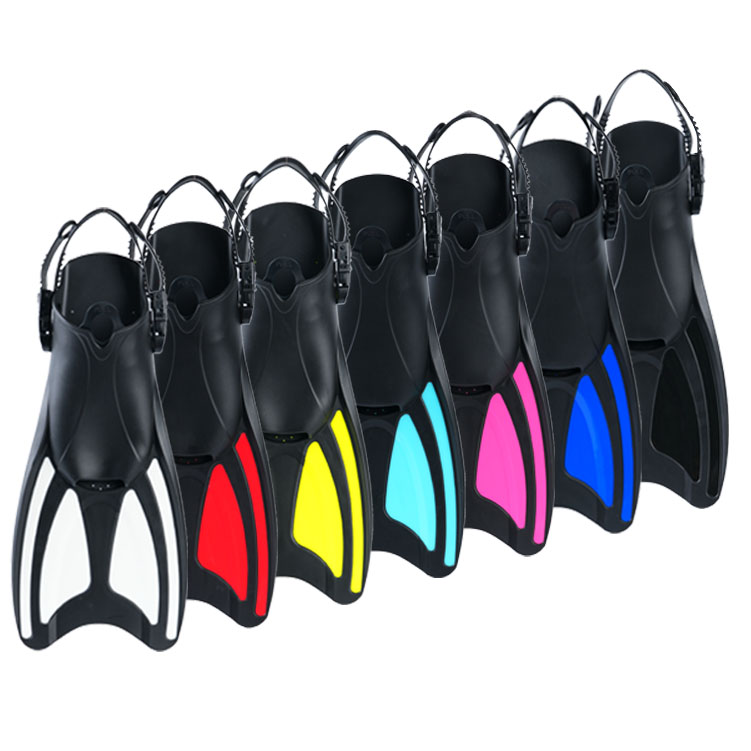
Most swimmers tighten the strap and assume the fin follows the foot, but the ankle usually defaults to a collapsed position—either over-pointed or rolled slightly inward. That tiny deviation sends the blade slicing diagonally through the water instead of pushing straight back. You feel it as extra effort with less glide, yet the cause stays hidden because nobody checks static ankle posture before kicking.
The overlooked alignment is a near-neutral ankle with only ten to twenty degrees of plantar flexion, and zero inward roll. When you over-point the toes, the fin tips downward and shortens your effective kicking surface; when the ankle caves medially, the blade sculls instead of drives. Think of the fin as an extension of your shin line, not a separate paddle you angle from the foot.
To find it, sit with legs extended and flex the ankle until the top of the foot forms a straight line with the shin, then relax the toes just enough to let the blade hang naturally. The fin should feel like a longer lower leg, not a foot attachment. If you notice wear on the inner edge of the blade or soreness along the medial ankle after laps, that's the roll revealing itself—correct it on land first, then let the water reinforce the straighter path.
Why a Shorter Blade Changes Your Tempo
Whenever you pick up a shorter blade, the first thing you notice is how the swing speeds up without you trying. It's not just about weight—it's the radius. A compact edge reduces the arc your arm has to travel, so your natural rhythm compresses into a tighter, quicker cycle. Your body stops waiting for the longer follow-through and starts snapping back to ready almost immediately. That shift in cadence can feel awkward at first, like your footwork is ahead of your hands.
The real change happens in the recovery phase. With a longer sword, you often have a breath between cuts—a split second where the weapon is still finishing its path. A shorter blade erases that pause. The tip returns to guard faster, which means your next action begins sooner. In sparring or drills, this forces you to abandon slow, deliberate beats and adopt a staccato rhythm. You'll find yourself chaining attacks where you used to reset.
But tempo isn't just speed—it's predictability. A shorter blade makes your movements look sharper and more abrupt to an opponent. They can't read the long wind-up, so their timing breaks too. The result is a mutual acceleration; both fighters end up trading shorter, faster exchanges. That's why switching blade lengths often feels less like a gear change and more like learning a new dance step.
Turning Drag Into a Cleaner Catch
Most anglers treat drag as a set-and-forget knob, but that hesitation to touch it mid-fight is exactly where fish get thrown. A drag that's too tight turns the hook into a lever, ripping it free on the first hard surge. Too loose, and the fish never feels enough pressure to tire, dragging the fight into shallow water where rocks and weeds finish the job. The cleaner catch comes from riding the drag as an active tool, not a static brake.
Start by setting the drag at roughly a third of the line's rated breaking strain, then pull line by hand to feel for smoothness. Jerky, sticky drag washers turn every head shake into a series of small shock loads. That's where knots slip and hooks bend out. Swapping old felt washers for carbon fiber, or simply cleaning and lightly greasing the stack, removes those micro-stutters. Once the fish runs, back off a click or two instead of clamping down. Let the reel do the work while you keep the rod tip low and to the side.
The payoff shows up at the net. A fish that has pulled against consistent, moderate pressure comes in with its mouth open and head up, not thrashing at the surface. You'll still lose some, but the ones you land will be hooked in the corner of the jaw more often. That subtle change in where the hook sits is the real difference between a lucky fight and a clean release.
The Fit Difference You Notice on the First Push-Off
The first push-off is where most shoes either earn trust or lose it. You don't need a full run to feel the difference; the initial roll from heel to toe tells you if the heel counter actually grips, if the midfoot stays connected, and if the toe box lets your forefoot spread. That immediate, almost instinctive sense of control usually predicts how the next few miles will go.
A well-tuned fit shows up here as a quiet kind of confidence. There's no sliding inside the shoe, no extra material bunching under the arch, and no need to re-tie the laces after the first block. Instead, the shoe moves as part of your foot, so the push-off feels crisp and stable without being stiff. If you notice yourself thinking about the shoe less and your stride more, that's the fit difference doing its job.
From Drills to Distance What Shifts After Two Weeks
The first two weeks of focused drill work rarely produce immediate jumps in ball speed. Instead, the changes happen underneath—your hands stop fighting the club, the transition sequence becomes more automatic, and you begin to trust a shorter backswing. Most golfers don't notice the shift until they step onto a launch monitor and see carry distance climb by five or eight yards without extra effort.
After the two-week mark, the drill-based movement patterns start to consolidate into your natural swing. You stop thinking about positions and start trusting tempo. That's when the real distance shows up: contact moves nearer to the center of the face, launch angle stabilizes, and the ball stops ballooning. It's not about swinging harder—it's about wasting less energy on compensations.
If you've been grinding through slow-motion reps, don't abandon them now. The shift from drills to distance isn't a clean break; it's a gradual handoff. Keep one feel-based drill per session, but spend the majority of your range time hitting full shots with a target. Measure your progress once every three sessions, not every swing.
FAQ
Yes, a slightly stiffer blade encourages kicking from the hip rather than the knee. When the fin resists the downbeat, it gives clear feedback if your legs are hinging too much. Many swimmers find their kick lengthens within a few sessions.
The foot pocket is shaped to keep your heel secure without squeezing the Achilles, and the blade has a graduated flex that feels more responsive on the upkick. Basic fins often feel either too floppy or like stiff boards, but these sit in the middle so you can feel the water moving over your foot.
Vertical kicking, side-lying kick, and single-arm freestyle all work well. Try 4 x 25 meters with fins at a moderate tempo, focusing on keeping the ankles loose and letting the fin finish the kick. Short rest intervals keep the feeling fresh when you take them off.
They can be useful, but start with short distances and low effort. The blade takes some load off the ankle by adding surface area, so the joint doesn't have to flex as aggressively to move water. If you feel pinching or sharp pain, switch to softer fins or reduce the duration.
The sizing runs close to standard shoe sizing, but the foot pocket has less stretch than rubber fins. If you are between sizes or use neoprene socks, order a size up. A snug fit should feel firm across the top of the foot but not cut off circulation.
Indirectly, yes. When your kick stops dragging, your hips rise and you waste less energy correcting balance. Swimmers often feel a more streamlined position after using them for kick sets because the legs learn to stay within the body's shadow.
They work across strokes. For butterfly, they give extra thrust during the dolphin motion and help you feel the wave from chest to toes. On backstroke, they support a shallow, continuous kick without throwing water upward. Just avoid using them for breaststroke because the whip kick can strain the foot pocket.
Conclusion
ODM swim fins take a different approach from the moment you pull them on. Instead of forcing a stiff, wide kick, the blade flexes just enough to soften the motion while still catching water—which means your legs work less against resistance and more with it. The foot pocket also guides your ankles into a neutral line, the kind of alignment most fins completely ignore. That small correction keeps your kick from scissoring and shifts power toward your hips. A shorter blade plays into this too. It raises your tempo naturally, so you stop over-kicking and start finding a rhythm that matches your stroke rate. As drag drops, the catch feels cleaner: each kick becomes a smooth transfer of energy rather than a fight against the fin.
The fit difference is immediate on the first push-off. There's no heel slip, no tight spots around the arch—just a locked-in feel that lets you focus on mechanics. After about two weeks, drills start to translate into distance. Your kick stays quieter, your legs last longer, and you find yourself holding form through long sets without drifting out of alignment. It's not a magic upgrade, but the change is measurable: better body position, less wasted motion, and a stroke that finally feels connected from kick to catch.
Contact Us
Contact Person: Wendy
Email: [email protected]
Tel/WhatsApp: 86 18807398467
Website: https://www.zlfswim.com