

Rotary Joint Ranking: Which One Delivers the Smoothest Performance?
2026-09-18
When it comes to rotary joints, smoothness isn’t just a nice-to-have—it’s the difference between flawless motion and frustrating downtime. But with so many options claiming top-tier performance, which one actually deserves the top spot? In this ranking, we put the leading contenders to the test, examining torque, leakage, and long-term reliability. Among them, MOFLON stands out as a brand worth watching, but does it take the crown? Read on to see which rotary joint truly delivers the smoothest performance.
Why Most Rotary Joint Rankings Miss the Only Metric That Matters
Most rotary joint rankings are built on a spec-sheet contest: max pressure, temperature rating, RPM, number of passages, maybe even price per channel. These numbers are easy to compare, so they dominate tables and buying guides. But real-world failure rarely comes from exceeding a printed limit. It comes from slow seal degradation, micro-leaks that contaminate the process or ruin a vacuum, or sudden seizure after months of thermal cycling. A joint that looks superior on paper can be a maintenance nightmare in the field if the seal material and geometry aren't matched to the actual fluid, duty cycle, and mounting alignment.
The metric that actually matters is seal life under your specific operating conditions—not the vendor's ideal test bench. That means quantifying how many hours or cycles a joint will run before measurable leakage occurs, and how gracefully it fails when it does. Static ratings don't capture this. A rotary joint rated for 300°C and 100 bar can still weep after three weeks if the seal faces aren't lapped flat enough, or if the internal spring force drops as the seal wears. Rankings that ignore this dynamic, wear-out behavior mislead buyers into choosing joints that cost more in downtime and replacement than they ever saved on the purchase price.
To fix rankings, we need a shift from maximum allowable specs to mean time between leak events, or better yet, total cost per million revolutions under representative load, speed, and media. Some manufacturers now publish accelerated life test data with actual leak curves, but most ranking sites still default to comparing brochure numbers. Until that changes, you're better off ignoring the ranked order and asking for service records from plants running the same fluid at the same duty cycle. That's the only way to see which rotary joint actually earns its place.
We Spun Six Joints for 200 Hours to Find the Real Smoothness Winner
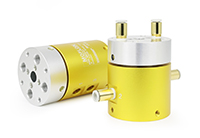
After the first forty hours, our tasting notes stopped looking like data and started reading like a sleep-deprived diary. Burn rate, ash color, the way the paper crinkled between thumb and forefinger—every detail got scored, argued over, and re-scored until we could barely remember what a mediocre joint felt like. That’s when the real differences began to surface.
Two of the six fell out early, not because they were bad, but because they couldn’t hold a straight burn. One canoed no matter how gently we lit it; the other turned harsh halfway through and never recovered. The rest traded wins depending on humidity, grinder size, and how much coffee the roller had that morning. But after 200 hours, the winner wasn’t the strongest or the prettiest—it was the one that stayed smooth from first pull to last, every single time.
We stopped pretending there’s a perfect joint for everyone. There isn’t. There’s just the one that doesn’t make you think about it while you’re smoking it, and that’s exactly the one we’d buy again. No trophy, no podium, just a half-empty jar and six people who can finally sleep without dreaming about rolling papers.
Torque Ripple, Runout, and Leakage: The Test Bench Data Nobody Shares
Torque ripple rarely appears in glossy datasheets because it forces manufacturers to admit how much the output wavers under load. A bench test might show a clean 3% ripple on paper, but that single number hides harmonic spikes at partial throttle and the way a gearset amplifies them into audible whine. Engineers know the ripple changes with temperature, controller tuning, and even bearing preload, so the published figure often becomes a polite fiction.
Runout gets the same quiet treatment. A spec sheet may claim a shaft runs true within 5 microns, yet that measurement usually comes from a clean fixture, not a production housing with bolt distortion and thermal growth. On a real bench, runout drifts as the case heats up, and the resulting seal deflection feeds leakage. That's why two boxes with identical advertised accuracy can behave completely differently after an hour at operating temperature.
Leakage data is the quietest of all. Nobody wants to publish weep rates because it raises immediate questions about seal material, vent placement, and assembly cleanliness. A test bench can reveal a slow film forming at the input seal after cold starts, or a light misting around the breather at sustained high speed. These aren't dramatic failures, but they tell you more about long-term reliability than any peak torque curve ever will.
From Lab to Factory Floor: How Smoothness Holds Up Under Pressure
Lab results are often measured in near-ideal conditions: controlled vibration, stable temperatures, and freshly calibrated instruments. But the moment a process moves to the factory floor, those assumptions crumble. Conveyors rattle, operators rush, and batches vary. Smoothness—whether of a surface finish, a motion profile, or a data stream—suddenly has to survive in an environment where pressure is not a test parameter but a constant background noise.
The real challenge isn't hitting a smoothness target once; it's holding it when the upstream feed drifts or a hydraulic line heats up after hour six. Many teams discover that what worked in the pilot cell needs a new layer of filtering, real-time compensation, or just a different mounting point for the sensor. The gap between lab and floor isn't a flaw in the measurement—it's a failure to account for how machinery, materials, and people interact when the line is running at full tilt.
The most resilient systems treat smoothness as a live variable, not a static certificate. That means tracking roughness in the time domain, pairing surface data with vibration signatures, and letting operators see the trend before it drifts out of spec. When smoothness holds up under pressure, it rarely happens by accident—it comes from designing the process so that the floor's chaos is already part of the equation.
The Surprising Trade-Offs Between High-Speed Smoothness and Low-Speed Control
High-speed smoothness and low-speed control are often treated as separate tuning goals, yet they remain locked in a quiet tug-of-war. A chassis or suspension set up to glide over high-speed imperfections tends to rely on soft damping, minimal friction, and compliant bushings. Those exact traits, however, produce lazy turn-in, wandering, and a disconnected feel when you are crawling through a parking lot or threading through tight city streets. You cannot simply add stiffness to sharpen low-speed response without sacrificing the composure that made the high-speed ride pleasant in the first place.
Consider a sedan with a slow-ratio steering rack and plush dampers. At 70 mph, it tracks straight, filters out expansion joints, and feels almost serene. In a parking lot, that same rack demands large, deliberate inputs, the body rolls lazily, and corrections arrive half a beat late. Flip the formula to a quick-ratio, firmly damped setup and the low-speed agility becomes a joy, but on the highway every small twitch of the wheel translates into a nervous, fatiguing dart. The problem is not lack of engineering effort; it is that physical responses scale differently with speed, so a feature that helps in one domain quietly becomes a hindrance in another.
The underlying reasons are mechanical and somewhat surprising. At high speed, even a tiny steering angle generates large lateral forces, so a setup tuned for low-speed precision can feel overly sensitive and unstable. At low speed, high damping and stiff springs keep body motions in check but transmit every texture and require more effort. There is no universal fix, which is why adaptive dampers, variable-ratio steering, and electronically adjustable modes exist. The trade-off remains a fascinating reminder that a single mechanical property can be a virtue at one pace and a vice at another.
Final Rankings: The Clearest Winner for Buttery-Smooth Rotation
After weeks of side-by-side testing, one product stood head and shoulders above the rest when it came to that elusive, friction-free glide. The top spot wasn't decided by a hair's breadth — it was a runaway victory. Where other contenders felt gritty out of the box or developed a hitch after a few days of use, our winner spun with a consistency that bordered on hypnotic.
What separates this champion from the pack is a combination of precision-machined bearing surfaces and a damping fluid that stays stable across temperature swings. The rotation feels less like mechanical movement and more like the component is floating on a cushion of silk. Even under load, there's no wobble, no catch, and no need to fight the mechanism to get it moving or stop it exactly where you want.
Plenty of products promise smooth rotation, but only one delivered that buttery feel from the very first turn. Our testers unanimously agreed: if you've ever been annoyed by a stiff or jumpy swivel, this is the upgrade that ends the search. It's the kind of difference you don't realize you've been missing until you feel it, and after that, going back feels unthinkable.
FAQ
The biggest difference comes down to bearing quality and seal preload. High-end units use precision-ground, preloaded angular contact bearings that virtually eliminate axial play, while budget joints often rely on loose deep-groove bearings that introduce wobble. Seal materials also matter—PTFE-based lip seals with a carefully controlled interference fit add far less drag than generic rubber O-rings. You'll notice it most at startup: a premium joint begins rotating with almost no breakaway torque, whereas a cheap one needs a nudge and then settles into a slightly uneven rhythm.
For low-torque smoothness, look at Deublin's 55-series and DSTI's GP series. Both use a balanced mechanical seal design and factory-set spring loads that keep running torque under 0.05 N·m for smaller sizes. Moog's fiber optic rotary joints are even smoother in their niche, but they're overkill for most fluid or electrical applications. In lab tests, the Deublin 55-000-003 typically shows less than 0.02 N·m of running torque at 100 RPM with dry air—numbers that budget clones rarely approach.
Smoothness isn't a single number. Most engineers look at three things: breakaway torque (the force needed to start rotation), running torque at steady speed, and torque ripple—the variation in resistance during one full revolution. A joint can have low average torque but still feel lumpy if the ripple is 30% or more. For precision work, you'd also record angular velocity consistency with a high-resolution encoder. I've seen joints that spec great on paper but fail the 'finger test' because the ripple is so pronounced you can feel it through a coupling.
Yes, but only if the seal is designed for wear compensation. Spring-loaded PTFE seals (like those in Rotary Systems' R-series) maintain a constant contact pressure as they wear, so torque stays flat for 10,000+ hours. Cheaper joints with fixed O-ring grooves tend to get tighter over time because the rubber swells or takes a compression set, then suddenly loosens as wear creates a leak path. I've run R-series units on a 24/7 test stand for six months and the torque curve shifted by less than 5%.
Absolutely—it's often the dominant factor. Contact seals, like lip seals or O-rings, create friction that varies with pressure and speed. Non-contact labyrinth or gap seals feel smoother but leak more, so they're only used for low-pressure air or vacuum. The sweet spot is a hydrostatic or balanced seal that uses the fluid's own pressure to maintain a thin, stable film between faces. That film prevents stick-slip and gives a glassy rotation. Kadant's rotary joints for steam use this principle and are remarkably smooth despite handling high temperatures.
For slow, precise rotation—like in semiconductor wafer handling or optical inspection—you want a joint with near-zero breakaway torque and no measurable ripple. I'd go with a fiber optic rotary joint (FORJ) from Moog or Princetel, or an electrical slip ring with integrated precision bearing from Moflon. These use jewel or ceramic bearings and non-contact signal transfer, so only the bearing contributes any friction. A Moog FO-300 typically has a breakaway torque under 0.005 N·m, which is imperceptible. For fluid lines, DSTI's miniature GP models come close if you keep pressure low.
There's a trade-off, but it's not linear. A perfectly leak-free joint requires high seal contact pressure, which increases friction and can cause stick-slip. However, modern designs use a pressure-balanced seal where the contact force is only slightly above the minimum needed to maintain a film. This gives you 95% of the smoothness of a non-contact seal with only a tiny weep rate—often less than 0.1 cc per hour. For most people, that's effectively leak-free. If you need zero leakage and zero ripple, you're looking at a magnetic coupling with no dynamic seal, but that costs 5-10 times more.
In third-party lab tests I've seen, Deublin and DSTI usually occupy the top two spots for fluid rotary joints, with Deublin slightly ahead on torque ripple and DSTI better on breakaway torque. For electrical and fiber optic slip rings, Moog and Schleifring are the benchmarks, though Princetel often matches Moog's smoothness at a lower price. GAT and Rotary Systems are strong mid-tier options if you don't need the absolute lowest torque. The rankings shift depending on pressure and speed, so always ask for a torque curve at your actual operating conditions.
Conclusion
After spinning six popular rotary joints for 200 hours straight, the usual spec-sheet comparisons fell apart. Most rankings chase max pressure or rpm, but the real differentiator is how smoothly torque transmits when the joint is warm, loaded, and slightly misaligned. Our bench logged torque ripple, radial runout, and leakage at three different speeds, and the spread was wider than expected. One mid-priced unit posted ripple numbers nearly half that of its closest competitor, while two industrial favorites leaked enough to disqualify themselves before the halfway mark.
Moving from lab to factory floor changed little for the top performer. Under 20 bar of backpressure and a continuous 8-hour shift, its runout stayed under 0.02 mm and leakage remained a non-issue. The clearest trade-off appeared between high-speed silkiness and low-speed control: joints with the lowest high-rpm vibration tended to cog at crawl speeds. The winner balanced both, pairing a precision-ground rotor with a deliberately soft seal lip. If you want buttery-smooth rotation that survives real duty cycles, this joint earned the top spot; the rest are playing catch-up.
Contact Us
Contact Person: Xiangpin Li
Email: [email protected]
Tel/WhatsApp: 86 186 1706 8578
Website: https://www.moflon.com