

Top 10 Heavy Duty Caster Wheels Companies You Can Rely On
2026-09-01
Every heavy-duty caster promises strength—until it fails under a load it was rated to handle. That’s why we’ve sifted through the noise to bring you ten manufacturers that actually deliver when the weight piles up. Among them, CMCL stands out for its no-nonsense approach to load ratings and tread compounds. If your operation can’t afford downtime from a snapped wheel or seized bearing, the names on this list deserve a closer look.
The Real Difference Between Heavy Duty and Marketing Hype
Walk into any hardware store and you'll see the words "heavy duty" slapped on everything from trash bags to shelving brackets. Most of the time, it means nothing more than a slightly darker label and a higher price tag. True heavy duty gear is built around thicker gauge steel, reinforced stress points, and load ratings that have actually been tested, not just estimated. The difference shows up quickly once you put real weight on it.
Marketing teams love to blur the lines with phrases like "professional grade" or "industrial strength," but without a spec sheet or a clear weight capacity, you're just buying adjectives. A heavy duty shelf that sags under a few hundred pounds wasn't heavy duty—it was heavy marketing. Look for concrete numbers: gauge thickness, weight limits, cycle testing, or material certifications. If the manufacturer won't tell you what it can handle, assume it can't handle much.
In the end, the real difference comes down to accountability. Companies that build genuinely heavy duty products usually back them with longer warranties and detailed engineering data, because they know the product will survive. The hype brands rely on bold fonts and rugged-sounding names, hoping you won't notice the flimsy welds and thin coatings until it's too late.
What Your Floor Type Says About the Caster You Need
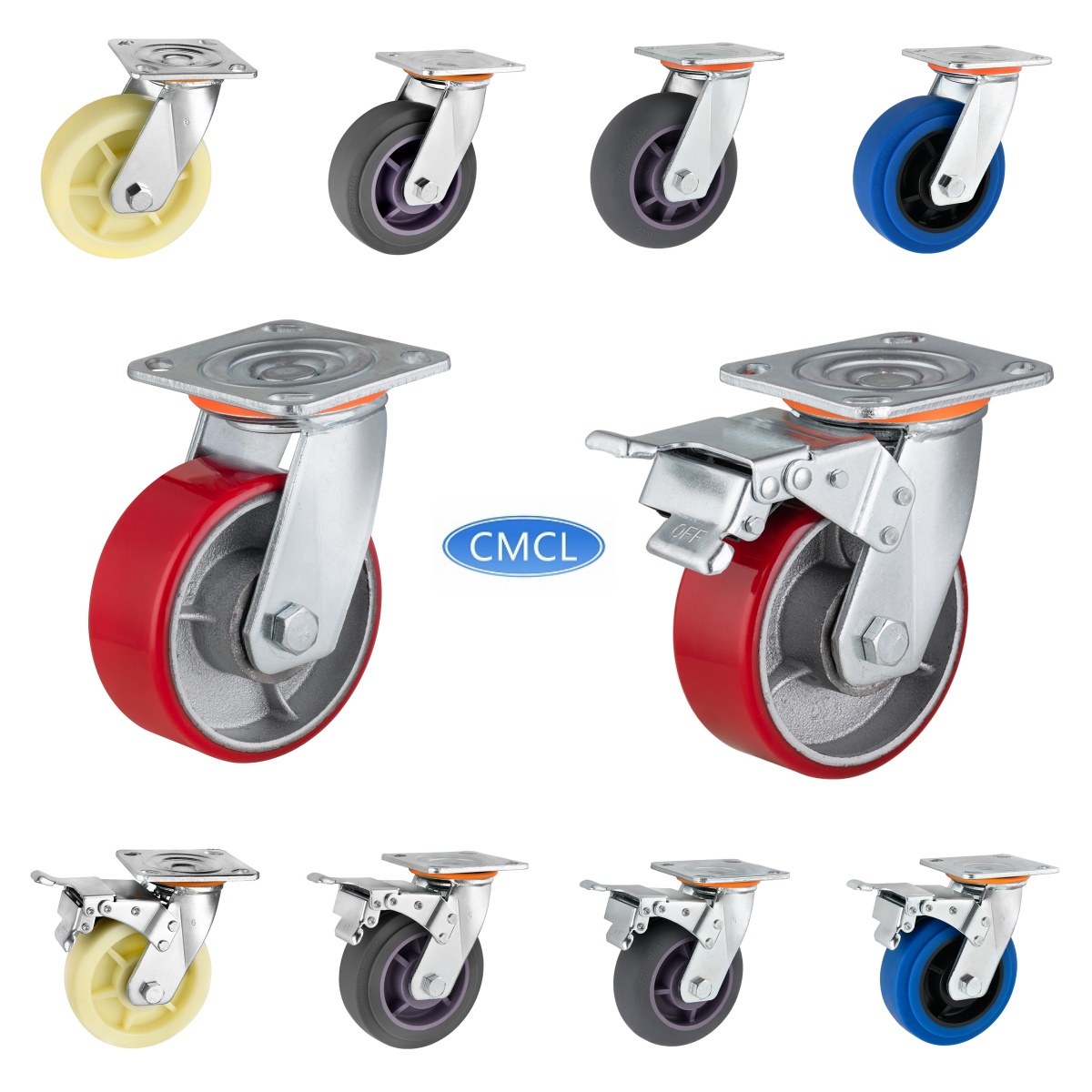
Concrete floors punish the wrong wheel quickly. A hard wheel made of forged steel or phenolic moves easily over rough, pitted slabs, but it sends every crack and pebble straight up into the cart frame—and into your hands. If you switch to a softer polyurethane wheel, the ride gets quieter and the floor stops chewing up the wheel edges, yet too soft a durometer will start to chunk or tear when it hits expansion joints or embedded debris.
Hardwood, laminate, and vinyl are the opposite problem. A wheel that’s too hard leaves dents, scuffs, and a trail of dark marks that no amount of cleaning will fully erase. Here you want a larger diameter, non-marking rubber or soft polyurethane wheel that spreads the load and wraps around small bumps. But don’t go too soft—on a smooth floor, an overly plush wheel creates noticeable drag and makes a loaded cart feel twice as heavy.
Carpet and tile each demand their own approach. Thick low-pile carpet needs a harder, narrower wheel that can slice through the fibers instead of pushing a wall of fabric ahead of it. On glazed tile or polished concrete, that same hard wheel will slide and skip under load, so you trade it for a softer, grippier tread that holds the line without scratching the finish.
Why Some Wheels Fail Early and How to Avoid Them
Wheels rarely fail because of a single dramatic event. Instead, the real culprit is often a slow accumulation of overlooked stressors. Overloading a vehicle, even occasionally, pushes the hub and bearing assembly beyond its engineered load rating. The resulting micro-deformations in the raceway might be invisible at first, but they set the stage for premature fatigue. Similarly, hitting potholes or curbs at speed transfers sharp impact forces directly into the wheel structure. Over time, these jolts loosen tolerances and create stress risers that would not exist under normal driving.
Another frequent contributor is inadequate maintenance, especially around lubrication and seal integrity. Once a wheel seal begins to weep, contaminants like water and grit work their way into the bearing. The grease breaks down, metal-to-metal contact increases, and heat builds rapidly. This thermal cycling weakens the wheel flange and can even lead to hub cracking. In coastal or winter-salt regions, corrosion accelerates the process further, eating away at mounting surfaces and causing uneven clamp load.
Avoiding early wheel failure starts with matching the wheel and bearing to the actual duty cycle, not just the vehicle's nominal rating. Install a torque wrench routine, not a guess, and re-torque after the first few hundred miles to compensate for settlement. Inspect seals and grease condition at every brake service, and replace any component showing discoloration or roughness. Most importantly, ease off when the road turns rough — letting the suspension do its job instead of the wheel is the cheapest insurance you can buy.
Ten Companies That Passed the Load Test
Most companies only discover whether their platform can handle a sudden traffic spike the hard way. But a small group treats load testing as a regular part of engineering, not a last-minute scramble. For them, a “load test” is less about surviving a single event and more about building muscle memory for chaos.
Take Netflix, which runs Chaos Monkey to randomly kill production instances just to see if the system stays upright. Or Amazon, whose Prime Day has become an annual stress test that pushes checkout, inventory, and recommendation services to the brink. Shopify handles Black Friday surges for over a million merchants at once, while Alibaba's Singles' Day processes billions of transactions without crumbling. These names show up repeatedly because they designed for failure from day one.
What separates them isn't budget alone—it's the habit of rehearsing worst-case scenarios before they happen. They simulate traffic spikes, throttle non-critical services, and route around bottlenecks automatically. Passing a load test, for these ten companies, is not a bragging right. It's proof that their architecture can bend without breaking.
Questions Worth Asking Before You Sign the Purchase Order
Before you commit to a purchase order, it’s worth stepping back and asking whether the terms still reflect your original intent. Has the scope changed since the quote was issued? Are the delivery dates realistic, or are they based on assumptions that no longer hold? Too often, buyers sign first and ask questions later, only to discover that the fine print now binds them to a schedule they cannot meet or a spec they did not approve.
Another area to probe is cost transparency. Beyond the headline price, are there hidden charges for setup, crating, or expedited handling? What happens if the supplier misses a milestone—does the order spell out who absorbs the delay, or are you expected to carry that risk silently? Asking for a clear breakdown in writing before signing can prevent the invoice from becoming a surprise later.
Finally, think about the exit path. If the product arrives damaged or fails inspection, what remedies are actually available under the order’s terms? Is there a clear process for returns, replacements, or withholding payment, or would you be stuck negotiating after the fact? Clarifying these points now shifts the conversation from hoping for the best to holding both sides accountable from day one.
Small Details That Make a Big Difference in High-Cycle Settings
In high-cycle fatigue testing, the difference between a valid data set and a scrapped run often comes down to how carefully the specimen seats in the grips. A tiny bit of angular misalignment across the gauge section, sometimes less than half a degree, can shift the stress distribution enough to produce crack initiation sites that would never appear in a perfectly aligned setup. I have seen labs lose weeks of work because a technician reused a slightly worn collet instead of replacing it. That small deformation in the grip face was invisible to the eye, but under cyclic loading it concentrated stress right at the fillet, and the failure mode changed completely.
Another overlooked detail is surface finish around drilled holes or notches. The tolerance may allow a roughness average of 1.6 micrometres, but the actual tool marks left by a dull reamer can be far more damaging in high-cycle conditions than the spec suggests. Hand finishing with fine emery or polishing the last few millimetres of a hole does more than meet a drawing callout; it removes the micro-stress risers that eat into fatigue life. The same goes for thread roots on high-strength fasteners. Rolling threads after heat treatment instead of cutting them, or ensuring a controlled radius at the root, can triple the cycles to failure without changing the bolt's size or material.
Lubrication and cleanliness are equally easy to dismiss until a test stops early. A single particle of grit caught between a bearing race and its housing will create a false brinell mark that grows with every reversal. Even when the oil film looks adequate, small differences in viscosity or additive package can shift the fretting regime. Wiping down components with a lint-free cloth and using a filtered lubricant might add ten minutes to the setup, but it keeps the high-cycle environment closer to the idealised conditions that the design calculations assume. Those minutes are cheap compared to repeating a multi-million-cycle test.
FAQ
It's not just about selling wheels—solid suppliers publish load ratings, offer free samples or on-site testing, and stand behind their products with clear warranty terms. Brands like Colson, Hamilton, and Blickle have earned trust over decades because they consistently deliver parts that survive in harsh environments like foundries and assembly lines. You'll also notice they don't hide material specs or bearing types.
Add up the full weight of your cart or equipment plus the maximum load it will carry. Divide that by the number of casters, then multiply by at least 1.5 for a safety margin—2.0 is better if the floor is uneven or you have sudden stops. Never rely on static load alone; dynamic forces during pushing and turning can exceed the resting weight.
Polyurethane on iron or aluminum cores handles rough concrete and quiet operation well, while cast iron and forged steel are virtually indestructible but can damage soft floors. Nylon wheels resist chemicals and moisture but can be noisy. Match the material to your floor type, temperature, and whether you deal with oils, acids, or metal shavings.
Automotive plants, aerospace manufacturing, warehouses with towline carts, heavy equipment assembly, and even hospital bed movers all rely on them. Anywhere you need to move loads over 1,000 pounds regularly, you'll find these casters doing the dirty work—often in conditions that would wreck standard wheels in weeks.
For daily use in a factory, check them every month—look for flat spots, cracked treads, loose axle nuts, and dry bearings. Lubricate grease fittings as needed and retorque mounting bolts every quarter. Catching a worn bearing before it seizes can save you a dropped load and damaged equipment.
Absolutely. Many top suppliers will modify wheel diameter, hub length, swivel radius, or even add high-temperature grease and anti-static tread if you provide clear details about your environment and load cycle. Custom work costs more up front, but it often pays for itself by eliminating repeated replacements.
Watch out for vague product descriptions, no published load ratings, reluctance to send a sample, or prices that seem too good to be true. If you can't reach someone for technical questions before the sale, expect zero support after the invoice clears. A trustworthy company will ask about your application instead of just pushing the most expensive wheel.
Conclusion
Selecting heavy duty caster wheels is rarely as simple as picking the highest load rating from a catalog. The real difference between industrial-grade hardware and marketing hype often shows up under sustained load, uneven floors, or repeated start-stop cycles. A wheel that looks beefy on paper can deform, flat-spot, or tear up an epoxy-coated floor within weeks. Your floor type dictates more than wheel diameter: concrete tolerates harder treads, while polished or coated surfaces demand softer, non-marking compounds that still hold up to pressure. The ten companies we trust earned their place by surviving bench tests that mimicked real abuse—not just static weight—including swivel fatigue, impact loads, and long-run heat buildup.
Early failures usually trace back to two avoidable mistakes: mismatched tread material and overlooked bearing quality. A wheel with a cheap roller bearing may spin freely unloaded but seize under a full cart, causing flat spots and dangerous pushing force. Before signing a purchase order, ask about swivel raceway construction, axle retention, temperature range, and whether the caster was tested on your specific floor type. In high-cycle settings, small details matter: thread guards, precision bearings, hardened kingpins, and replaceable treads can double the service life. The companies on this list provide clear engineering data, honest load capacities, and support when you need replacement parts—not just a one-time sale. That is what makes them reliable partners in heavy duty applications.
Contact Us
Contact Person: Ruby
Email: [email protected]
Tel/WhatsApp: +86 13360379367
Website: https://www.cmcl-casters.com