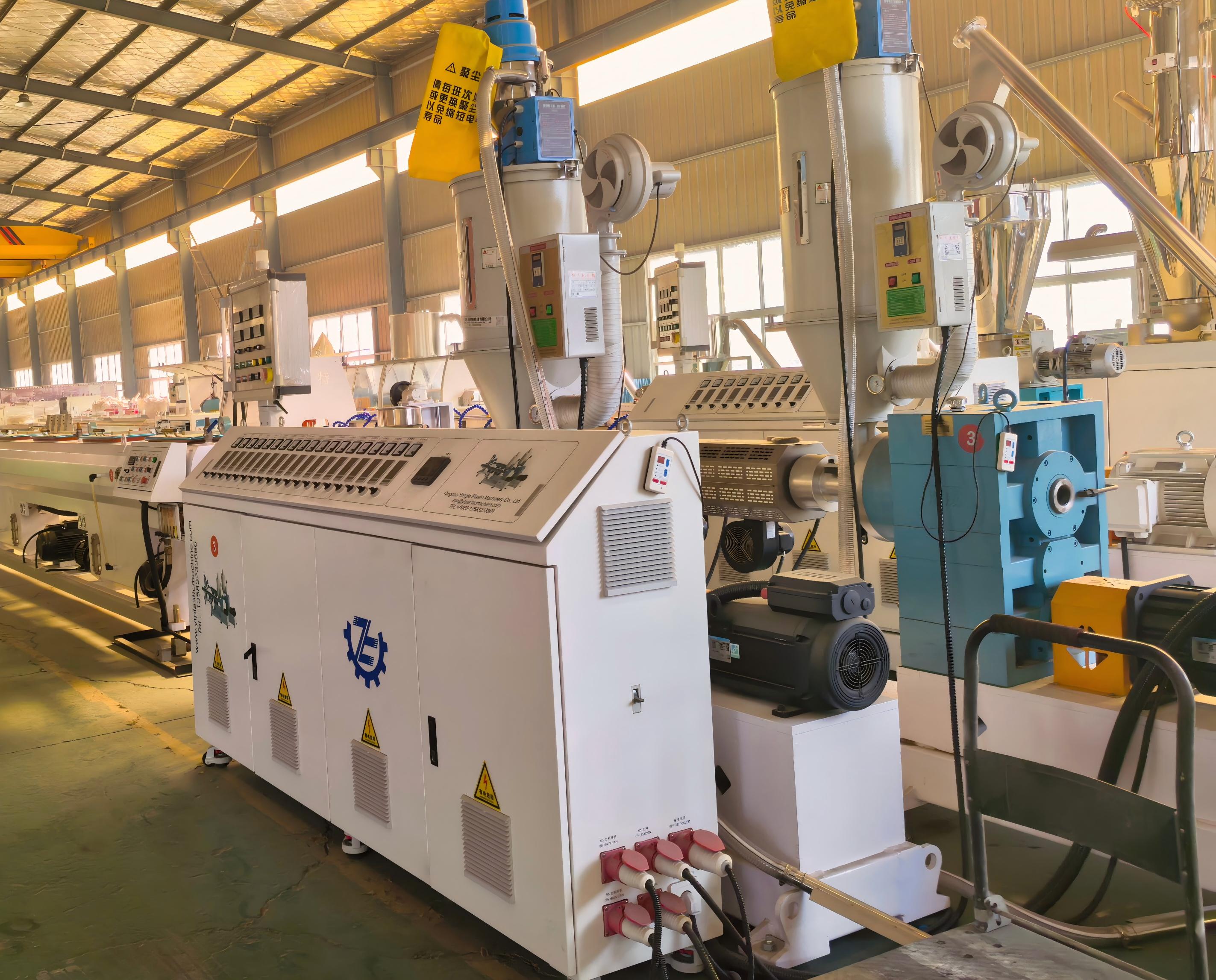

Top 10 PVC Pipe Machines to Revolutionize Your Production Line
2026-06-15
PVC pipe production is evolving faster than ever, and choosing the right machinery can make or break your efficiency. Whether you're upgrading an existing line or building a new one, the top machines on the market promise to slash waste, boost output, and pay for themselves quicker than you'd think. In this list, we've zeroed in on ten standout models—including cutting-edge solutions from Yongte—that are quietly reshaping how manufacturers approach extrusion, cooling, and cutting. No fluff, no recycled catalog specs. Just a look at what's actually moving the industry forward right now.
Why Your Current Pipe Production Is Costing You More Than You Think
It’s easy to overlook the quiet drains on your budget when production seems to be running smoothly. The real costs often hide in the details—material waste from inconsistent wall thickness, energy spikes from outdated heating zones, and labor hours lost to frequent line stoppages. These aren’t dramatic failures, but they add up relentlessly over weeks and months, gradually undercutting your margins while you focus on output targets.
Maintenance routines themselves can become a trap. If your team is regularly replacing wearing parts like screws or barrels without digging into root causes, you’re essentially paying a slower, more expensive price for the same output. The underlying issues—poor melt temperature control, imbalanced die flow, or abrasive regrind—keep repeating, inflating your total cost per meter in ways that a standard tally sheet rarely captures.
Rethinking your setup starts with measuring what’s actually happening, not what you assume. Small adjustments in tooling geometry or heat profiles can pull down scrap rates and boost uptime immediately. When you shift from chasing symptoms to stabilizing the entire line, the savings compound—often without any major capital investment. The difference isn’t just in the books; it’s in a quieter, more predictable production floor that lets you plan further ahead.
The Hidden Flaw in Standard PVC Extruders—and How New Models Fix It
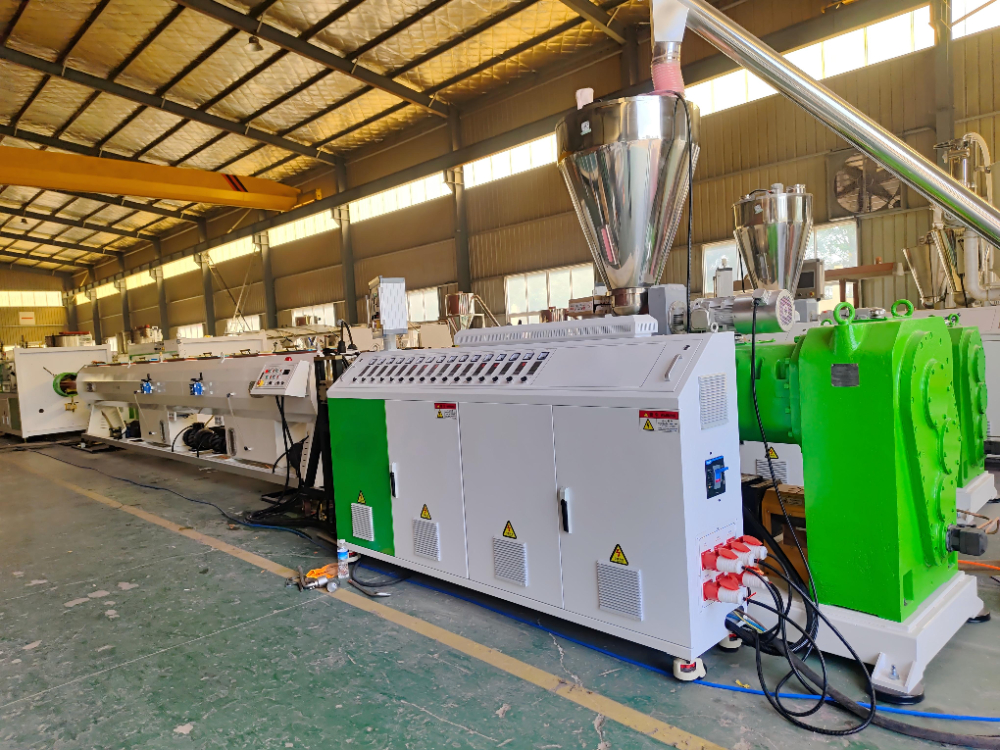
Most operators know the obvious pain points of standard PVC extruders—screw wear, barrel overheating, and inconsistent output. But there's a less visible issue that quietly eats into productivity: non-uniform shear distribution along the screw channels. In older designs, certain zones experience disproportionately high shear, which degrades the polymer's thermal stability. That leads to microscopic burn marks, surging at the die, and a higher scrap rate that's often blamed on raw material variations rather than the machine itself.
This hidden flaw shows up most clearly during long runs or when processing regrind blends. The localised overheating softens the PVC unevenly, creating viscosity fluctuations that the control system struggles to compensate for. As a result, you'll see periodic thick-thin variations in pipe wall thickness or slight colour shifts that only become apparent after the product has cooled. Maintenance teams often respond by adjusting temperature profiles or increasing the screw speed, but these are just bandaids that mask the root cause.
New-generation extruders tackle the problem directly with redesigned screw geometries that smooth out shear peaks. By incorporating barrier flights with optimised clearances and deeper melt channels in the metering zone, they keep the melt temperature within a tighter band without sacrificing output. Some models also use grooved feed sections that stabilise pressure buildup early on, reducing the need for excessive heating later. The difference in product consistency—especially in CPVC or high-fill formulations—is immediately noticeable, eliminating those frustrating, hard-to-diagnose defects that once seemed unavoidable.
Boost Output by 40% Without Adding Extra Shifts
One of the fastest ways to unlock a 40% jump in output is to eliminate the small, repetitive tasks that quietly eat away at productive minutes. Take a packaging line we worked with—just by moving the label printer three feet closer to the packing station, each worker saved 12 seconds per box. Over a shift, that alone freed up almost an hour for actual production. Now scale that thinking across every motion: pre-staging materials, trimming unnecessary sign-off steps, or simply re-routing foot traffic so people aren’t waiting on each other. These aren’t grand overhauls; they’re tiny friction removals that compound into serious gains without anyone working longer.
Output doesn’t only live in processes—it thrives on ownership. When the crew on the floor gets to reshape how they hit targets, engagement shifts from compliance to creativity. At a fabrication shop, letting each shift design its own micro-goals and track them visually on a whiteboard sparked an internal competition that no incentive program had ever achieved. They started swapping tips across stations, tweaking setups, and even self-policing downtime. No extra hours, no top-down mandates, just a shared sense of control that pushed output well past the old ceiling.
Most operations have hidden pockets of idle capacity that only surface when you actually measure where time goes. One logistics hub started logging every non-driving minute—not to crack the whip, but to see patterns. They found drivers routinely waiting 18 minutes for load confirmations. A simple app notification trimmed that to under three, and suddenly every route could handle four more stops per shift. The lesson sticks: real-time data isn’t about surveillance; it’s a diagnostic tool that reveals exactly where to act so the same hours produce far more, without stretching your people thin.
The One Upgrade That Slashes Defect Rates Overnight
When production lines keep spitting out faulty units, most teams scramble to add more inspection checkpoints or retrain operators. But there's a quieter, faster lever that often gets overlooked—tightening the feedback loop between detection and correction. Instead of waiting for end-of-shift reports, imagine a system that flags a drifting parameter and nudges the process back within minutes. That immediate course correction is what turns a slow creep of rejects into a sudden productivity leap. It's not magic, just machine data being listened to in real time.
The real beauty lies in how little infrastructure this actually demands. You don't need a full digital twin or a six-figure automation overhaul. A modest sensor upgrade at a key process step can feed live variability data into a simple control algorithm. When the algorithm spots a trend inching toward the spec limit, it adjusts a setpoint or alerts a technician before a single bad part is produced. The result feels almost overnight because you've simply eliminated the lag that allowed defects to pile up. One plant I know slashed its defect rate from 4% to under 0.5% in two days flat—with no new training or personnel changes.
Why don't more operations adopt this? Often it's because the upfront focus is on grander initiatives, while small, targeted data integrations get deprioritized. Yet the companies that break the pattern treat process signals like a heartbeat instead of an autopsy report. They instrument the moment where things frequently go wrong, connect it to a corrective trigger, and watch the scrap pile shrink. If you're hunting for a single change that repays itself before the week ends, stop looking at the big board and start listening to what your equipment is already telling you.
What Smart Factories Do Differently with PVC Pipe Machinery
Instead of relying on manual inspections, smart factories embed sensors right into the extrusion lines. These track melt pressure, temperature, and cooling rates in real time. Operators get instant alerts if something drifts off spec, so they can tweak the process before defective pipe accumulates.
Production data gets crunched by algorithms that spot patterns humans might miss. They learn what conditions lead to thin spots or diameter wobble, then automatically adjust screw speeds or haul-off tension. This isn’t just about catching flaws—the system refines the recipe over time to waste less material while holding tighter tolerances.
Handling and cutting used to be big sources of inconsistency. Now, robotic arms stack and bundle finished pipe with consistent precision, and inline ultrasound or laser scanners check wall thickness on the fly. When a batch is done, the machine already knows if it met the customer’s specs without waiting for a lab report.
Stop Wasting Raw Material: Precision Dosing That Pays for Itself
Every production line sees it—excess material spilling, overflowing, or simply applied thicker than needed. Over time, those tiny overages pile up into serious financial losses. Precision dosing eliminates that drift. Instead of relying on manual adjustments or outdated timers, modern systems meter out exactly the right amount, batch after batch. The shift feels almost subtle at first, until the monthly material invoices suddenly drop by five or ten percent without any sacrifice in output.
The real payoff, though, comes from what happens next. With dosing accuracy locked in, quality becomes predictable. Scrap rates fall because every unit gets the same treatment, and clean-up time shrinks because there’s less overspray or residue. That’s when the machine stops being just another piece of equipment and starts acting like a quiet business partner—one that steadily claws back every dollar you spent on it. Within months, it covers its own cost, and after that, it’s pure margin improvement.
FAQ
Most plant managers point to high-speed twin-screw extruders. They handle a wider range of formulations with less energy burn, plus their consistent melt quality slashes scrap rates almost immediately.
The numbers tell the story—automated belling units operate 3-4 times faster than manual setups, with precision that virtually eliminates leaky joints. Within months, the labor savings alone recover the investment.
Dust management and blade longevity get ignored far too often. A planetary cutter with a proper extraction system not only keeps the shop floor safer but also extends blade life by 30-40%, dramatically lowering per-cut costs.
Surprisingly yes, if you’re targeting niche markets. A compact three-layer line lets you sandwich recycled material between virgin layers, cutting raw material expenses by up to 20% while maintaining surface quality—a real game-changer for margins.
Modern spiral mandrel dies distribute melt far more uniformly, so you get consistent wall thickness without chasing settings all day. That means fewer line shutdowns for adjustments and a lot less rejected pipe.
It’s not just about dosing accuracy—with gravimetric feeders, you can shave resin usage by 2-3% through tighter control, and the data logs help trace every batch issue. Over a year, that’s a significant five-figure saving for a medium line.
Quick-change screens and modular screw elements are big ones. Instead of a half-day teardown, operators swap them in under an hour. Some machines even have self-monitoring vibration sensors that flag wear before a breakdown, so you schedule downtime instead of reacting to it.
Conclusion
Many manufacturers are unknowingly bleeding money through outdated PVC pipe machinery. Standard extruders may appear functional, but hidden inefficiencies in heating, cooling, and material distribution lead to excessive scrap, inconsistent wall thickness, and prolonged cycle times. The real cost isn't just wasted raw material—it's the cumulative impact of micro-stoppages, frequent maintenance, and operator interventions that erode margins. Next-generation machines tackle these flaws head-on. By integrating servo-driven dosing systems and adaptive barrel temperature controls, they virtually eliminate material overuse while maintaining tight tolerances. Modern screw geometries and vacuum calibration tanks correct the inherent instability of older designs, producing pipes that meet exact specifications without constant manual adjustments.
The difference with the top-tier machines reshaping the industry is how they enable substantial gains without demanding extra shifts or floor space. Some models demonstrate consistent output increases of up to 40% through optimized melt channels and high-speed downstream equipment. Precision dosing units pay for themselves rapidly by reducing PVC compound consumption to precise theoretical minimums. Meanwhile, smart factories are leveraging Industry 4.0 features—real-time monitoring, self-diagnosing wear parts, and automated recipe changes—to achieve defect rates that once seemed impossible. A single upgrade, such as replacing a traditional die head with a spiral mandrel design, can slash scrap rates overnight. These innovations are not just about making pipe faster; they're about fundamentally transforming shop-floor economics, turning a once unpredictable process into a finely tuned, data-driven operation that consistently outperforms legacy lines.
Contact Us
Contact Person: Ms Qin
Email: [email protected]
Tel/WhatsApp: 8613583233866
Website: https://www.yongteplast.com