

Top IMS Core Network Architecture Essentials for Modern Telecom
2026-06-11
In the fast-paced world of modern telecom, IMS core network architecture isn't just a legacy upgrade—it's the backbone of seamless voice, video, and messaging over IP. As operators pivot to 5G and beyond, understanding the essentials of IMS becomes mission-critical. From CSCF nodes to HSS integration, every component plays a role in delivering the reliability and scalability that subscribers demand. At IPLOOK, we’ve seen firsthand how a streamlined IMS core can transform service agility while slashing operational costs. Ready to cut through the complexity? Let’s dive into the architectural building blocks that separate modern networks from the rest.
IMS Core Foundations: Untangling the SIP Stack
At the heart of any IP Multimedia Subsystem lies its signaling protocol, SIP, which often gets oversimplified into a single monolithic entity. In reality, the SIP stack within IMS is a layered construct, with each layer handling distinct responsibilities from transport security to session management. Peeling back these layers reveals how IMS-specific extensions, such as those for authentication and policy control, integrate into the standard SIP framework, shaping the behavior that operators rely on for everything from voice calls to video sharing.
The stack typically begins with the transport and network layer, where protocols like TCP, UDP, and increasingly TLS ensure reliable or fast delivery while also tackling the NAT traversal challenges common in mobile environments. Above that sits the transaction layer, which manages message retransmissions and matching responses to requests, providing a reliable foundation for the dialog layer. Dialogs then maintain the state of a session, enabling features like call hold or conferencing, while the topmost layer—the application—introduces IMS-specific logic through headers like P-Access-Network-Info or P-Charging-Vector, embedding operator clues that are invisible to standard SIP endpoints but critical for service delivery.
Untangling this stack isn't just an academic exercise; it directly impacts troubleshooting and network optimization. When a call drops unexpectedly, knowing which layer failed—whether a TLS handshake hiccup, a misrouted transaction, or a malformed extension header—saves hours of guesswork. Moreover, understanding the interactions allows engineers to fine-tune timers, adjust message compression, or streamline the registration flows that burden IMS cores during peak hours. In essence, demystifying the SIP stack empowers architects to build more resilient systems and paves the way for smoother interworking with legacy networks and emerging 5G cores.
Harmonizing Legacy and Cloud-Native in the IMS
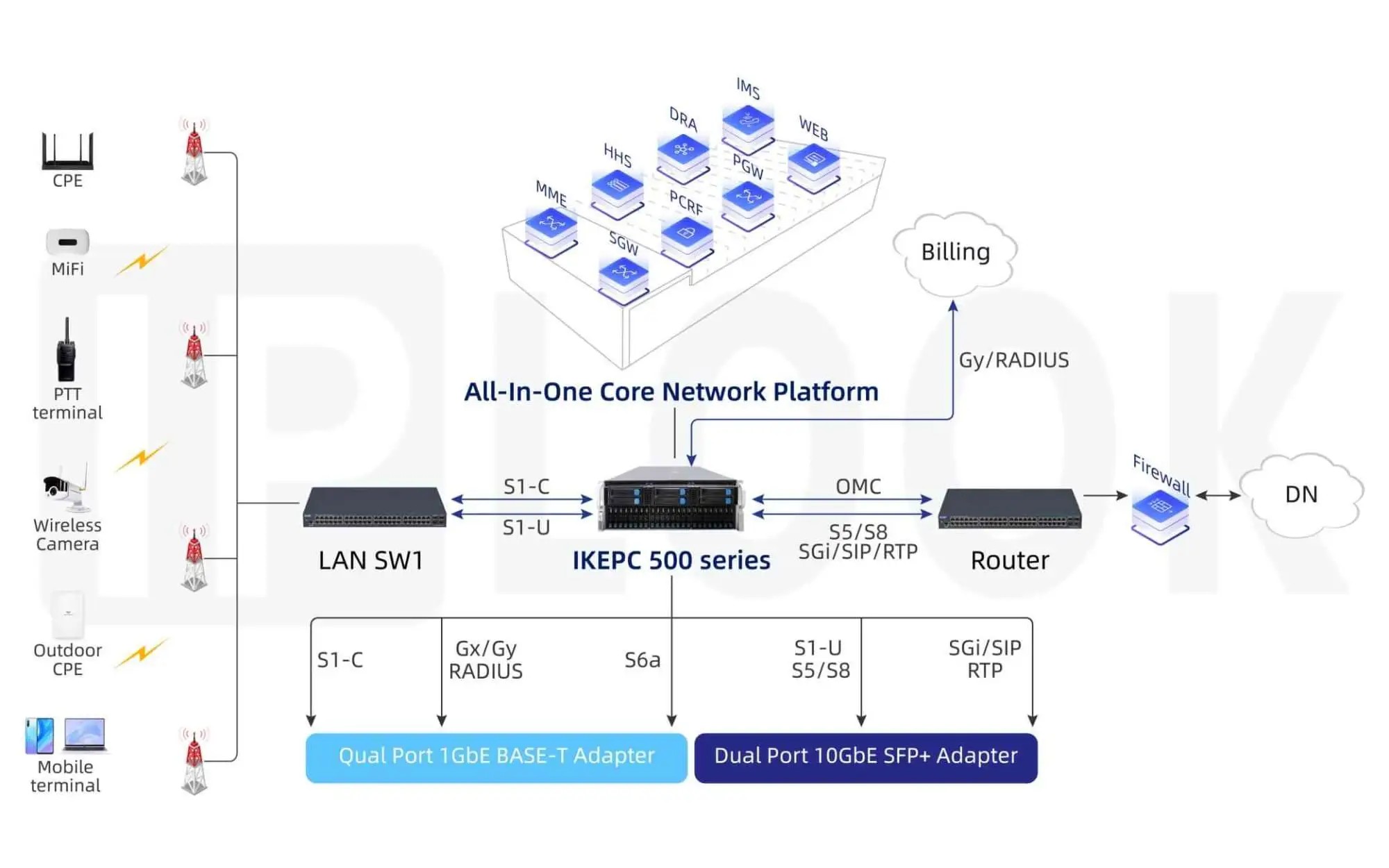
Transitioning an IP Multimedia Subsystem from rigid, hardware-bound architectures to dynamic, cloud-native paradigms is rarely a clean break. The real challenge lies in integrating lightweight, containerized network functions with monolithic legacy components that still carry essential business logic. Successful harmonization often starts with decomposing the legacy core into smaller, modular services—such as breaking out the HSS into a stateless front-end and a scalable back-end—while maintaining standard interfaces like Diameter to avoid disrupting existing signaling flows. This incremental approach preserves service reliability while gradually injecting the agility and resilience of cloud-native designs.
Automation becomes the bridge between old and new. By wrapping legacy elements with modern APIs and orchestrating them alongside Kubernetes-native workloads, operators can treat the entire IMS as a unified infrastructure. For instance, a cloud-native CSCF can be elastically scaled to meet traffic spikes, while a traditional BGCF continues to handle routing based on tried-and-tested policies. The key is to avoid forcing every component into containers; instead, focus on creating an abstraction layer that allows legacy systems to consume cloud benefits—auto-healing, progressive rollouts, and observability—without a complete rewrite.
The end goal is not a monolithic cloud-native IMS, but a hybrid fabric where legacy robustness meets cloud flexibility. This coexistence model lets service providers control costs, extend the life of existing investments, and gradually modernize. By applying DevOps practices to both realms and fostering a culture of continuous improvement, teams can turn what seems like a technological dichotomy into a cohesive, future-ready communication core.
Crafting Scalable Session Control with CSCF Elements
Building session control that scales with demand is a core challenge in modern telecom networks. The CSCF elements—Proxy, Interrogating, and Serving—are the linchpins of IMS, each handling distinct parts of the signaling flow. By breaking down session management into these specialized nodes, operators can distribute load more naturally, avoiding bottlenecks that plague single-point architectures.
The Proxy-CSCF sits at the edge, anchoring user equipment and enforcing policy without heavy statekeeping, which lets it handle high connection volumes with minimal overhead. The Interrogating-CSCF acts as a stateless router in the core, balancing incoming requests across available Serving-CSCF instances based on subscriber data and current load. Meanwhile, the Serving-CSCF manages session state but can be scaled horizontally by fragmenting subscriber ranges or using clustered replication, ensuring that no single node becomes a choke point as traffic grows.
Practical scaling also leans on session-aware traffic steering and intelligent failover. Techniques like DNS-based load distribution guide initial requests to the right P-CSCF or I-CSCF pools, while session continuity mechanisms move calls between S-CSCF instances without dropping active connections. By combining these strategies with dynamic resource allocation, operators can craft a session control layer that expands gracefully with user bases, handling spikes in voice, video, and messaging traffic without compromising on reliability or latency.
Diameter and Beyond: Rethinking Signaling Stacks
The Diameter protocol once served as the backbone of 4G signaling, enabling robust authentication, authorization, and accounting across network elements. Its design, inherited from the RADIUS protocol, was built on a point-to-point model with long-lived TCP/SCTP associations and a strict client-server hierarchy. While this sufficed in an era of monolithic network functions, the shift toward virtualization and cloud-native architectures exposed its inherent rigidity. Operators found themselves constrained by Diameter’s complex message structures, reliance on static routing tables, and limited support for dynamic service discovery, making it increasingly ill-suited for the fluid, distributed environments emerging in modern networks.
With the arrival of 5G and the 3GPP’s Service-Based Architecture (SBA), signaling took a decisive step away from the Diameter mold. The new generation leverages HTTP/2 and RESTful APIs, introducing a paradigm where network functions communicate as stateless, loosely coupled services. This move simplifies integration, reduces overhead through binary framing and multiplexing, and aligns telecom signaling with mainstream web-scale practices. Beyond the protocol itself, the SBA’s design fosters greater resilience and scalability—allowing functions to gracefully fail over or scale out without the cascading bottlenecks that often plagued Diameter routing agents.
Looking beyond the current state, the rethinking of signaling stacks is far from settled. The industry is already exploring alternatives like gRPC and QUIC to further reduce latency, improve security by default, and streamline intra-service messaging. Edge computing, network slicing, and the proliferation of IoT devices demand signaling that is not only efficient but also adaptive to varying latency budgets and reliability requirements. This ongoing evolution signals a broader shift: away from monolithic, pre-defined protocol stacks and toward composable, intent-driven communication layers that can be tailored to the unique needs of each service and deployment scenario.
VoLTE and VoNR: Media Handling Under the Hood
When your voice travels over LTE or 5G, it’s not simply a stream of bits—it’s a carefully choreographed dance between terminals and network. In VoLTE, the media path begins with a codec negotiation that picks the best common option, often AMR-WB, and then latches onto a dedicated bearer with strict quality of service. This ensures your call isn’t jostled by background downloads; packets with expired playout deadlines are simply discarded, preserving real-time clarity even under congestion.
VoNR takes this a step further by harnessing 5G’s native IMS architecture and more flexible QoS flows. Here, media can ride on the ultra-reliable low-latency communication (URLLC) lane, if available, reducing mouth-to-ear delay below 20 ms. The codec story also evolves: EVS becomes the star, adapting bitrates frame by frame to match air interface conditions—something earlier codecs only dreamed of. Meanwhile, the IP multimedia subsystem acts as the maestro, orchestrating session setup, modification, and even seamless handover between VoNR and VoLTE when you wander out of 5G coverage.
Beneath the surface, header compression (RoHC) shrinks protocol overhead dramatically, turning bulky IP/UDP/RTP stacks into slim envelopes that conserve radio resources. Together with features like packet duplication in dual connectivity scenarios, the network can glue together multiple paths for rock-solid reliability. This under-the-hood magic means that, regardless of the underlying access, your voice remains crisp and constantly on—making the transition between technologies invisible to the user.
Security at the Core: Locking Down Subscriber Data
Protecting subscriber information isn’t just a feature—it’s the foundation everything else rests on. Every time a user hands over an email address or payment details, there’s an implicit promise that their data won’t become tomorrow’s headline. We approach this by treating each piece of stored information as a liability, not an asset, which fundamentally changes how access is granted, monitored, and limited across internal teams.
Instead of relying on perimeter defenses that crumble once breached, we’ve embedded security directly into the data layer. Encryption isn’t an afterthought; it’s applied at rest and in transit, with keys that rotate automatically and never sit alongside the protected records. Even our own engineers can’t casually browse through subscriber tables without explicit, time-boxed credentials that leave an immutable audit trail—no exceptions, no shortcuts.
What often gets overlooked is the human angle: social engineering and misconfigured tools still cause the majority of leaks. That’s why our systems are designed to distrust every request by default, requiring contextual verification that goes well beyond a simple login. By assuming compromise is inevitable and planning backward from that reality, we’ve built an architecture where locking down subscriber data isn’t a periodic task, but an ongoing, automatic process that adapts as threats evolve.
FAQ
An IMS core isn't a monolith—it's a cluster of specialized functions like the CSCF, HSS, and application servers working in concert. A single box would crumble under session control, authentication, and media handling all at once. Splitting these across nodes allows operators to scale, maintain redundancy, and isolate faults effectively.
The P-CSCF is the entry sentry—it’s the first hop for UE signaling, enforcing security and compressing SIP messages. The S-CSCF is the brain, performing session control and invoking services. If a P-CSCF fails, the device re-registers via another; lose an S-CSCF and the HSS can reassign sessions, but active calls drop unless backup paths exist.
It’s the authoritative store for identity, service profiles, and authentication vectors. In VoLTE, the HSS ties into the IMS core to provide seamless handoff between LTE and circuit-switched fallback, plus it enables rich communication services by syncing user capabilities across the network.
They inject intelligence beyond mere call routing. Think of a hosted business telephony service: an AS can implement hunt groups, call queuing, and IVR. It interfaces over ISC with the S-CSCF, using SIP servlets or APIs to weave in real-time logic without touching the core routing stack.
The BGCF selects the right gateway for egress to circuit-switched networks. A common oversight is configuring a single BGCF without alternative routes—if trunk groups are down, calls silently fail. Proper design uses nested routing tables and periodic SIP OPTIONS pings to verify paths.
The trick is separating signaling and bearer planes entirely. Media never traverses the CSCFs—once the IMS sets up the session via SIP, endpoints or a media gateway handle RTP directly. Coupled with QoS policies on the transport layer, this keeps voice crisp and video smooth.
You gain elasticity and faster service rollout, but lose deterministic hardware performance. Virtualizing the P-CSCF, for instance, requires careful attention to vCPU pinning and SR-IOV for low-latency packet processing. Without it, registration storms during outages can cripple the entire core.
Conclusion
At the heart of every modern telecom network lies a resilient IMS core, where the intricate SIP stack orchestrates everything from registration to session teardown. It's not just about routing INVITEs; a well-tuned stack gracefully handles NAT traversal, forking, and early media cut-through while seamlessly bridging circuit-switched heritage with cloud-native agility. The art lies in harmonizing legacy nodes with containerized network functions, ensuring that existing HSS investments coexist with stateless service proxies and Kubernetes-driven orchestration. This convergence demands a modular architecture where each CSCF element scales independently—P-CSCF for secure access, I-CSCF for intelligent routing, and S-CSCF for stateful session control—all working in concert without becoming a bottleneck.
Signaling stacks are evolving beyond Diameter, embracing HTTP/2 and gRPC for leaner, more extensible interconnects while maintaining backward compatibility for BSF, PCRF, and OCS. Under the hood, VoLTE and VoNR media planes rely on refined QoS flows, header compression, and dynamic codec negotiation to deliver crisp calls without choking the RAN. But none of this matters if subscriber data isn't locked down; hardened HSS/UDR front-ends, strict diameter security, and continuous threat monitoring are non-negotiables when every endpoint is a potential vector. Ultimately, crafting an IMS core means weaving these threads into a fabric that's both rock-solid and ready for tomorrow's services—where each design choice directly impacts reliability, latency, and the bottom line.
Contact Us
Contact Person: Shimmy
Email: [email protected]
Tel/WhatsApp: 85253392231
Website: https://www.iplook.com