

Tricresyl Phosphate Manufacturer: Quality and Safety in Industrial Supply
2026-09-13
Behind every smooth-running hydraulic system or flame-retardant plastic lies a chemical often taken for granted: tricresyl phosphate. Yet not all TCP is created equal—impurities or inconsistent supply can grind production to a halt. That's why industrial buyers are turning to Fortune, a manufacturer that pairs uncompromising quality control with safety-first logistics, ensuring your supply chain never misses a beat.
Quality Starts Before the First Drop Is Made
You might imagine that great coffee begins with the turn of a grinder or the first hiss of steam, but the truth is far quieter. Long before any water touches the grounds, decisions about soil health, shade cover, and harvest timing have already shaped what ends up in your cup. A rushed pick, a careless wash, or a few extra hours in the fermentation tank can erase years of careful cultivation. Quality isn't something you add at the end—it's either protected from the start or lost before you ever get the chance.
The same principle applies to roasting. You can have the finest green beans in the world, but if they're loaded into a cold drum or pushed through a profile that doesn't match their density, the result will be flat and forgettable. Roasters who chase consistency without understanding the raw material often end up fighting the bean instead of listening to it. The best batches come from paying attention to moisture content, bean size, and even the weather on the day of roasting. These details don't make for a flashy story, but they're exactly what separates a memorable cup from a merely adequate one.
None of this is glamorous. It's not about trendy brewing gadgets or latte art. It's about showing up early, checking the cherry ripeness by hand, and trusting that small, invisible choices compound over time. When you finally pour the water and wait for the bloom, you're not starting the process—you're witnessing the final act of something that began weeks, months, or even years ago. That's why the first drop in your cup is never really the first drop of quality.
Safety That Holds Up Under Real Industrial Loads
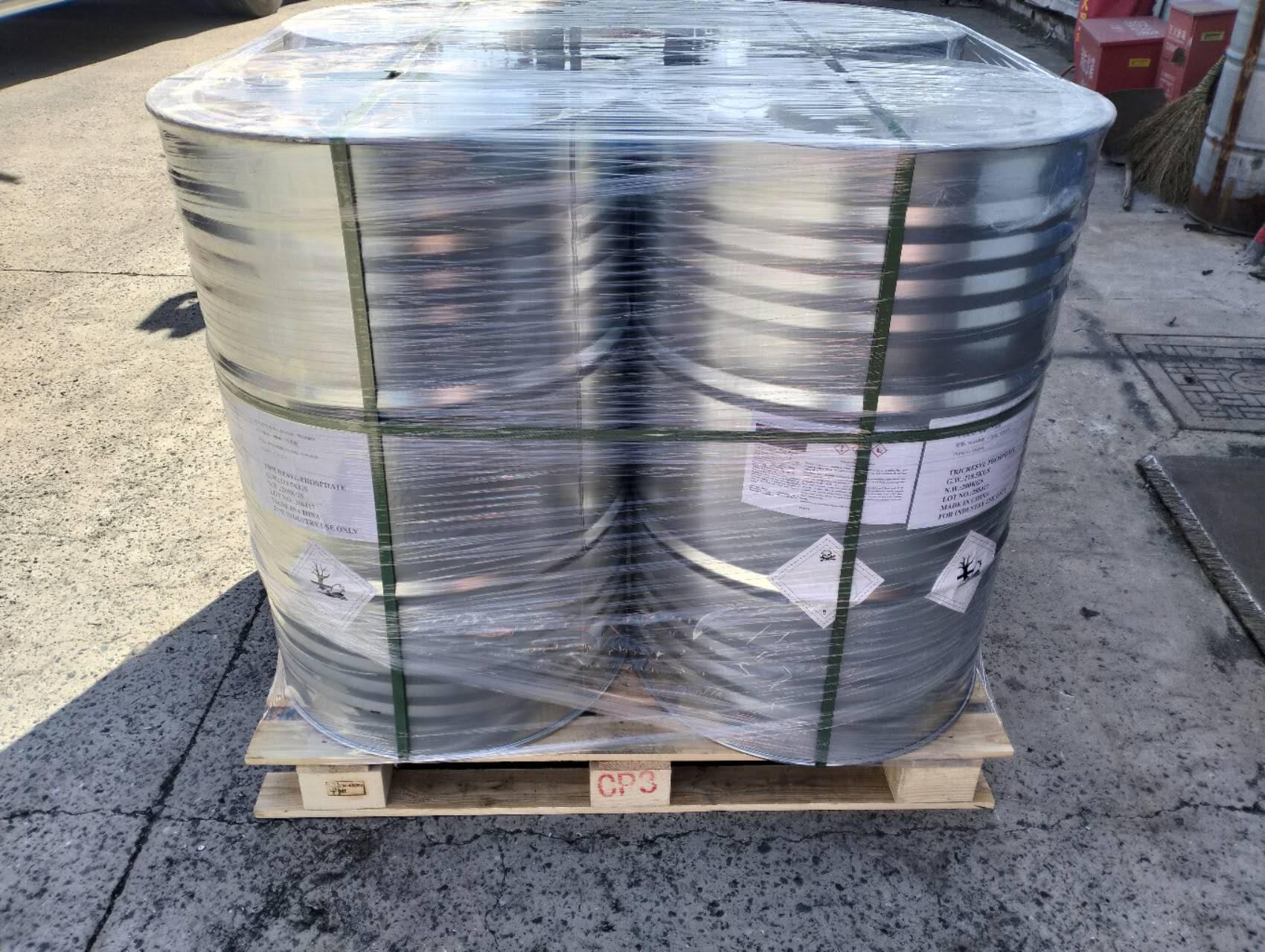
Industrial environments don't offer second chances when a cabinet, rack, or enclosure is pushed beyond its stated limits. The structural integrity of load-bearing components isn't a marketing claim; it's measured in weld penetration depth, steel gauge consistency, and the absence of stress risers at critical joints. Our frames are built on a modular backbone that distributes weight evenly across a reinforced base, so a sudden forklift impact or an unbalanced 2,000-pound server stack doesn't translate into cascading deformation.
Real loads are rarely static. Pallets get dropped, cable trays sag, and vibration from nearby machinery turns a static load into a fatigue cycle. That's why we test beyond nominal ratings—subjecting prototype enclosures to cyclic loading that simulates years of micro-movement, then inspecting for hairline fractures or loosened fasteners. The result is a design that tolerates the messy, unpredictable forces of a live production floor, not just the clean numbers on a spec sheet.
Safety also means no surprises during installation or maintenance. Access panels are engineered to stay put under load without relying on plastic catches that degrade. Threaded inserts are anchored in full-thickness steel, not just tack-welded, so repeated torque doesn't strip them. The goal is simple: when a technician leans a ladder against the housing or a hoist transfers a heavy module, the structure behaves like a single, predictable unit—not a collection of parts that might give way.
Why Batch-to-Batch Drift Quietly Erodes Your Margins
Most plants treat batch-to-batch variation as an inconvenience, not a cost center. A half-degree temperature shift, a slight change in raw material moisture, or a pump that runs a bit slower than last week rarely triggers an alarm. But these small drifts accumulate. They show up as extra rework, higher scrap rates, and longer cycle times—expenses that never appear as a single line item, yet quietly chip away at the margin you thought you had locked in.
Consider a resin producer running the same recipe for six months. If catalyst activity drops just 2% between batches, the yield loss per batch might be negligible on paper. Over three hundred batches, that 2% becomes thousands of kilograms of wasted feedstock and energy, plus the labor spent troubleshooting why output fell short of plan. The problem is that standard cost accounting often absorbs this drift as "normal" variation, so nobody sees the true cumulative damage until quarterly margins disappoint.
The fix is not more final inspection; it’s tighter control on the variables that drift in the first place. A simple statistical process control chart on critical inputs—temperature, pressure, feed rate, or raw material quality—can flag a shift long before it becomes a batch failure. Treating drift as a process problem rather than an isolated batch problem is how you stop the quiet erosion and protect the profit you already produce.
The Tricresyl Phosphate Specs You Should Actually Question
Most spec sheets for tricresyl phosphate lead with viscosity, acid number, colour, and density. Those numbers won't tell you much about the risks that actually matter. The figure you should be interrogating is the ortho-isomer content. Plenty of suppliers simply list 'tricresyl phosphate' without breaking down the isomer profile, yet the ortho form is the one linked to neurotoxic effects. Even trace amounts in a technical-grade product can shift your safety assessment, so ask for a chromatogram, not just a pass/fail certificate.
Free cresol content is another line that deserves more than a glance. A low value is usually marketed as proof of purity, but the testing method changes everything. A simple acid number titration can hide reactive impurities that a properly resolved GC or HPLC run would expose. Instead of accepting '99% purity' at face value, request the exact method, column conditions, and the isomer separation profile. If they can't produce that, the spec is basically decorative.
Batch-to-batch consistency is rarely addressed in a one-page datasheet. Most documents omit trace metal limits or moisture ceilings, and those are exactly the factors that accelerate decomposition under sustained heat. If your application involves long thermal exposure, reviewing conventional parameters isn't enough. Insist on seeing the full impurity profile and lot-specific chromatograms before you trust the numbers.
What Responsible Manufacturers Do Differently With Isomer Ratios
Responsible manufacturers treat isomer ratios as a functional variable, not a footnote on a certificate of analysis. Instead of relying solely on bulk purity, they map each isomer's individual contribution to efficacy, stability, or sensory profile. This often means running orthogonal assays—chiral chromatography paired with bioactivity screens—to confirm that the ratio delivered in the final product matches the ratio that was validated during development, even when minor isomers fall below typical reporting thresholds.
What sets them apart is the willingness to tighten internal specifications beyond compendial or regulatory minimums. They recognize that a seemingly negligible shift from 98:2 to 96:4 can alter receptor binding, metabolic half-life, or off-target effects. So they build control ranges around the exact ratio that performed well in toxicology and clinical batches, then hold every production lot to that narrower window, rejecting material that a less rigorous supplier would ship without hesitation.
These manufacturers also maintain a living change-control record for isomer distribution. If a raw material source, catalyst, or purification step changes, they re-profile the isomer ratio against reference standards and historical batch data before release. Downstream users never have to guess whether a formulation drift came from their own process or from an upstream shift—because the responsible supplier already flagged, investigated, and corrected any ratio deviation at its origin.
Choosing a TCP Partner Without the Usual Sales Noise
Most partner conversations start with slide decks and end with a signed contract you barely remember. Flip that. Ask for a walkthrough of a messy, real-world migration—the kind where things went wrong. The way they describe failures tells you more than any polished demo.
Cut through the noise by requesting direct access to the people who would actually handle your account—not the person closing the deal. If they hesitate to connect you with an engineer or a current client without a sales rep on the line, treat that as a warning sign.
Finally, stop asking if they can meet your requirements and start testing whether they understand them. Give them one very specific, awkward constraint from your environment and see if they adapt or deflect. A partner worth keeping will engage with the constraint instead of drowning it in reassurances.
FAQ
Look beyond basic certifications. A dependable producer will share detailed batch analysis, control isomer ratios that affect performance, and have a clear system for tracing raw materials. Ask if they test for trace impurities like cresol leftovers or moisture—small deviations can cause real problems downstream.
Safety starts with packaging and labeling that match real-world use. Reputable manufacturers provide sealed containers, clear hazard communication, and guidance on ventilation and personal protective equipment. Some go further by offering training materials or on-site support for bulk handling systems.
Different ortho, meta, and para isomers have different toxicity and performance characteristics. For uses like aviation hydraulic fluids or flame retardants, the ortho isomer content must be tightly controlled. A knowledgeable manufacturer will specify the isomer distribution and adjust it to your process needs.
Request a certificate of analysis with every shipment, not just a generic brochure. Depending on your region, look for REACH, TSCA, or similar compliance documents. A thorough supplier will also provide safety data sheets that reflect the actual product, not a copy-paste template.
Yes, many industrial suppliers can adjust viscosity, purity, or isomer ratios to fit specific applications. The key is whether they have in-house lab capability or rely on third parties. Direct technical contact with their chemists often leads to better results than a sales-only relationship.
It is widely used as a flame retardant in hydraulic fluids, a plasticizer in PVC and rubber, and an anti-wear additive in lubricants. In each case, impurities can reduce thermal stability, cause corrosion, or create unwanted odors. High-purity TCP keeps these systems running longer.
Ask about production capacity, lead times, and backup inventory. A manufacturer with multiple production lines or regional warehouses is less likely to leave you stranded. Check their track record during raw material shortages—this reveals whether they prioritize long-term contracts or spot sales.
TCP is under scrutiny in some regions due to toxicity concerns, particularly ortho isomers. Work with a manufacturer that stays ahead of regulatory changes and can offer lower-toxicity grades if needed. Proper documentation for waste disposal and emissions reporting should be available without hesitation.
Conclusion
Quality in tricresyl phosphate isn't something a final spec sheet can prove. It starts with raw material selection, process control, and how a manufacturer handles isomer ratios before the first drop leaves the reactor. Many suppliers will show you a certificate that looks identical, but the real difference shows up in batch-to-batch consistency. When impurity profiles or viscosity drift between shipments, downstream blending and performance suffer, and those hidden costs eat into margins faster than most buyers realize. A plant that treats TCP as a specialty chemical rather than a commodity will test for the specs that actually affect your process, not just the ones that are easy to pass.
Safety under real industrial loads means the product has to hold up in hot, pressurized, or high-shear environments without breaking down or forming unexpected byproducts. That requires more than a clean SDS. Responsible manufacturers will talk openly about isomer distribution and how it affects lubricity, flame retardancy, and compatibility with your other additives. When you're choosing a partner, the useful conversation skips the usual sales noise and focuses on process audits, change notification, and whether they can explain what they do differently when a batch starts to drift. That level of transparency is what separates a reliable long-term supply from a recurring quality problem.
Contact Us
Contact Person: WANG SIHAI
Email: [email protected]
Tel/WhatsApp: +86-13815295628
Website: https://www.fortunechemtech.com/index_en.html