

What Role Do Spiral Wound Gaskets Play in Preventing Fugitive Emissions?
2026-03-25
Why Are Fugitive Emissions a Critical Concern in Modern Industrial Sealing Systems?
Fugitive emissions are unintended leaks of gases or vapors from pressurized equipment such as pipelines, valves, and flanges. In industries like oil and gas, petrochemicals, and power generation, these emissions are closely regulated under frameworks such as EPA LDAR programs and EU Industrial Emissions Directive. Even minor leakage can result in environmental penalties, safety risks, and operational inefficiencies.
Sealing systems are often the weakest point in containment. Poor gasket performance, improper installation, or material incompatibility can all lead to leakage paths. Our field observations show that flange connections account for a significant percentage of emission points in process plants. That is why selecting the right sealing solution is essential for compliance and long term reliability.
Our factory works with clients who require low emission sealing solutions for refineries and chemical plants. By understanding real operating conditions such as pressure cycling, thermal expansion, and chemical exposure, it becomes possible to reduce emission risks significantly. This is where Spiral Wound Gaskets play a vital role in maintaining tight seals under dynamic conditions.
How Do Spiral Wound Gaskets Effectively Prevent Leakage in High Pressure Systems?
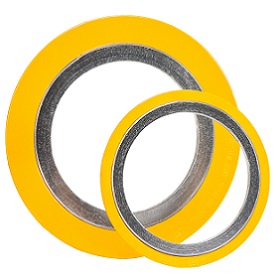
Spiral Wound Gaskets are engineered using a combination of metal windings and soft filler materials. This design allows them to maintain resilience and flexibility, ensuring tight sealing even under fluctuating loads and temperatures. In industrial practice, this is often referred to as load retention capability.
The metal strip provides mechanical strength, while the filler material ensures conformability to flange surfaces. This dual structure enables the gasket to compensate for bolt relaxation and thermal cycling, which are common causes of fugitive emissions. Our engineering team has found that this structure performs especially well in applications involving steam, hydrocarbons, and aggressive chemicals.
At Ningbo Kaxite Sealing Materials Co., Ltd., our production lines are optimized for precision winding and material consistency. Our factory ensures that each gasket meets tight dimensional tolerances, which is critical for achieving proper seating stress and leak tight performance. This attention to detail allows our products to perform reliably in demanding environments.
What Technical Parameters Define High Performance Sealing Solutions?
Understanding gasket specifications is essential when selecting the right product for emission control. Industrial buyers typically evaluate parameters such as pressure rating, temperature resistance, and material compatibility.
| Parameter | Specification Range | Performance Impact |
| Pressure Rating | Class 150 to Class 2500 | Ensures sealing under high pressure |
| Temperature Range | -200°C to 550°C | Maintains integrity under thermal stress |
| Metal Material | SS304, SS316, Carbon Steel | Provides strength and corrosion resistance |
| Filler Material | Graphite, PTFE | Improves sealing and chemical resistance |
| Density | 4.5 g/cm³ to 5.5 g/cm³ | Affects compression and recovery |
Our factory carefully controls these parameters to meet international sealing standards. By optimizing material combinations, our solutions achieve low leakage rates required for emission control programs. Ningbo Kaxite Sealing Materials Co., Ltd. continues to refine these specifications based on feedback from global clients.
How Do Material Selection and Design Influence Long Term Emission Control?
Material selection is a critical factor in preventing fugitive emissions. Different industries require different combinations depending on media type and operating conditions. For example, graphite fillers are widely used in high temperature environments due to their thermal stability, while PTFE is preferred for chemical resistance in corrosive applications.
Our factory emphasizes compatibility between gasket materials and process media. In refinery applications, exposure to hydrocarbons and high pressure steam demands materials that can resist degradation over time. Using inappropriate materials often leads to gasket creep or chemical attack, both of which increase the risk of leakage.
| Application | Recommended Material | Key Advantage |
| Oil and Gas | Graphite with SS316 | High temperature resistance |
| Chemical Processing | PTFE with SS304 | Excellent chemical stability |
| Power Plants | Graphite with Carbon Steel | Cost effective durability |
| Marine Industry | SS316 with PTFE | Corrosion resistance |
Spiral Wound Gaskets designed with optimized materials provide consistent sealing performance even after repeated thermal cycles. Ningbo Kaxite Sealing Materials Co., Ltd. integrates advanced material testing to ensure long term stability across different industrial sectors.
How Can Proper Installation and Maintenance Reduce Fugitive Emissions Risks?
Even the best gasket design cannot perform effectively without proper installation. In many industrial audits, improper bolt tightening and flange misalignment are identified as leading causes of leakage. Torque control and cross tightening patterns are essential to achieve uniform gasket compression.
Our factory recommends following ASME PCC-1 guidelines for installation. Ensuring clean flange surfaces, correct bolt lubrication, and calibrated torque tools can significantly improve sealing reliability. Regular inspection and maintenance also help detect early signs of wear before leakage occurs.
In addition, adopting monitoring practices such as LDAR programs allows operators to track emission points and take corrective action. When combined with high quality Spiral Wound Gaskets, these practices create a robust sealing strategy that minimizes environmental impact and operational downtime.
FAQ
What makes spiral wound gaskets suitable for preventing fugitive emissions?
They combine metal strength with soft filler flexibility, allowing them to maintain tight seals under pressure and temperature fluctuations. This design reduces leakage paths and ensures long term sealing performance.
How do operating conditions affect gasket performance in emission control?
Factors such as pressure cycling, temperature variation, and chemical exposure can impact gasket integrity. Selecting materials that match these conditions is essential for maintaining a leak free seal.
Are spiral wound gaskets compliant with emission regulations?
Yes, when properly selected and installed, they meet industry standards for low emission sealing. Many configurations are designed to comply with international regulations and testing requirements.
Conclusion
Spiral Wound Gaskets play a critical role in preventing fugitive emissions by providing reliable sealing under demanding industrial conditions. Their unique structure, combined with proper material selection and installation practices, ensures consistent performance and regulatory compliance.
Our factory remains committed to delivering high quality sealing solutions tailored to diverse industrial needs. If you are looking to improve emission control and enhance system reliability, contact our team today to explore customized options and technical support.