

Can a Spiral Classifier Really Improve Separation Efficiency in Mineral Processing?
2025-12-30
When I first started evaluating classification equipment for real-world mineral processing projects, I noticed how often efficiency issues traced back to one overlooked step. That was when I began paying closer attention to Spiral Classifier performance. Over time, and through hands-on comparisons, I saw why more engineers quietly lean toward solutions developed by EPIC. Not because of marketing promises, but because the results hold up under daily operating pressure. In this article, I want to walk through what actually matters when choosing a Spiral Classifier and why this equipment continues to earn its place in modern plants.
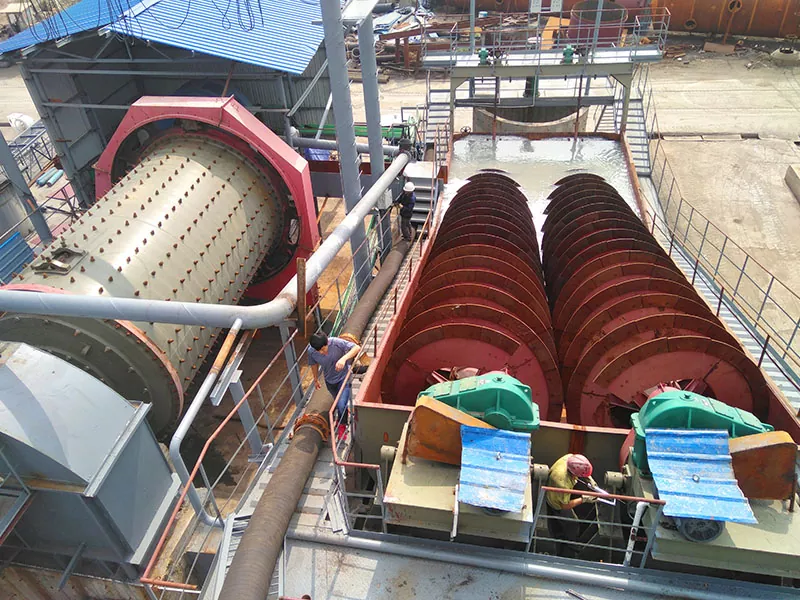
Why Does Classification Accuracy Matter More Than Most Operators Expect?
In mineral processing, classification is not just a supporting step. It directly affects grinding efficiency, recovery rates, and downstream separation stability. I have seen plants struggle with inconsistent particle size distribution simply because the classifier could not maintain steady control under variable loads.
A well-designed Spiral Classifier addresses these pain points by:
- Maintaining stable overflow particle size
- Reducing unnecessary circulating loads in grinding circuits
- Lowering energy consumption caused by over-grinding
- Improving downstream flotation or magnetic separation efficiency
When classification becomes predictable, the entire processing line becomes easier to optimize.
What Makes a Spiral Classifier Suitable for Continuous Operation?
One of the first questions I usually ask is whether the equipment can run reliably with minimal intervention. In real plants, downtime is rarely acceptable. A properly engineered Spiral Classifier uses a simple but robust mechanical structure that allows it to work continuously even under abrasive slurry conditions.
Key structural features that matter in practice include:
- Wear-resistant spiral blades designed for long service life
- Stable tank geometry that prevents turbulence and re-mixing
- Smooth transmission systems that reduce vibration and noise
- Easy-access maintenance points that shorten service time
This is where experience-driven design choices make a visible difference during long-term operation.
How Does a Spiral Classifier Compare to Other Classification Methods?
I often get asked whether hydrocyclones can fully replace a Spiral Classifier. In reality, both have their place. However, spiral classifiers still offer advantages in applications where precise control and gentle separation are required.
| Aspect | Spiral Classifier | Hydrocyclone |
|---|---|---|
| Separation Control | Highly adjustable and stable | Sensitive to pressure fluctuations |
| Energy Consumption | Lower mechanical energy use | Higher pumping energy required |
| Wear Management | Predictable wear patterns | Rapid liner wear under abrasive conditions |
| Operational Visibility | Easy to monitor visually | Limited real-time observation |
In many beneficiation plants, combining both systems actually delivers the best overall performance.
Can a Spiral Classifier Handle Different Ore Characteristics?
Ore properties vary significantly from site to site. Density, particle shape, and slurry concentration all influence separation behavior. A flexible Spiral Classifier allows operators to adapt to these variables without redesigning the entire circuit.
From my experience, adjustable spiral speed and weir height are essential for:
- Processing fine-grained ores without excessive losses
- Handling high-density slurries with consistent overflow quality
- Adapting to seasonal or feed composition changes
This adaptability is one reason why the Spiral Classifier remains relevant across different mining sectors.
What Should Buyers Look for When Selecting a Spiral Classifier?
Choosing the right equipment is not about chasing the lowest upfront cost. I always advise buyers to evaluate long-term performance and support. A reliable Spiral Classifier should align with the actual operating conditions of the plant.
Critical evaluation points include:
- Manufacturing precision and material quality
- Customization options for tank length and spiral diameter
- Ease of integration into existing grinding circuits
- After-sales technical support and spare parts availability
This is where established manufacturers like EPIC tend to stand out, especially when projects require tailored solutions rather than standardized equipment.
Is a Spiral Classifier Still a Smart Investment for Modern Plants?
Despite advances in automation and alternative technologies, the Spiral Classifier continues to prove its value. Its mechanical simplicity, operational transparency, and reliable performance make it a practical choice for many beneficiation lines.
For plants aiming to balance efficiency, cost control, and stable output quality, this type of classifier remains a dependable solution rather than an outdated one.
Ready to Improve Your Classification Process?
If you are reviewing your current classification setup or planning a new mineral processing line, now is a good time to reassess how a Spiral Classifier could fit into your operation. A well-matched solution can significantly improve consistency and reduce operating stress.
If you want to explore suitable configurations or discuss real application scenarios, feel free to contact us today. Our team is ready to help you identify the right approach and provide practical guidance for your project.